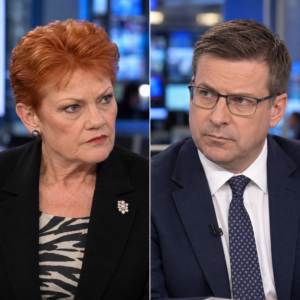
One Nation leader Pauline Hanson has doubled down on her decision to bar journalists from the ABC, The Guardian, The Age and the Sydney Morning Herald from a major campaign event in Melbourne, accusing the outlets of spreading “lies” and “spin” while insisting she would no longer tolerate what she considers unfair reporting.
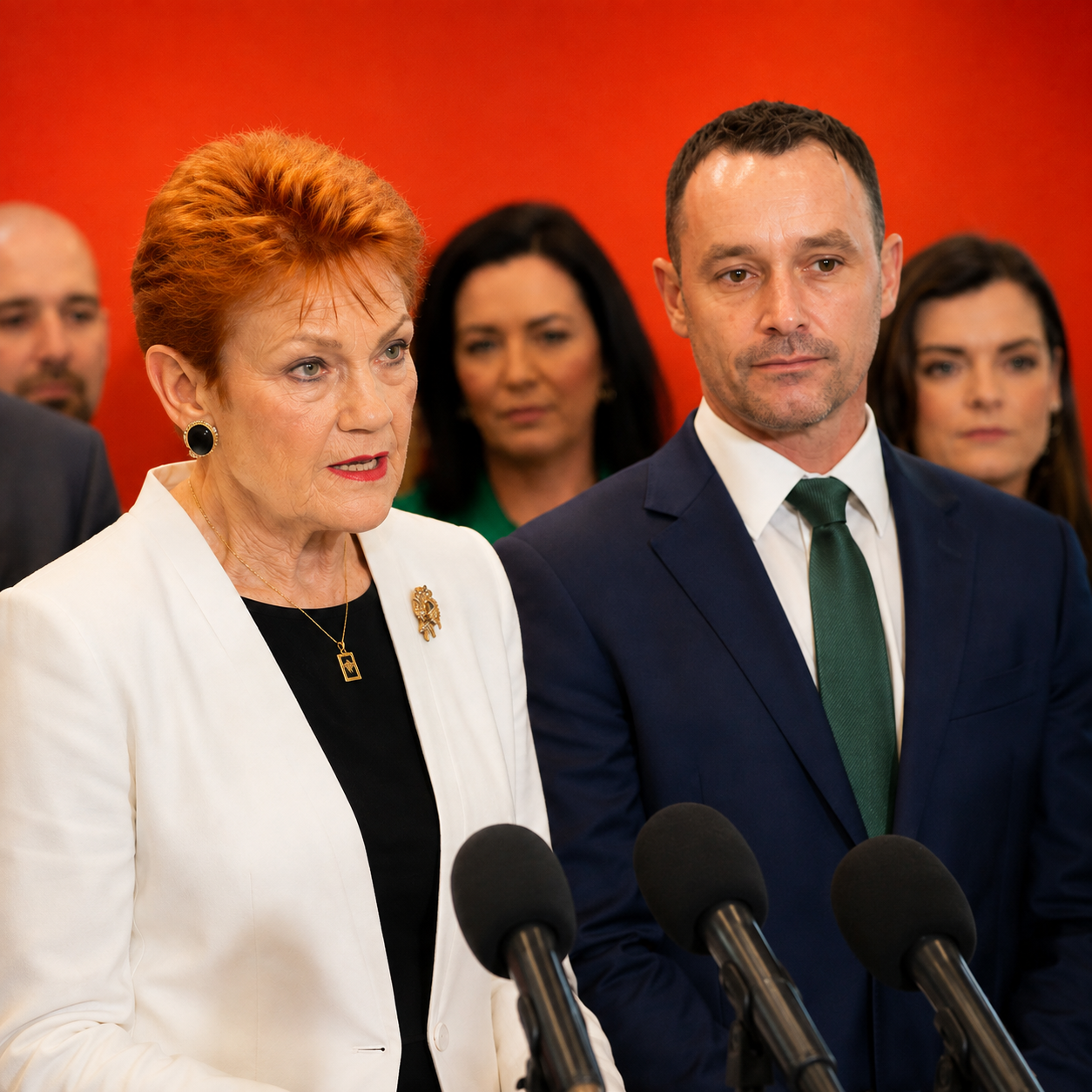
The controversy unfolded as Hanson unveiled One Nation’s Victorian candidates ahead of November’s state election, but the announcement was quickly overshadowed by questions about why several major media organisations had been denied entry to the event.
Speaking to journalists who were permitted to attend, Hanson defended the restrictions when asked whether they were compatible with press freedom.
“ABC were denied entry into here, and The Guardian. I am not putting up with their rubbish, I’m not putting up with their spin, their lies, whatsoever,” Hanson said.
“I want truth and honesty. You get it from me, I expect it back from the media.”
One Nation staff screened reporters before the Melbourne press conference, with journalists from the ABC, The Guardian, The Age and the Sydney Morning Herald excluded from attending. Other media organisations were granted access to cover the event and question the party leader.
The event marked the official launch of One Nation’s Victorian election campaign, with Hanson introducing the party’s first group of candidates for the Legislative Council and outlining her ambition to expand the party’s influence in state politics.
Victorian party president Warren Pickering was presented as the campaign leader, joined by incumbent MP Rikkie-Lee Tyrrell, former Liberal Party member Colleen Harkin, political cartoonist Mark Nicholson, former Victoria Police officer Chris Burson and several other upper house candidates.
Although the candidate announcement was intended to highlight the party’s election preparations, questions about media access dominated much of the discussion.
Hanson argued that some media organisations had repeatedly misrepresented both her personally and One Nation’s policies over many years, saying she no longer believed they were interested in fair reporting.
She maintained that journalists should be held to the same standard of honesty that politicians are expected to meet when addressing the public.
The latest dispute follows a series of high-profile confrontations between Hanson and sections of Australia’s mainstream media.
Earlier this year, she publicly criticised The Guardian journalist Sarah Martin during a National Press Club appearance, accusing the reporter of being obsessed with One Nation and indicating she would not welcome similar questioning at future events.
The ABC has also become a frequent target of Hanson’s criticism over its political coverage and editorial decisions.
One factor adding to those tensions has been the ABC’s handling of its Race Around the World program, which featured a satirical segment containing graphic references to violence against Hancock Prospecting executive chair Gina Rinehart.
Hancock Prospecting subsequently demanded the broadcaster remove the segment and issue an apology before commencing legal action after those requests were rejected.
The ABC has referred complaints about the broadcast to its independent Ombudsman while maintaining its established editorial processes.
Although Hanson referred to the broadcaster’s handling of that controversy when discussing her broader concerns about media coverage, her decision to exclude journalists was presented as applying more broadly to organisations she believes consistently report unfairly on One Nation rather than being solely a response to the Rinehart dispute.
Critics of the move argue that restricting accredited journalists from political events undermines transparency and reduces opportunities for public scrutiny during an election campaign.
Greens senator Sarah Hanson-Young criticised the decision, arguing that political leaders seeking public office should be willing to answer questions from all recognised news organisations rather than selecting preferred outlets.
Supporters of Hanson, however, contend that political parties are under no legal obligation to provide access to every media organisation for privately organised campaign events.
They argue politicians should retain discretion over media invitations, particularly where they believe reporting has been inaccurate or consistently biased.
The disagreement reflects a broader international trend in which political leaders increasingly challenge established news organisations while communicating more directly with voters through social media and alternative media platforms.
The Victorian campaign itself represents an important test for One Nation.
Recent opinion polls have suggested the party has strengthened its support among conservative voters, leading the organisation to invest more heavily in candidate recruitment, campaign infrastructure and policy development ahead of the November election.
Party officials have also indicated they intend to contest a large majority of Victoria’s lower house seats while fielding candidates across every Legislative Council region.
Victoria’s proportional upper house voting system is regarded as offering smaller parties greater opportunities to secure parliamentary representation than single-member lower house contests.
Political analysts therefore believe even modest increases in One Nation’s vote could translate into additional Legislative Council seats, potentially increasing the party’s influence over future legislation if Parliament becomes more fragmented.
Hanson has argued that dissatisfaction with both Labor and the Liberal Party is creating opportunities for One Nation to expand its presence in Victoria.
During the Melbourne event she again criticised both major parties over cost-of-living pressures, crime, education and government accountability, while indicating that more detailed policy announcements would follow during the election campaign.
The dispute over media access has nevertheless become one of the defining stories surrounding the campaign launch.
Supporters describe Hanson’s decision as a legitimate response to what they view as persistent bias from sections of the media.
Opponents argue that excluding journalists weakens democratic accountability by limiting opportunities for independent questioning.
Whether voters interpret the move as a principled stand against perceived unfair reporting or an unnecessary restriction on press access remains a matter of political opinion.
What is clear is that the controversy has ensured One Nation’s Victorian campaign launch attracted national attention—not only for the candidates unveiled, but also for the continuing debate over the relationship between politicians, the media and public scrutiny during election campaigns.