One Nation leader Pauline Hanson has sought to clarify her position on paid parental leave after comments made during a National Press Club address triggered widespread criticism from economists, workplace advocates and political opponents.
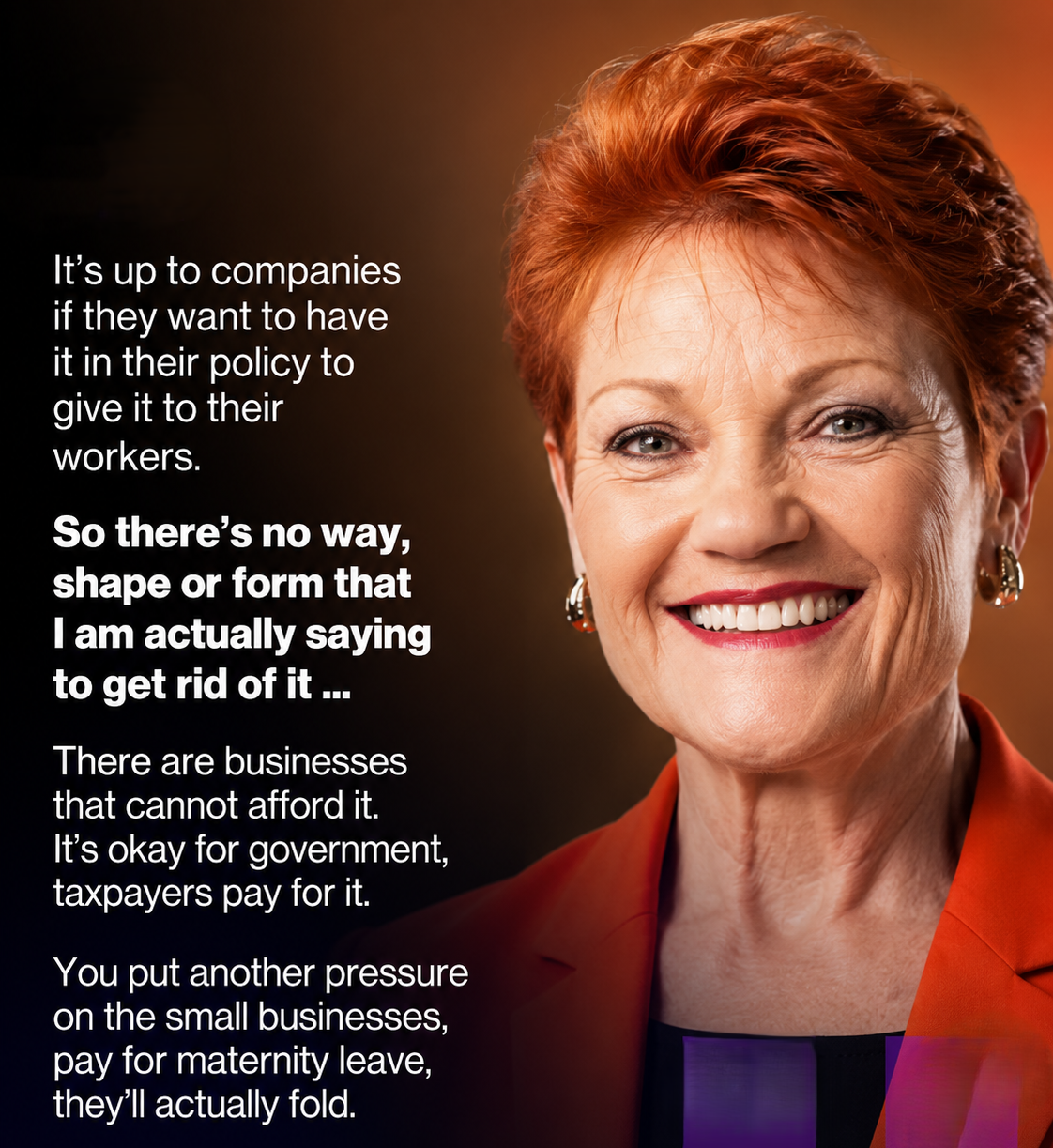
Hanson now insists she supports Australia’s taxpayer-funded Paid Parental Leave scheme and has no intention of abolishing it. Instead, she says her concern is that struggling small businesses should never be compelled to shoulder the financial burden of paying parental leave themselves.
The clarification followed several days of intense political debate after Hanson questioned why businesses should pay employees who were not at work while taking parental leave. Her remarks prompted criticism from Labor ministers, economists and advocacy groups, who argued they risked undermining women’s workforce participation and creating confusion about One Nation’s policy.
Appearing on national television to explain her comments, Hanson said they had been “totally taken out of context”.
“There’s no way, shape or form that I am actually saying to get rid of it,” Hanson said.
She argued that government-funded parental leave had been beneficial in helping women return to work after having children, but maintained that many smaller employers simply could not afford additional mandatory workplace entitlements.
“It’s OK for government, taxpayers pay for it, but there are businesses, smaller businesses, that cannot afford it,” she said.
Under Australia’s existing system, the Commonwealth Paid Parental Leave scheme is funded by the federal government rather than employers. Eligible parents receive payments at the national minimum wage, while many employers voluntarily provide additional paid leave through workplace agreements or enterprise bargaining arrangements.
Importantly, Australian law does not require employers to provide paid parental leave beyond any contractual or enterprise agreement obligations they may choose to offer. Employees are, however, entitled to up to 12 months of unpaid parental leave under the National Employment Standards, with an option to request a further 12 months in some circumstances.
The misunderstanding surrounding Hanson’s remarks emerged after she questioned during her National Press Club address why businesses should continue paying employees who were away from work caring for newborn children.
Her comments were interpreted by many observers as signalling support for winding back Australia’s paid parental leave arrangements altogether.
Within hours, Labor ministers accused One Nation of being out of step with modern Australian workplaces, arguing the party failed to appreciate the economic and social value of supporting new parents.
Employment Minister Amanda Rishworth said employer-funded parental leave was an important tool used by businesses to attract and retain skilled workers, particularly women returning to the workforce after childbirth.
She argued that generous parental leave policies strengthen workforce participation, improve employee retention and benefit the wider economy by helping experienced workers remain connected to their employers.
Economists have similarly warned that reducing support for working parents could have broader economic consequences.
Research consistently shows that access to paid parental leave increases labour force participation among women, reduces long-term career interruptions and contributes to higher productivity by encouraging experienced employees to return to work after starting a family.
Many economists also argue that paid parental leave delivers long-term economic benefits through improved child health outcomes, stronger workforce attachment and reduced recruitment costs for employers.
Women’s advocacy organisations responded to Hanson’s original remarks by expressing concern that any perception of reduced support for parental leave could discourage progress towards gender equality in Australian workplaces.
Several groups noted that Australia has spent years expanding access to paid parental leave as governments sought to narrow workforce participation gaps between men and women while improving flexibility for families.
From 1 July 2026, eligible Australian parents can access up to 26 weeks of government-funded Paid Parental Leave, an increase from the previous entitlement. The leave can be shared between parents, with a dedicated component reserved for the second parent on a “use it or lose it” basis to encourage greater sharing of caring responsibilities. Superannuation contributions can also be paid on government-funded leave under the expanded scheme.
Hanson nevertheless maintained that her criticism had always been directed at the financial pressures facing employers rather than the government scheme itself.
She argued that many small businesses were already struggling with rising wages, higher energy prices, insurance costs and increased regulatory obligations.
According to Hanson, forcing those businesses to absorb additional employment costs could threaten their viability.
“If you force them to actually pay for paid maternity leave, they will go under,” she said, adding that businesses should remain free to provide additional benefits voluntarily if they choose.
Her clarification has not entirely ended the political controversy.
Labor ministers argued that the explanation demonstrated confusion about how Australia’s parental leave system already operates, noting there is currently no law requiring employers to fund the government entitlement.
Opposition figures also questioned why Hanson appeared to reverse the impression created during her earlier speech, suggesting One Nation needed to communicate its workplace policies more clearly.
The debate comes at a time when paid parental leave has become an increasingly significant policy issue in Australia.
Successive federal governments have gradually expanded the scheme, with bipartisan recognition that supporting families during the first months after childbirth delivers both social and economic benefits.
Business groups have generally accepted the value of government-funded parental leave, although they continue to express concern about additional employment costs arising through enterprise bargaining or workplace competition for skilled staff.
For small businesses in particular, balancing competitive employee benefits with rising operating expenses remains a significant challenge.
Many employers voluntarily provide paid parental leave as part of broader strategies to recruit and retain experienced workers, especially in sectors experiencing persistent labour shortages.
Political analysts say the episode illustrates the heightened scrutiny now facing One Nation as the party attracts increased electoral attention.
Statements that may once have generated only limited discussion are now receiving close examination from economists, industry groups and political opponents eager to challenge the party’s policy platform.
For Hanson, the clarification appears aimed at reassuring both working families and small business owners that One Nation supports government-funded parental leave while continuing to advocate against imposing additional mandatory costs on employers.
Whether that explanation satisfies critics remains uncertain, but the debate has once again highlighted the complex balance between supporting Australian families, encouraging workforce participation and limiting financial pressures on businesses operating in an increasingly challenging economic environment.






