Pauline Hanson’s One Nation has regained the lead in the latest national opinion polling, with a new survey placing the right-wing populist party narrowly ahead of Labor in primary vote support as Australia’s political landscape continues to fragment.
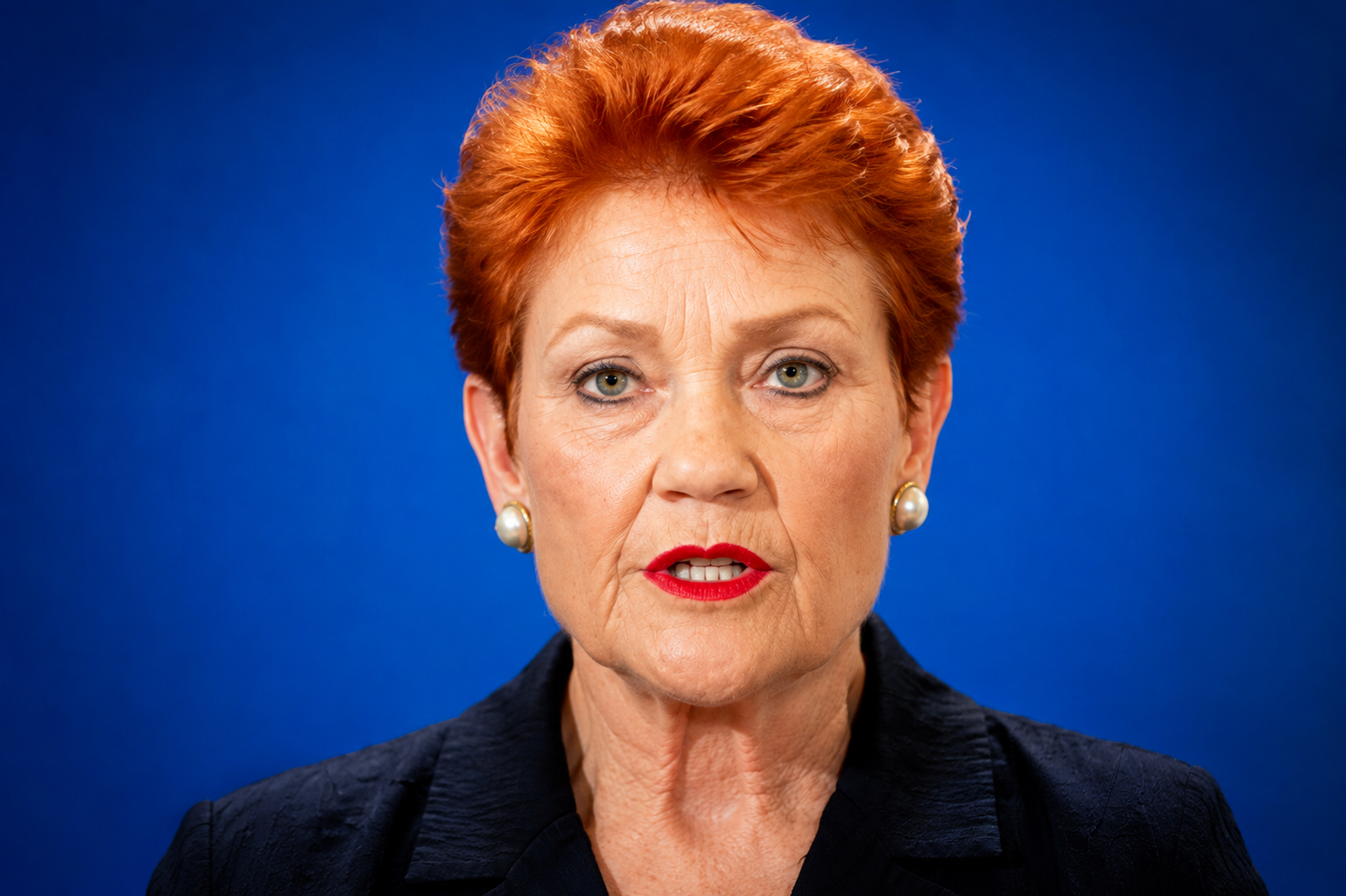
The latest monthly Australian Financial Review/RedBridge Group/Accent Research poll found One Nation’s primary vote has increased by two percentage points to 31 per cent, while Labor slipped one point to 29 per cent. Although both movements fall within the survey’s stated margin of error of 3.3 percentage points, the result places One Nation back in first place after briefly surrendering the lead in last month’s polling.
The Coalition also recorded a notable improvement, climbing four percentage points to 22 per cent, while the Greens fell four points to 10 per cent, highlighting continuing volatility among Australian voters following this year’s federal election and ongoing cost-of-living pressures.
One Nation rebounds after recent setback
The latest figures represent a modest recovery for One Nation following a softer result in the previous monthly survey.
Last month’s polling came after Pauline Hanson attracted significant national attention for comments on multiculturalism that dominated political debate. Despite that controversy, the newest survey suggests the party has recovered much of the support it temporarily lost.
The AFR/RedBridge/Accent series first placed One Nation ahead of Labor in May following the federal budget, marking one of the most striking shifts in Australian opinion polling in recent years. Since then, Labor and One Nation have traded the lead across successive monthly surveys as voter sentiment has remained highly fluid.
Understanding the primary vote
The figures reported in the survey refer to each party’s primary vote—the proportion of voters selecting a party as their first preference before Australia’s preferential voting system redistributes preferences.
Primary vote leadership does not necessarily translate into forming government, as Australia’s preferential electoral system means second and subsequent preferences can significantly alter final election outcomes.
Indeed, while One Nation now leads on primary vote in this survey, Labor continues to perform more strongly than One Nation in several two-party-preferred scenarios because of the way preferences are distributed under Australia’s voting system.
Poll remains within the margin of error
Pollsters caution against overinterpreting relatively small monthly movements.
The survey’s margin of error is approximately 3.3 percentage points, meaning the reported changes for both Labor and One Nation fall within the range that could occur through normal sampling variation.
Nevertheless, the poll continues a broader trend seen across several RedBridge surveys during 2026, with One Nation consistently polling at historically elevated levels compared with previous election cycles.
Political analysts say that while individual monthly surveys should be interpreted carefully, sustained polling over several months can provide a more meaningful indication of longer-term shifts in voter attitudes.
Coalition gains while Greens lose ground
The latest poll also contained encouraging news for the Coalition.
The Liberal-National Coalition’s primary vote rose four percentage points to 22 per cent, while the Greens dropped four points to 10 per cent.
Although Labor remains ahead of the Coalition, the improvement suggests some conservative voters may be returning to the Coalition after previously shifting support toward minor parties, while others continue backing One Nation.
The combined result reflects an increasingly fragmented centre-right vote, one of the defining features of Australian politics in recent years.
Cost of living remains the dominant issue
Research accompanying earlier RedBridge polling has consistently shown that cost-of-living pressures remain voters’ overwhelming concern.
Housing affordability, grocery prices, energy bills and broader economic confidence continue to dominate public opinion, providing fertile ground for parties campaigning against the political establishment.
Previous RedBridge analysis found dissatisfaction with the federal budget contributed to One Nation’s surge earlier this year, particularly among middle-income and regional voters who felt economic conditions had deteriorated.
Immigration and crime have also become increasingly prominent issues, areas where polling suggests One Nation enjoys comparatively strong voter confidence relative to other parties.
What the result means politically
Although opinion polls do not determine election outcomes, the latest figures reinforce the extent to which Australia’s traditional two-party political landscape has evolved.
Support for minor parties and independents has steadily increased over the past decade, while both Labor and the Coalition have experienced declining long-term primary vote shares.
One Nation’s ability to remain competitive at or above Labor’s primary vote in multiple consecutive national polls represents a significant departure from historical polling patterns, even if preferential voting ultimately limits the party’s parliamentary representation.
The result is also likely to intensify debate within both major parties about how to respond to growing voter dissatisfaction over living costs, housing, immigration and public confidence in government institutions.
Looking ahead
With several months remaining before the next major electoral contests in a number of Australian jurisdictions, polling is expected to remain highly volatile.
Political strategists across the spectrum will be watching closely to determine whether One Nation’s latest lead represents the beginning of another sustained upward trend or simply normal month-to-month variation within the survey’s margin of error.
For Pauline Hanson, however, the latest figures provide fresh evidence that her party continues to resonate with a substantial section of the electorate despite recent controversy.
For Labor, the survey serves as another reminder that economic concerns remain front of mind for many Australians and that maintaining voter support will require addressing the issues that continue to dominate household conversations across the country.
Whether One Nation can convert sustained polling strength into long-term electoral gains remains one of the most closely watched questions in Australian politics, but the latest RedBridge survey confirms the party remains a significant force in the national political landscape.






