One Nation has doubled down on its vision for Australia’s education system, republishing a social media post that the party says disappeared from Meta and using it to outline one of its clearest education policy messages ahead of the next federal election.
The post declares that Australian schools under a One Nation government would promote patriotism, encourage students to take pride in Australia’s history and heritage, and remove both Welcome to Country practices and what the party describes as “self-hatred” from classrooms.
Although the party did not provide evidence explaining why the original social media post disappeared, it republished the message in full, arguing that its education agenda reflects what many Australians want from their school system. 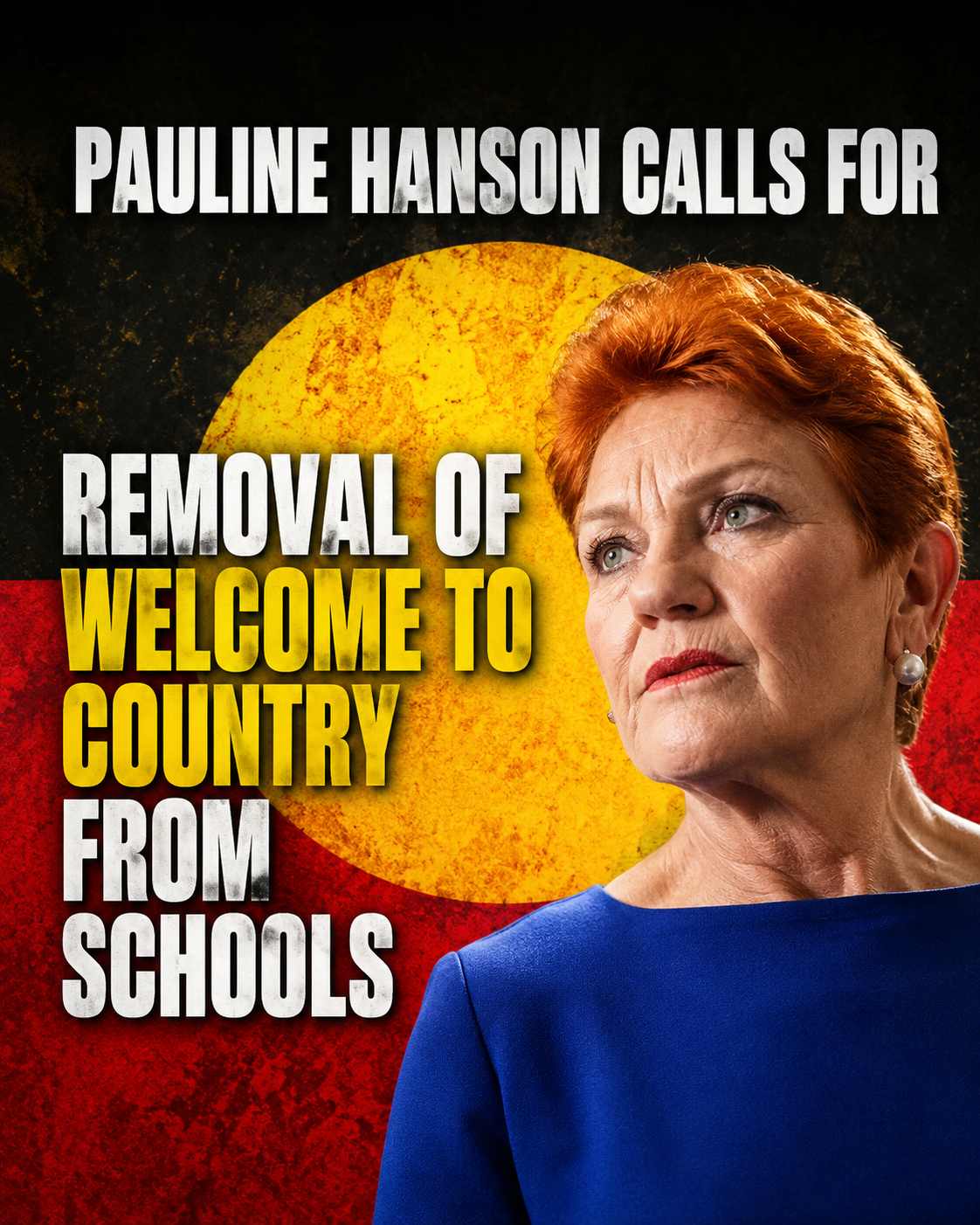
The republished statement leaves little doubt about the party’s priorities.
“Under One Nation, our schools will promote patriotism and encourage young Aussies to love their country, its history and its heritage,” the post states.
“We will not apologise for our history. We are one of the greatest countries on earth, and we will be proud of this.”
The party further argues that Australia’s education system has increasingly portrayed the nation’s history in a negative light and promises that “both the Welcome to Country and self-hatred will be expunged from our schools.”
A broader education platform
The announcement is consistent with One Nation’s broader education policies, which have increasingly focused on national identity, civics education and classroom discipline.
Pauline Hanson has repeatedly argued that schools should spend more time teaching Australia’s democratic institutions, national achievements and constitutional history while placing greater emphasis on literacy, numeracy and explicit instruction.
The party also says schools should encourage critical thinking without, in its view, promoting what it describes as ideological approaches to history, race and national identity.
Those themes have featured prominently in recent speeches by Hanson, including her proposed first 100-day agenda for government and her wider campaign against Welcome to Country ceremonies across public institutions.
What does “patriotism” mean?
Although One Nation’s latest statement strongly emphasises patriotism, it provides relatively little detail about how that objective would translate into classroom practice.
The party says students should develop pride in Australia’s achievements, democratic traditions, military service, institutions and cultural heritage.
Supporters argue that schools should help young Australians understand the country’s successes alongside its challenges, strengthening civic participation and national unity.
Critics, however, question whether the concept of patriotism should be defined by governments and warn that curriculum changes should continue reflecting Australia’s diverse historical experiences.
The debate over Welcome to Country
One Nation’s proposal again targets Welcome to Country ceremonies, an issue that has become central to the party’s cultural platform.
Senator Hanson has consistently argued that such ceremonies have expanded well beyond their original purpose and should no longer appear in schools, government departments or official public events.
The party says these practices unnecessarily divide Australians and reinforce the idea that modern Australians should feel responsible for historical events beyond their control.
Supporters of Welcome to Country strongly reject that characterisation.
Reconciliation Australia explains that a Welcome to Country is a traditional cultural protocol delivered by Traditional Owners to welcome visitors onto Country, while an Acknowledgement of Country can be delivered by anyone as a sign of respect for Aboriginal and Torres Strait Islander peoples and their continuing connection to land. The organisation says these practices are intended to promote respect and reconciliation rather than diminish Australia’s broader national identity.
How much control does Canberra actually have?
One practical question raised by One Nation’s proposal concerns constitutional responsibility for schools.
Although the Commonwealth provides substantial education funding and helps shape national curriculum priorities, Australia’s school systems are primarily administered by state and territory governments, while Catholic and independent schools are managed by their own authorities.
That means a future federal government could not simply order every Australian school to adopt identical classroom policies without cooperation from the states and territories.
Instead, any significant national curriculum changes would normally involve negotiations through education ministers, curriculum authorities and school sectors.
Similarly, decisions regarding ceremonies, assemblies and many day-to-day school activities are often made at state, system or individual school level.
The current Australian Curriculum
The existing Australian Curriculum already includes extensive teaching about Australia’s democratic institutions, Constitution, Parliament, legal system and national history.
Students study topics including Federation, immigration, war service, citizenship, elections and the development of Australian democracy.
At the same time, the curriculum also incorporates Aboriginal and Torres Strait Islander Histories and Cultures as one of three cross-curriculum priorities.
The Australian Curriculum, Assessment and Reporting Authority (ACARA) says this approach aims to help all students understand both Australia’s democratic achievements and the experiences of First Nations peoples throughout the nation’s history.
Supporters describe that balance as essential for developing informed citizens.
Critics, including One Nation, argue the emphasis has shifted too far toward historical guilt at the expense of national pride.
A wider political debate
One Nation’s announcement arrives amid broader national discussion about civics education and Australian values.
Earlier this year, education ministers agreed to review parts of the national curriculum to strengthen teaching about Australian democracy, citizenship and values while addressing concerns about antisemitism and declining civic knowledge.
Recent national assessments have shown falling student performance in civics and citizenship, prompting renewed calls across the political spectrum for greater emphasis on Australia’s democratic institutions.
While there is broad agreement that students should better understand Australia’s political system, parties disagree over how history should be taught and how First Nations perspectives should be incorporated into classroom learning.
Supporters and critics
Supporters of One Nation’s proposal argue that schools should foster national pride, encourage students to appreciate Australia’s freedoms and achievements, and ensure civic education receives greater attention.
They believe stronger emphasis on patriotism would help build social cohesion and encourage greater respect for Australia’s institutions.
Critics respond that teaching difficult aspects of Australia’s history does not undermine patriotism but instead provides students with a fuller understanding of the nation’s development.
They also argue that recognising Indigenous history and cultural traditions can coexist with pride in Australia’s democratic institutions and contemporary achievements.
Questions that remain unanswered
While the party’s message is clear, many practical details remain unresolved.
One Nation has not yet outlined precisely how schools would implement its proposed patriotism agenda, which curriculum materials would change, or whether the policy would extend beyond government schools to Catholic and independent sectors.
It has also not specified whether the proposal would apply solely to formal Welcome to Country ceremonies or also to Acknowledgement of Country practices commonly used at school assemblies and events.
Those questions would likely become central if the policy were ever introduced into Parliament.
A continuing conversation about Australian identity
The debate sparked by One Nation’s latest announcement reflects a broader national conversation that extends well beyond education policy.
Immigration, multiculturalism, reconciliation, civic identity and the teaching of Australian history have become increasingly prominent issues across federal and state politics.
For One Nation, schools are viewed as playing a central role in shaping national identity and civic values.
For supporters of the current curriculum, Australia’s education system already seeks to balance national pride with an honest examination of the country’s history, including both achievements and historical injustices.
As Australia moves toward future elections, those competing visions are likely to remain central to political debate.
Whether One Nation’s proposal ultimately gains broader public support or faces significant resistance, it has once again placed education at the centre of national discussion about what Australian students should learn, how the nation’s history should be taught and what role schools should play in fostering a shared sense of identity.






