One Nation has launched a fresh attack on the Victorian Labor Government’s plan to progressively reduce the use of natural gas, arguing the policy places political ideology ahead of affordability and consumer choice as energy becomes a defining issue ahead of the state’s next election.
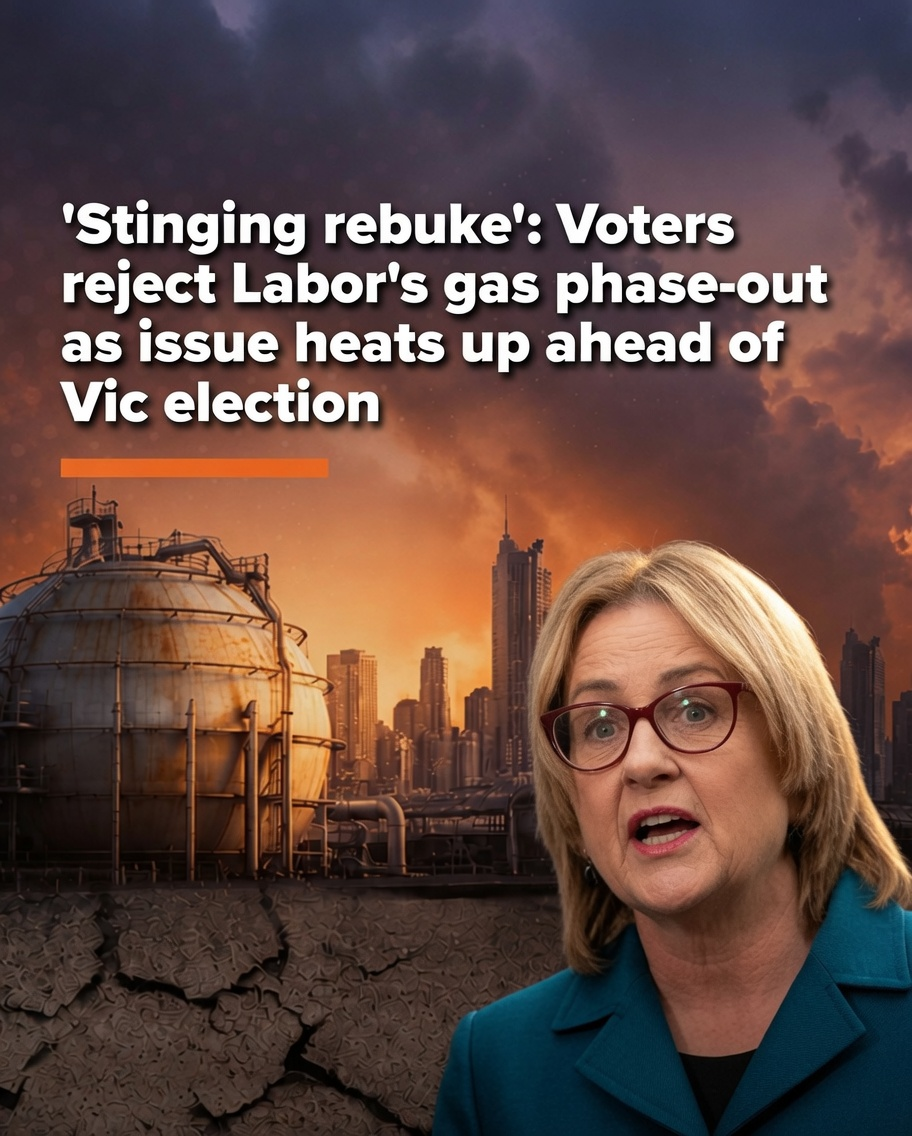
The party said many Victorians are rejecting Labor’s approach because they fear it will increase household energy costs, limit consumer choice and place additional pressure on families already struggling with the rising cost of living.
“Victorians are rejecting Labor’s plan to phase out gas because they know what it means: higher power bills, more pressure on households, and fewer choices,” One Nation said in a statement.
The party argued that affordable and reliable energy should remain the priority for governments rather than policies primarily designed to accelerate the transition away from fossil fuels.
“One Nation believes affordable and reliable energy should come before political ideology,” the statement said.
The comments come as Victoria’s energy transition has become one of the state’s most contested political issues.
Under the Victorian Government’s Gas Substitution Roadmap, the state is progressively encouraging households and businesses to move away from fossil gas through greater electrification, improved energy efficiency and the eventual expansion of renewable gases such as biomethane and renewable hydrogen.
The government says the roadmap forms part of its broader strategy to achieve net-zero emissions while improving energy efficiency, reducing long-term energy costs and maintaining a secure and reliable energy system.
Recent reforms have included restrictions on new gas connections for many new residential developments and a gradual shift toward electric appliances in new homes and, over time, when certain existing gas appliances reach the end of their operating life.
Labor argues electrification will lower household energy consumption over the long term because modern electric appliances, including reverse-cycle heating and induction cooking, are generally more energy efficient than traditional gas systems when combined with an increasingly renewable electricity grid.
Critics, however, contend that the transition risks imposing substantial upfront costs on households.
Replacing gas heating systems, hot water services and cooking appliances can require significant investment, particularly for homeowners and landlords with functioning gas infrastructure.
Industry groups have also warned that some manufacturers and commercial users continue to rely heavily on natural gas and argue that an accelerated transition could increase operating costs unless reliable alternatives become more widely available.
The debate has intensified following the release of new polling commissioned by Australian Energy Producers, which suggested a majority of surveyed Victorian voters opposed further restrictions on household gas use.
According to the survey, 58 per cent opposed the state’s ban on new residential gas connections, while 71 per cent supported allowing households to choose whether to install gas in new homes. The poll also found strong support for preserving consumer choice when replacing existing gas appliances.
Supporters of the government’s policy caution that such polling reflects current public sentiment but does not necessarily measure the long-term economic or environmental benefits of reducing reliance on fossil fuels.
Environmental organisations argue Victoria’s gas network contributes significantly to greenhouse gas emissions through both combustion and methane leakage, making electrification an important part of meeting the state’s legislated emissions reduction targets.
Climate advocates also point to improving renewable electricity generation, expanding battery storage and increasing energy efficiency as reasons why reliance on gas is expected to decline over coming decades.
Victoria remains one of Australia’s largest users of natural gas.
Approximately four out of five Victorian households are connected to the gas network, using natural gas for heating, hot water and cooking, while manufacturers continue to depend on gas for a range of industrial processes. At the same time, declining production from the Bass Strait gas fields has raised concerns about future supply and wholesale gas prices.
These competing priorities have produced sharply different political responses.
The Allan Labor Government maintains that transitioning away from fossil gas is necessary to achieve Victoria’s climate objectives while modernising the state’s energy system.
The Opposition has criticised aspects of the transition, arguing the government is moving too quickly and placing unnecessary financial burdens on households and businesses.
One Nation has adopted an even stronger position, calling for continued support for natural gas and warning against policies it says remove consumer choice before affordable alternatives are fully established.
The party argues energy policy should prioritise reliability, affordability and domestic energy security, particularly while Australians continue to experience high electricity prices and broader cost-of-living pressures.
Supporters of the transition counter that delaying electrification would expose households to future gas supply constraints and continued price volatility associated with fossil fuel markets.
They also argue that improvements in appliance efficiency and falling renewable energy costs are expected to deliver savings over time, although those savings may vary depending on household circumstances and the cost of replacing existing equipment.
With Victoria expected to hold a state election later this year, energy policy has emerged as one of the campaign’s central battlegrounds.
Political parties are increasingly framing the debate around competing priorities: reducing emissions while maintaining affordability, encouraging cleaner technologies without limiting consumer choice, and balancing long-term climate objectives against immediate cost-of-living concerns.
For voters, the discussion extends well beyond gas itself.
It touches on broader questions about how quickly Australia should transition its energy system, who should bear the costs of that transition, and what role governments should play in shaping household energy choices.
As campaigning intensifies, Victoria’s gas transition is likely to remain one of the state’s most closely watched policy debates, with both supporters and opponents seeking to convince voters that their approach offers the most practical path to delivering reliable, affordable and sustainable energy for the years ahead.






