Independent senator Lidia Thorpe has criticised One Nation leader Pauline Hanson over an older animated cartoon showing a caricature of Thorpe being run over by a bus. Hanson has defended the party's Please Explain cartoons as political satire and rejected suggestions they are connected to an alleged attack on independent MP Helen Haines.
The clash comes as politicians debate the limits of political rhetoric in a climate of increasing threats. Thorpe argues that images of violence towards elected representatives warrant particular care. Hanson says political cartoons should remain free to mock opponents.
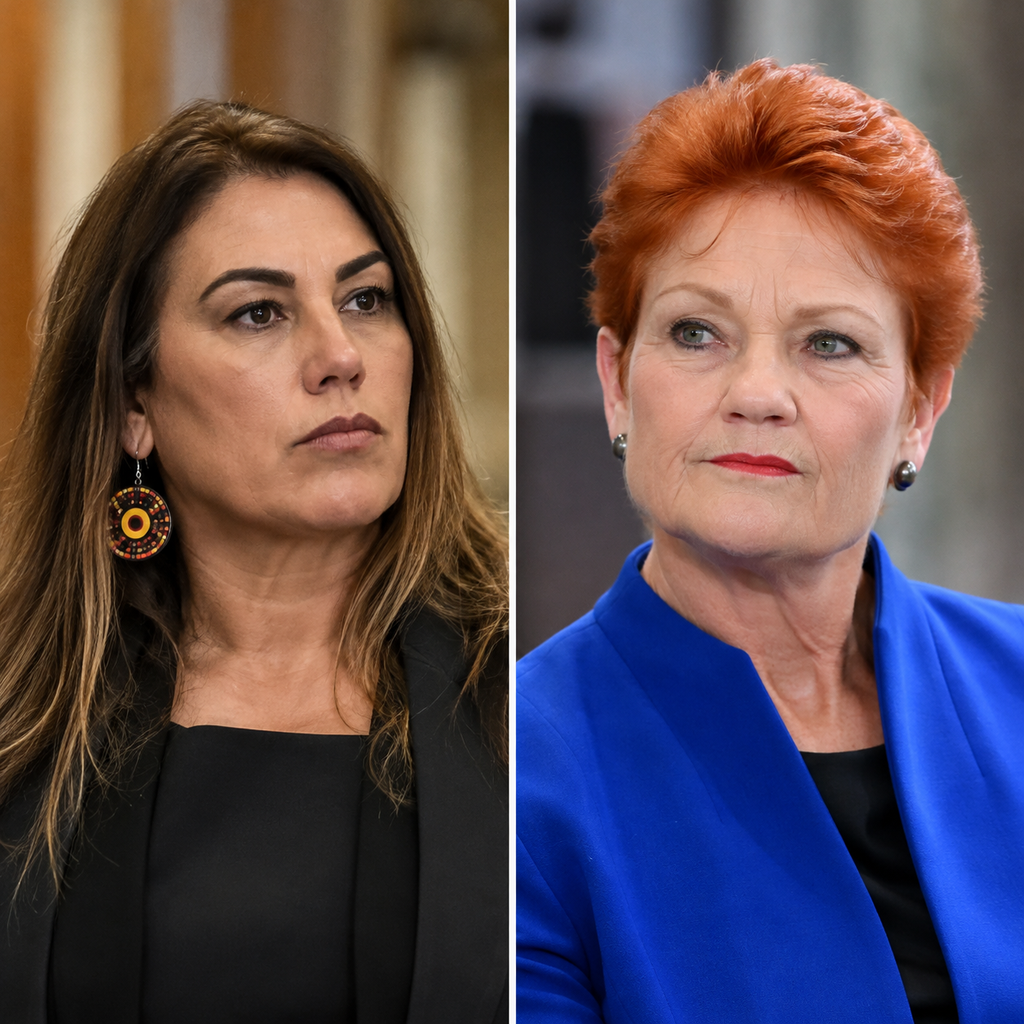
The video is not footage of an actual bus attack. Reporting identifies the scene as part of a fictional One Nation animation from 2023 that resurfaced during discussion of political threats. It depicts Hanson's cartoon character driving a bus over a character representing Thorpe.
Thorpe says the party leader should consider the example that such imagery sets. She has also alleged that threatening comments about her were left unmoderated on One Nation social-media feeds. The available reporting records her allegation but does not establish, through an independent review, exactly what moderation decisions were made.
Hanson's stated position is that the animation is satire, not an encouragement of violence. She has denied any connection between the cartoon series and the alleged attack on Haines, and has indicated the series will continue. There is no evidence in the reporting reviewed that an animated video caused that separate incident.
Both sides are arguing about the impact and limits of expression. Satire often exaggerates public figures and uses deliberately absurd imagery. The subjects of satire may nevertheless regard a repeated violent metaphor as irresponsible, particularly if they have experienced threats.
The distinction matters for news coverage too. An old fictional clip cannot be portrayed as a news image of a real confrontation. Nor should it be paired with photographs of an unrelated attack in a way that implies causation. An accurate presentation has to identify the cartoon as animation and the criticism as a political disagreement.
Thorpe's separate concern about online threats presents a more specific question: what comments appeared on the party’s accounts, whether moderators were alerted to them, and what action followed. Resolving those questions would require evidence of the posts and their handling, not an assumption that either side is correct.
Hanson’s defence of satire also does not amount to a claim that direct threats should be tolerated. Conversely, criticism of a cartoon does not necessarily amount to a legal attempt to prohibit it. These are arguments about political judgment and responsibility rather than an established criminal finding about the video.
The controversy is distinct from a separate One Nation cartoon mocking senator Jacqui Lambie’s medical condition. The Lambie dispute involves cartoon co-creator and Victorian One Nation candidate Mark Nicholson, who has refused to apologise. Combining the two would obscure the people, chronology and complaints involved.
The immediate dispute has two components that should not be compressed into one accusation. The first is the content of the animation. A fictional bus striking a cartoon politician is an intentionally exaggerated image, and Hanson is defending the right to make that kind of political satire. The second is Thorpe’s allegation about responses to the video on social media. She says threats against her have remained without moderation. That raises a question about management of actual comments, which is different from judging the symbolic content of the animation itself.
The National Indigenous Times reported Thorpe's criticism in the context of arguments following the alleged attack on independent MP Helen Haines. Thorpe urged Hanson to consider the example being set by the party's material. Hanson defended older cartoons involving Thorpe and Anthony Albanese, and denied that the animated content had any connection with the attack. Reporting does not demonstrate such a connection. It would be misleading to show the cartoon next to the real incident in a way that suggested the latter was inspired by the former.
One Nation's Please Explain series uses fictional representations of political personalities. Its supporters may see those animations as a familiar form of exaggerated commentary: a cartoon character can be humiliated, chased or subjected to an absurd scenario that no one should take literally. Critics question whether images that use violent acts as punchlines are appropriate when elected officials regularly receive personal threats. Those positions concern judgment and political culture rather than a court finding about the legality of an individual scene.
Thorpe's position is informed by the fact that she is the depicted person and says she has experienced threatening messages. It is not necessary to decide whether everyone watching the video would interpret it in the same way in order to report her criticism accurately. Hanson, however, is entitled to have her defence described accurately too. Saying the video is satire is not identical to admitting it depicts a real event, endorsing an assault or accepting Thorpe’s assessment of its effect.
Moderation of comments is a more concrete accountability issue. A publisher may choose to post controversial political material, but public discussion about that material can include threats, discriminatory abuse or intimidating language. Determining whether One Nation failed to address particular posts would require identifying the content, how long it remained visible, whether complaints were received and what platform tools were available. Those records were not established in the material reviewed. Thorpe’s allegation must therefore remain attributed, not treated as a confirmed breach.
The same restraint applies to assumptions about the psychological consequences of a video. Some viewers may find a violent cartoon upsetting; others may regard it as no more than caricature. A reporter cannot infer the motives of every viewer, and the fact that a video circulates widely does not establish that it triggered specific threats. What can be verified is the content as described by reporting, the competing public statements and the political debate they generated.
The timing is also important. An old animation can become news again because a new event causes people to reconsider it. That does not make the old cartoon newly produced. Nor should an earlier cartoon be labelled an immediate response to the alleged Haines attack. Accuracy requires identifying the item as historical while explaining why political figures brought it back into contemporary debate. The question is whether the party should reassess existing material amid current safety concerns.
The public debate may be framed as a tension between free expression and responsibility, but those ideas are not necessarily mutually exclusive. Hanson can argue that provocative satire is a legitimate political form. Thorpe can argue that leaders should consider the consequences and take care with imagery that depicts harm to an opponent. A party may legally publish a cartoon and still face criticism for its judgment. A critic may disapprove of it without demanding that every offensive joke be outlawed.
The relevant forms of accountability are therefore different. A political leader can be questioned about editorial approval, the handling of complaints and whether material stays online. Platforms can be questioned about enforcement of rules against threats. Law enforcement can address credible specific threats to individuals, separate from arguments about taste in political advertising. These pathways should not be collapsed into a single claim that disagreement over a cartoon proves a criminal offence.
Comparisons with other One Nation controversies should be made carefully. The separate episode mocking Jacqui Lambie's medical condition involved a different target, separate criticism and a public apology from Hanson. The Thorpe bus imagery predates that dispute. Mark Nicholson's refusal to apologise for the Lambie cartoon does not establish his intentions concerning the Thorpe episode, and Hanson’s response to one video is not automatically her response to all videos in the series.
For readers, the question is not whether politicians should be immune from parody. It is whether a particular scene advances political commentary, whether the person depicted can reasonably criticise it, and what obligations a party has once its online audience responds. Thorpe and Hanson have expressed sharply different assessments. The public can weigh those positions without inventing a face-to-face confrontation, implying a causal link to another crime or elevating an untested moderation allegation into a proven fact.
Because the subject matter involves alleged threats, headlines should not imply that either politician has been found to have encouraged violence. That would go beyond the established record and could wrongly associate a separate criminal investigation with the cartoon controversy. It is more accurate to describe Thorpe as challenging Hanson's judgment and moderation practices, and Hanson as defending the work as satire. The facts of those public positions can be reported confidently while the contested allegations remain labelled.
A future update would require evidence of changed moderation decisions, a verified new public response or findings about particular threats. Repeating the existence of the same cartoon without such a development would not constitute a new factual outcome.
The unresolved disagreement between Thorpe and Hanson is whether a provocative fictional depiction has crossed a line of political responsibility, and whether One Nation responded appropriately to alleged threats in associated online discussions. The confirmed facts are the animation, its renewed circulation, Thorpe's public criticism and Hanson's defence.