Liberal senator Sarah Henderson and Labor senator Tim Ayres have clashed during Senate estimates over a reported $682,000 contract for meetings at Sydney’s Sofitel Darling Harbour. Henderson questioned the expense of holding climate-related meetings at a five-star venue, while Ayres challenged her comparison and argued that the Coalition was failing to treat Australia’s Pacific diplomatic commitments seriously.
The exchange was confrontational, but the central facts are more specific than a headline about a large hotel bill. Officials said the contract supported at least five separate events over several weeks, rather than a single overnight stay or meeting.
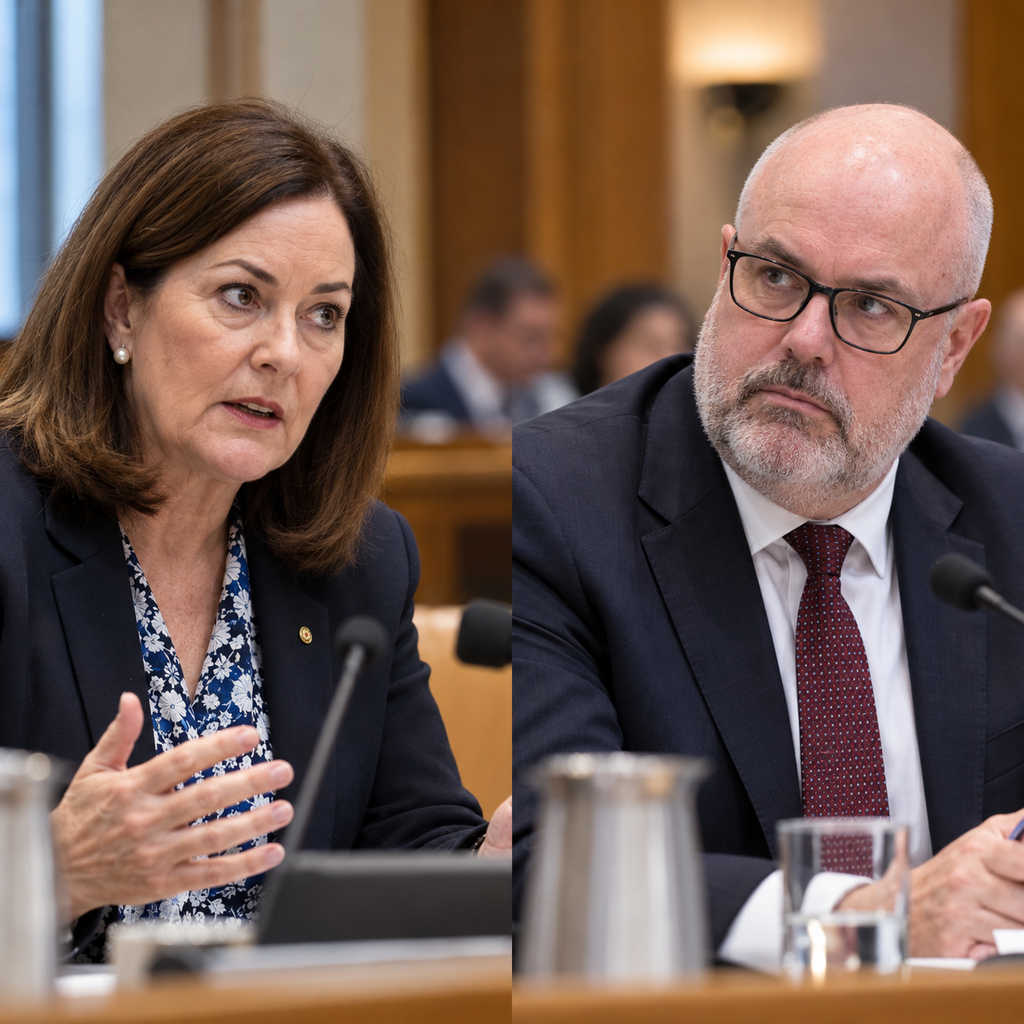
Henderson pressed officials about why the venue was chosen and whether the expenditure represented value for money. She used a rhetorical comparison suggesting that almost $700,000 was enough to buy a hotel. Ayres rejected the comparison and pointed to accommodation costs associated with the Brisbane G20 held under the Abbott government.
According to reporting of the hearing, senior official Dr Sally Box said the venue contract was tied to gatherings required by international climate-negotiation arrangements or workshops involving delegations. She did not immediately provide a breakdown showing the exact number of rooms, days involved or whether the amount included accommodation. Those details are important for a fair comparison.
The contract forms part of wider preparations for international climate meetings, including talks involving Pacific countries. Officials discussed a broader $150 million budget for preparatory activity, which is not the same figure as the Sofitel contract and should not be added or compared without explaining the different purposes.
Henderson’s criticism raises a reasonable public spending question: could the government have obtained the meeting facilities and services it needed for less? Without the procurement records and a full list of services, the public cannot reliably answer that question.
Ayres’ defence rests on the practical and diplomatic value of hosting complex talks. Conferences involving international delegations can require security, translation, event management and facilities. Yet the fact that such expenses may be necessary does not, on its own, prove that every contract represents good value.
The hearing also examined spending commitments for events in Fiji. Officials reportedly described an upper-bound figure of $34.6 million in contracted commitments and said some costs were expected to be recovered from participating countries. An upper-bound commitment is not the same as a final net cost. It should not be folded into the Sydney bill as though both were identical expenditures.
Henderson and Ayres each used the exchange to advance a wider political argument about the seriousness and cost of Australia’s international climate policy. Their rhetoric should be kept distinct from the evidence of what the contract purchased.
No evidence cited in the available reporting or the recorded hearing establishes corruption, a procurement breach or wrongdoing connected with the hotel contract. What is established is a disagreement between two senators and unanswered questions about the cost breakdown.
The exchange was unusually pointed because each senator framed the same contract as evidence of a broader political failing. Henderson argued that a department committing nearly $700,000 to a five-star venue needed to demonstrate restraint and value. Ayres, who intervened during her questioning of officials, characterised the Coalition’s approach as dismissive of Pacific diplomacy. They were not simply debating the price of a meeting room: they were arguing about whether scrutiny of a particular purchase showed fiscal responsibility or indifference to Australia’s international obligations.
The reporting of the hearing records Dr Sally Box describing at least five events held across several weeks at the Sofitel Sydney Darling Harbour. Some were required by United Nations climate-negotiation processes; others were workshops designed to help delegations discuss outstanding matters. She did not have an immediate breakdown of room numbers, meeting days or accommodation included in the contract. The number of events establishes that the spend cannot properly be presented as the price of one dinner or one hotel night, but it does not establish that the per-event price was competitive.
Procurement records could address that gap. Readers would need to see the requested facilities, dates, staffing or catering requirements, available competing venues, reasons for a limited tender and contractual changes. A hotel can be an expensive venue because of meeting space, accommodation, security or service arrangements, but those factors must be documented. Five-star branding is not itself evidence of waste or quality; the relevant question is whether government bought suitable services at a defensible price.
Ayres rejected Henderson’s rhetorical suggestion that the money could almost buy a hotel. His response also referred to the cost of accommodating the 2014 Brisbane G20 and to criticism he said Coalition politicians had directed at Pacific leaders. This comparison makes a political point about the cost of major diplomatic gatherings and the parties’ previous attitudes. It does not provide a mathematical comparison between a multi-event Sydney contract and a national leaders’ summit. Different event scales, security environments, attendance and procurement arrangements limit the usefulness of a simple headline-versus-headline contrast.
Henderson also complained about interruptions while questioning public officials. That detail matters because estimates hearings are supposed to obtain evidence from departments, even when politicians disagree sharply about what the evidence means. An official can answer factual questions about procurement while a minister contests the implication that the expenditure is excessive. Where arguments overlap, a reader can be left remembering the theatre of the exchange rather than the absence of a detailed contract breakdown. The most useful outcome from a hearing is often a specific question taken on notice and a document supplied later.
The broader spending figures were another source of potential confusion. Officials described Fiji-related contracted commitments of up to $34.6 million and expected some costs would be recovered. Reporting identified accommodation and venue costs of about $8.4 million within that program, along with an event-management component and broadcasting services. Those figures are not interchangeable with the separate $682,000 Sofitel contract. Nor should the department’s total preparatory allocation be described as an amount already spent on hotel rooms. A contract ceiling, an appropriated budget and final net expenditure represent three different stages of public finance.
The Pacific context explains why the government regards the meetings as important. Island nations have substantial interests in international climate decisions and in access to discussions where priorities are negotiated. Australia has diplomatic and strategic reasons to participate and may expect relationship-building benefits from hosting delegates. Those benefits are difficult to express as a dollar return against one venue invoice. They should, nevertheless, be described clearly rather than offered as a blanket exemption from normal accountability for procurement decisions.
For members of the public who are concerned about housing costs, household energy bills and strained services, a hotel contract approaching seven figures is an arresting number. That reaction deserves a factual response. Public expenditure should be tested against budgets and competing priorities, but outrage alone is not an audit. A spending decision should be criticised on the basis of its purpose, approvals, value, services and alternatives, not just because the supplier operates an expensive hotel.
There is also a legitimate risk of selecting comparisons to suit a party position. Ayres’ argument about previous Coalition spending does not absolve the current administration of accountability; Henderson’s critique of the Sofitel contract does not establish that international climate meetings are unnecessary. Both propositions can be considered independently. Taxpayers can support diplomatic engagement while insisting on competitive purchasing, or oppose a government's climate approach while acknowledging that multilateral events require facilities.
An assessment should examine whether a single central venue reduced transport and logistical costs compared with placing negotiations in multiple buildings. It should examine whether lower-priced venues could have satisfied the same accessibility and security requirements. It should identify costs recovered from participants and costs genuinely borne by the Commonwealth. These are questions for the contract records, not conclusions available from the limited figures disclosed during the dispute.
This is why precise language matters in the headline and caption. Henderson challenged a $682,000 contract; Ayres challenged her framing and the Coalition’s broader rhetoric. The debate did not demonstrate that a minister broke procurement law or that all of the wider event commitments had become a final charge to the public. The unresolved issue is not whether the confrontation occurred, but what the full accounts will show about the value received from the Sydney gatherings.
The Senate committee's recorded hearing is an important supporting source because it preserves the structure of the exchange: questions directed to officials, answers on the contract and interventions from Ayres. Readers should distinguish the statements of government witnesses, who can describe contracts and expenditure, from senators’ rhetoric about whether those costs are defensible. A politician's comparison is not an audited valuation of a hotel, just as a minister's defence is not an independent procurement review.
Answers supplied after the hearing may change the level of detail publicly available. Any later disclosure should be checked against the original figures before the story is updated, rather than adding newer amounts to the existing headline without explaining their scope.
Publication of the contractual scope, procurement process and final event accounts would allow the spending to be assessed on evidence. Until those details are available, the $682,000 figure warrants explanation but cannot fairly be described as proof that taxpayer funds were improperly used.






