A proposal to allow Sydney’s Lakemba Mosque to broadcast the Islamic call to prayer across surrounding neighbourhoods has reignited debate over religious freedom, community amenity and local planning, with One Nation accusing council representatives of dismissing residents’ concerns.
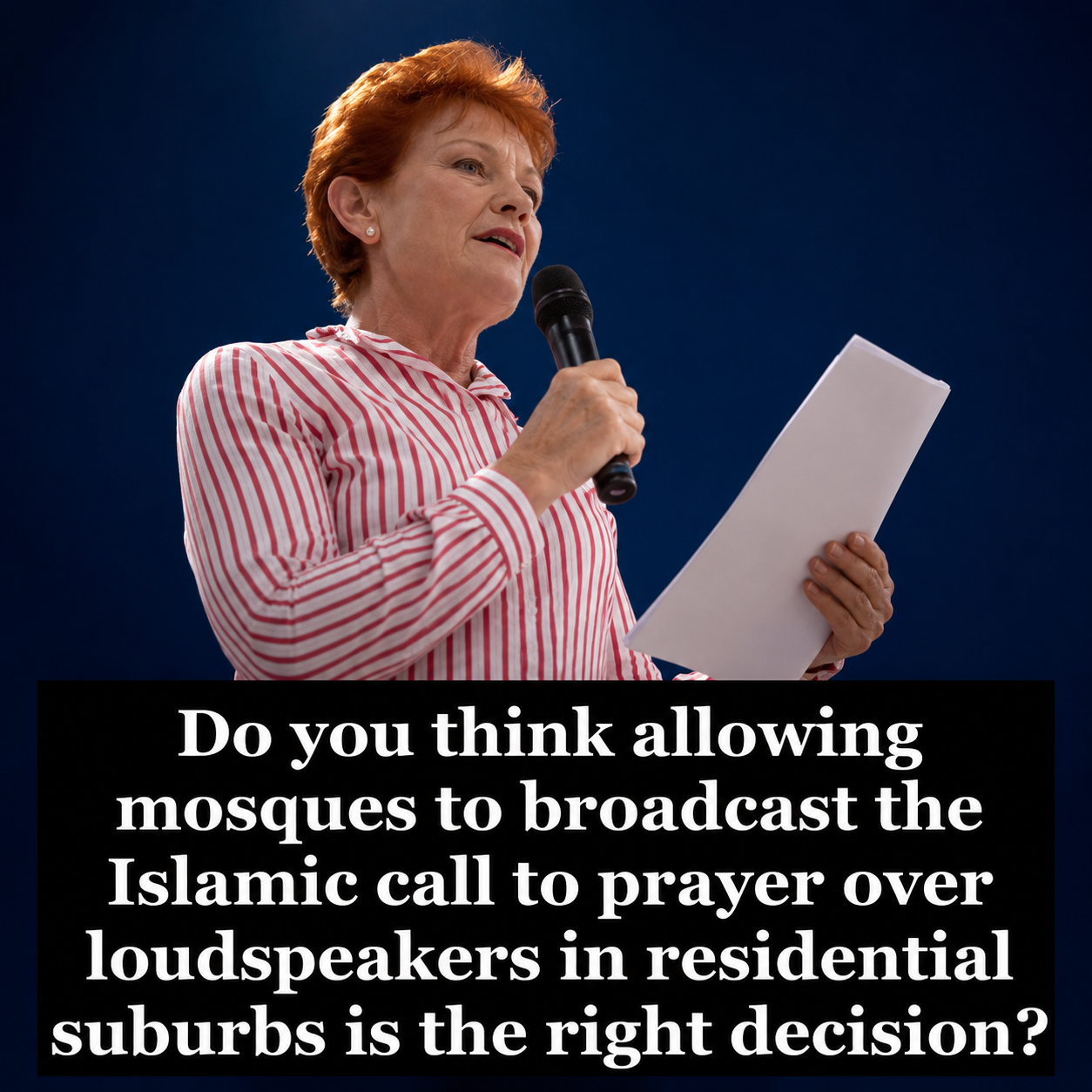
The latest political flashpoint followed comments made during discussions surrounding the proposal, where residents worried about amplified religious broadcasts were reportedly told to simply “close your windows“.
One Nation responded sharply, arguing that such remarks ignored the legitimate concerns of people living in the area.
In a statement shared on social media, the party said:
“Close your windows.” Completely inappropriate. It is understandable that local residents have concerns about the Islamic call to prayer being blasted across their neighbourhood.
To simply brush off residents’ concerns by saying, “close your windows,” is entirely wrong. Defending the character of your area is entirely justified.
The comments have become the latest chapter in an increasingly contentious debate over an application by the Lebanese Muslim Association (LMA), which is seeking approval to broadcast the Adhan from loudspeakers mounted on Lakemba Mosque’s minaret in Sydney’s south-west.
The proposal would allow the Islamic call to prayer to be broadcast once each Friday around midday through external loudspeakers, subject to planning approval and acoustic conditions.
Supporters say the request reflects the area’s significant Muslim population and represents an expression of religious freedom similar to church bells that have long formed part of Australia’s cultural landscape.
Opponents argue that externally amplified religious broadcasts are fundamentally different from traditional church bells and raise concerns about noise, neighbourhood amenity and preserving the existing character of residential communities.
The issue recently intensified during a Canterbury-Bankstown Council debate.
Independent councillor Barbara Coorey sought stronger planning controls governing amplified sound from places of worship, saying residential amenity should remain a priority.
During the meeting, councillor Saud Abu-Samen reportedly suggested residents concerned about the proposed broadcasts could simply “close your windows”, a remark that immediately attracted criticism from political opponents and sections of the community.
One Nation has now joined those criticisms, arguing residents deserve to have their concerns treated seriously rather than dismissed.
The party says local communities should be entitled to participate fully in planning decisions affecting their suburbs without having their concerns characterised as unreasonable.
The proposal itself has generated extensive public feedback.
Supporters have launched petitions arguing the Friday Adhan would last only a few minutes each week and represents an important symbol of inclusion for Australia’s Muslim community.
The Lebanese Muslim Association says the broadcast would occur under controlled acoustic conditions and is intended to serve worshippers while respecting neighbouring residents.
Opponents have organised petitions of their own, arguing that public broadcasting of religious calls should not become part of everyday neighbourhood soundscapes and that existing planning laws should continue protecting residential amenity.
The debate has extended well beyond local planning questions.
For supporters, the issue has become one of multiculturalism, equal treatment between faiths and recognition of Australia’s religious diversity.
For critics, it raises broader questions about balancing religious expression with the expectations of residents who chose to live in established suburban neighbourhoods.
Planning experts note that councils must typically consider multiple competing factors when assessing applications involving amplified sound, including noise impacts, local planning controls, public submissions, environmental standards and broader community interest.
The final determination is therefore expected to focus on planning law rather than broader political arguments, although the issue has inevitably become highly politicised.
The Lakemba proposal follows previous attempts to secure approval for external loudspeakers, some of which were rejected after significant community opposition.
Earlier applications attracted hundreds of submissions from local residents and generated widespread national attention, illustrating how planning matters involving religious facilities can quickly become politically sensitive.
Community leaders supporting the proposal maintain the Friday broadcast would be brief, carefully managed and comparable to longstanding practices involving church bells or other recognised religious traditions.
Critics reject that comparison, arguing spoken religious messages delivered through loudspeakers create different impacts from traditional bell ringing and should therefore be assessed independently under planning rules.
The debate has also prompted wider discussion about how Australia’s increasingly diverse communities balance freedom of religion with neighbourhood expectations.
Australia’s Constitution protects freedom of religion, while state and local planning systems continue regulating land use, building works and environmental impacts such as noise.
As a result, disputes like the Lakemba proposal often involve both legal planning considerations and broader public debates about community identity and social cohesion.
For now, no final planning approval has been granted.
The application remains subject to assessment through the relevant planning process, with authorities expected to weigh technical acoustic evidence alongside public submissions and applicable planning controls before reaching a final decision.