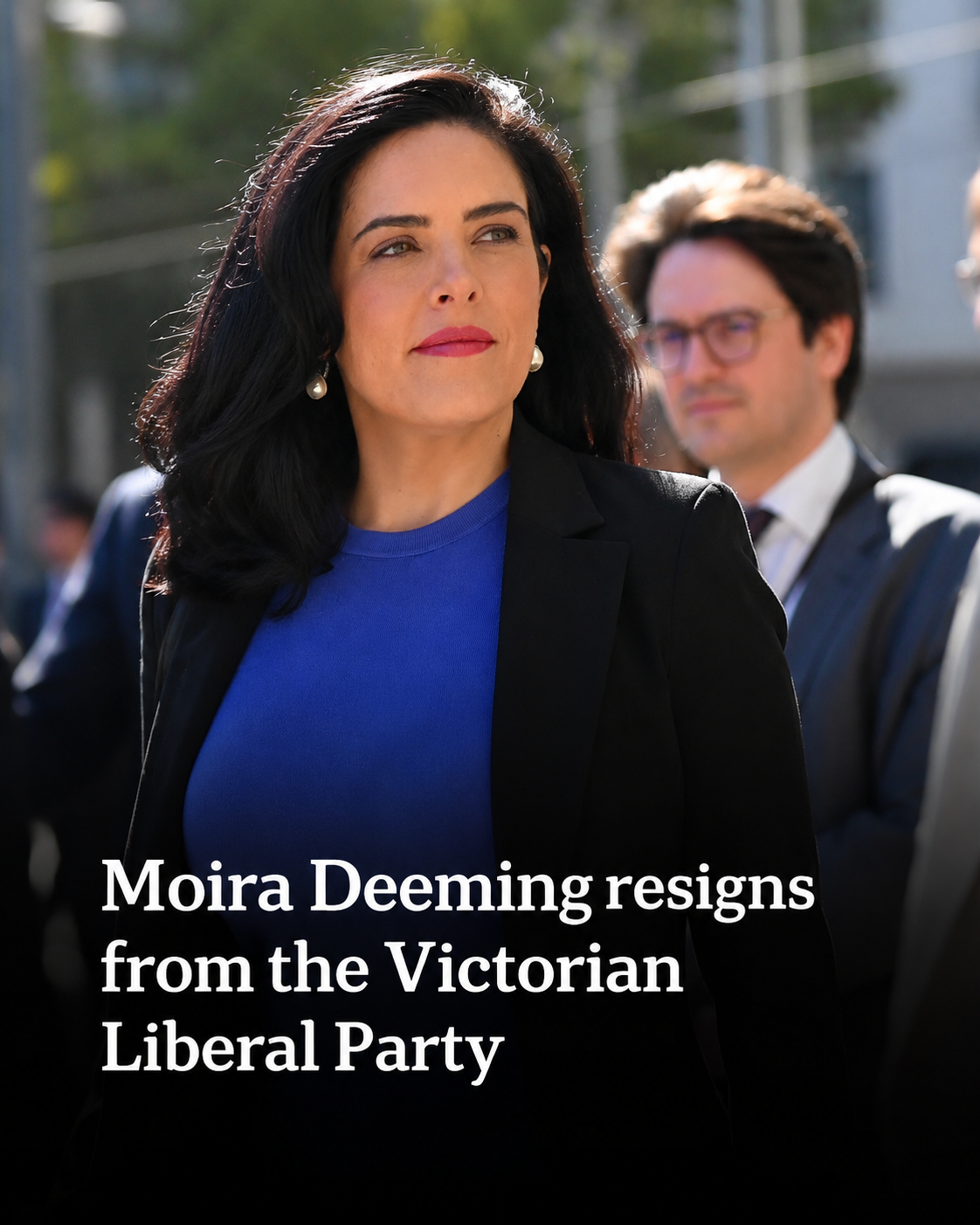
Victorian upper house MP Moira Deeming has formally resigned from the Parliamentary Liberal Party, ending months of internal conflict that has dominated headlines and further complicating the opposition’s efforts to present a united front ahead of November’s state election.
Deeming confirmed she will continue serving in Parliament as an independent member on the crossbench for the remainder of the current parliamentary term, bringing an end to a turbulent relationship with the Victorian Liberal Party that has included legal battles, leadership upheaval and repeated public disputes.
Victorian Opposition Leader Jess Wilson announced the resignation on Tuesday morning.
“This morning I received the resignation from the Parliamentary Liberal Party from Moira Deeming,” Wilson said in a brief statement confirming the development.
The announcement came only hours after Victoria’s political attention had shifted to the resignation of Premier Jacinta Allan and the election of Ben Carroll as the state’s new premier, meaning Deeming’s departure unfolded amid one of the busiest days in Victorian politics this year.
Although her resignation surprised many observers, it followed weeks of escalating tension between Deeming and the Liberal leadership.
Earlier this month, the Victorian Liberal Party voted to revoke her endorsement as a candidate for the November state election, effectively ending her prospects of contesting another term under the Liberal banner.
The decision followed a series of disputes that party leaders argued had become damaging to the opposition’s election campaign.
At the centre of the latest controversy were allegations made by Deeming against fellow Liberal MP and former opposition leader Matthew Guy.
Deeming alleged that Guy assaulted her during a community event in May, an accusation he strongly denied.
Victoria Police subsequently reviewed CCTV footage from the event and concluded that no criminal offence had occurred, bringing the police investigation to an end without charges being laid.
Despite that outcome, Deeming maintained she had acted honestly and in good faith when making the allegation.
She repeatedly declined requests from senior party figures to apologise or withdraw her statements, arguing that she believed her account of the incident to be accurate.
That refusal ultimately became a key factor behind the party’s decision to withdraw her endorsement for the upcoming election.
In announcing her resignation, Deeming said her primary responsibility remained representing the people who elected her rather than engaging in ongoing internal party disputes.
She indicated she would continue advocating for what she described as freedom, fair laws and stronger support for families while sitting on the parliamentary crossbench.
She did not announce whether she intends to contest the November election as an independent or under another political banner.
For the Victorian Liberal Party, Deeming’s departure closes one chapter of an internal conflict that has persisted for more than three years.
Her relationship with party leadership deteriorated dramatically following the controversial 2023 women’s rights rally outside Parliament House that was infiltrated by neo-Nazi demonstrators.
Then Liberal leader John Pesutto publicly associated Deeming with extremist elements present at the rally, allegations she strongly rejected.
Deeming subsequently launched defamation proceedings against Pesutto and won the case, with the Federal Court finding that defamatory statements had been made against her. The litigation significantly destabilised the opposition, eventually contributing to Pesutto’s departure from the Liberal leadership.
The financial consequences of that legal battle also proved substantial.
Following the judgment, questions arose over how the Victorian Liberal Party would fund the legal costs associated with the case, creating additional pressure on the party’s finances and internal unity.
Those disputes continued long after the court proceedings concluded and became an enduring source of tension within Liberal ranks.
Opposition Leader Jess Wilson has sought to move beyond the controversy since taking over the leadership.
She has repeatedly argued that the Liberal Party needs to focus on issues voters identify as priorities, including the cost of living, crime, housing affordability and government accountability, rather than internal disputes.
Following Deeming’s resignation, Wilson described the matter as effectively concluded and said the opposition’s attention would remain fixed on presenting an alternative government ahead of the state election.
Political analysts say the timing of Deeming’s departure is particularly significant.
Victoria is approaching a closely contested election in November, with Labor entering the campaign under new Premier Ben Carroll after Jacinta Allan’s resignation, while the Liberal Party is attempting to convince voters it is ready to return to government after more than a decade in opposition.
Any perception of continued instability within either major party is likely to attract heightened scrutiny during the campaign.
As an independent, Deeming will no longer be bound by Liberal Party decisions inside Parliament.
While the change is unlikely to dramatically alter parliamentary numbers during the remaining sitting period, it does provide another reminder of the divisions that have affected the Victorian Liberals throughout the current parliamentary term.
Crossbench representation has become increasingly influential in Australian politics, particularly where closely contested legislation requires negotiation beyond the major parties.
Although Victoria’s current parliamentary arithmetic is unlikely to be transformed by Deeming’s move, her independence gives her greater freedom to determine her own voting position on legislation without party discipline.
Whether she remains active in frontline politics beyond the current term remains uncertain.
Deeming has not confirmed whether she will seek re-election, and observers note that running as an independent in the Western Metropolitan Region would present significant electoral challenges under Victoria’s proportional representation system.
At the same time, her profile has grown considerably because of the legal and political disputes that have surrounded her since entering Parliament in 2022.
Supporters argue she has consistently defended freedom of expression and refused to compromise her principles despite political pressure.
Critics contend that the succession of controversies diverted attention from the opposition’s broader policy agenda and damaged the Liberal Party’s efforts to present itself as a government-in-waiting.
Regardless of those competing perspectives, Deeming’s resignation marks the formal end of her membership of the Victorian Parliamentary Liberal Party.
It also concludes another chapter in one of the most closely watched internal political disputes in recent Victorian history.
With only months remaining before voters head to the polls, both major parties are now attempting to shift public attention away from internal conflict and towards their competing visions for the state’s future.
For the Liberals, however, Deeming’s departure serves as another reminder that rebuilding unity may prove just as important as challenging the newly installed Labor government during the final stretch of the election campaign.






