A 19-year-old man has been charged with murder following the death of a 12-year-old boy who was shot inside a unit in Sydney's north-west, in a case now being handled by specialist homicide detectives. NSW Police confirmed the charge after a series of arrests and inquiries into the incident at Norwest. The allegation remains before the courts and is not a finding of guilt.
The child was found with a gunshot wound to his face and neck when officers responded to reports of a shooting at a home on Fairway Drive. Ambulance paramedics treated him at the scene before he was taken to hospital in a critical condition. Police said nine other people inside the home at the time were not injured. Those details come from the official police account rather than assumptions about what happened in the room.
The boy later died in hospital. After his death, detectives from the State Crime Command Homicide Squad took responsibility for the investigation, which is known as Strike Force Janilo. A specialised investigation of this kind can involve reviewing accounts from people who were at the property, forensic evidence and the sequence of events. Police have not publicly released a comprehensive account of every person's role, and an incomplete picture should not be treated as a settled narrative.
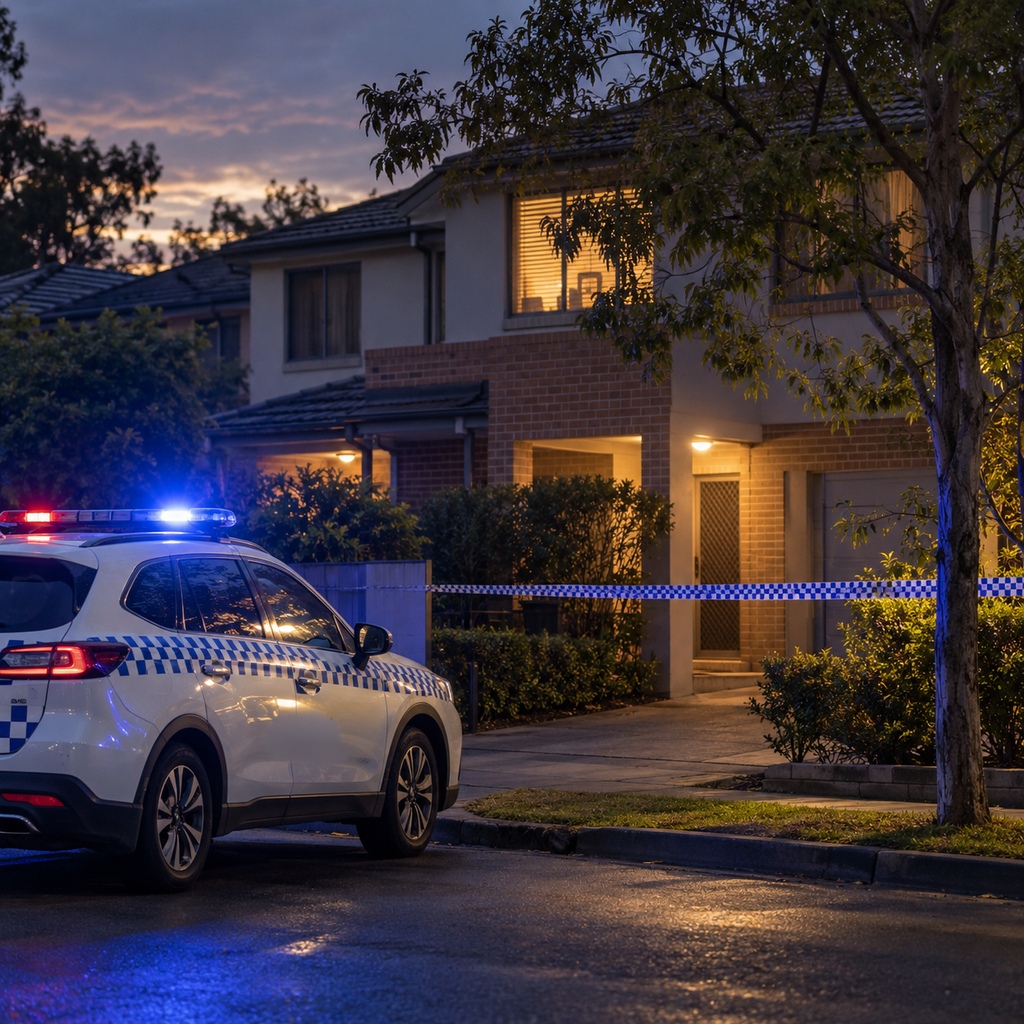
Police initially arrested three men, all then aged 18, in connection with the incident. Two were taken to The Hills Police Station and later released while inquiries continued. A third was charged with concealing a serious indictable offence and has been dealt with separately through the court process. Being arrested, released, questioned or charged are different legal events. None is proof that an individual caused a death or committed another person's alleged crime.
Following further inquiries, homicide detectives arrested a man at a correctional facility in Silverwater. Police said he was 19 at the time of the arrest but had been 18 when the shooting occurred. Investigators charged him with murder and he was remanded in custody to appear before a bail court. A remand decision concerns custody while a case proceeds; it must not be confused with a conviction or a sentencing outcome.
NSW Police issued a correction to its public information about the boy's age, explicitly confirming that he was 12. Earlier accounts may still carry the incorrect age, but NSW Police has now confirmed the child was 12. The updated information should be used when referring to the victim. The child's identity and the family's privacy remain sensitive as the investigation and legal proceedings continue. The correction is particularly significant because inaccurate early details can be repeated after authorities have issued an update.
The distinction between what police allege and what has been proved is also essential. A murder charge indicates prosecutors allege an offence meeting the legal elements of murder. It does not establish that the charge will be upheld. The accused has the ordinary right to contest the allegation, and the determination of criminal liability belongs to the courts. No finding of guilt has been made and the prosecution's case remains to be tested.
The available police statement identifies the location and the injuries but does not establish a complete motive or the precise sequence in which the firearm was discharged. Nor does it prove any public speculation about connections between people present at the unit. Such matters can become part of a police inquiry, but unless confirmed in evidence or an official statement they should not be presented as facts about this boy's death.
There is a second distinction in the public record: the original charge of concealing a serious indictable offence is not the same as the later murder charge. Combining those charges into a single accusation, or suggesting that every person questioned was involved in a killing, would misrepresent the reported proceedings. The police description records different actions taken in relation to different individuals as the investigation developed.
The killing of a child is an event with consequences far beyond a criminal file. The family has lost a young person; those who were present may have witnessed a traumatic emergency; neighbours learned that a shooting had occurred at a residential address. None of those observations establishes a motive or the guilt of any named person. The family and community remain affected while the criminal investigation continues without a complete public account of what occurred inside the unit.
Investigators have already moved from the first emergency response to a homicide inquiry and a serious criminal charge. The next stages belong to the court process and to any further investigative decisions. Evidence may be tested, allegations may be challenged and procedural developments may change the position of the accused. Until those steps occur, the most accurate account remains that a child died after being shot and a man has been charged in connection with his death.
The official NSW criminal trial guidance makes clear that the prosecution, not an accused person, carries the burden of establishing guilt beyond reasonable doubt. That burden still applies in this case, despite the seriousness of the charge and the devastating consequences of the boy's death. The alleged conduct has not been proved in court. A police press release identifies what investigators believe they can put before a court; it does not replace the evidence-testing role of a criminal trial.
Bail has a different purpose again. NSW judicial guidance distinguishes a decision about whether an accused should remain in custody from a decision about the criminal charge. A court dealing with bail may consider risks and statutory criteria rather than hearing and determining the complete prosecution case. Here, public reporting records that the accused did not obtain bail. That decision cannot be converted into an assumption that the offence has been proved. A remand prisoner remains entitled to the presumption of innocence.
Details about the ages in the original police response also need to be read carefully. Police said the three men first arrested were 18 at the time; the man later charged with murder was 19 when he was arrested in custody and 18 when the fatal incident occurred. These numbers describe stages of the same investigation, not a second child victim or a separate location. The official correction concerns the deceased boy's age and should not be confused with the age of any accused person.
The role of the nine other people at the home has not been established in the police statement beyond their presence and the fact that they were not injured. Being nearby during a shooting does not demonstrate participation in a crime. The same restraint applies to residents in the neighbourhood: the public location is known, but no verified report says that a broader community threat, a subsequent gun incident or a particular gang was responsible. An accurate account should resist filling those spaces with rumours.
News about a child's death can spread on social media faster than official corrections. NSW Police updated its release to confirm the boy was 12, and court reporting has since documented how the legal proceedings have advanced. Police have not released enough detail to establish how the gun was discharged, and the identities or roles of others at the home have not been fully disclosed.
NSW Police has not published a statement setting out a proven chain of events from possession of the weapon to the boy's injury. The Homicide Squad charge represents an important advance in the case, but it does not resolve that gap for the public. Later court documents or evidence could shed light on the circumstances. Until further evidence is heard, the motive and full sequence of events remain unresolved.
ABC court reporting has identified the man charged, although NSW Police's release is sufficient to establish the latest legal development. The charge relates to the Norwest shooting and remains subject to court proceedings. Details of the wider investigation have yet to be tested in open court. Police have continued inquiries beyond their original response, but their public account does not establish the complete sequence of events or the role of everyone at the address.
Anyone following the matter should distinguish the official police correction about the child's age from the criminal allegations yet to be determined. The victim is 12, the fatal incident occurred at Norwest, and homicide detectives are investigating. The murder allegation will be determined through the courts. The boy's death, the police investigation and the charge now before the court remain the confirmed developments.






