The National Anti-Corruption Commission’s decision to take no further action in its Operation Ivanhoe investigation has brought one inquiry involving former political staffer Bruce Lehrmann to an end. It has not ended the separate court dispute in which Lehrmann accuses former commissioner Paul Brereton of abusing investigative powers. That distinction is central to understanding what the closure means, what remains contested and why the case has raised questions about accountability within Australia’s anti-corruption system.
The commission informed Lehrmann by letter that it would not proceed with the operation, which concerned allegations involving material associated with Australia’s submarine program. The inquiry had followed allegations about classified information connected with a former defence minister’s office. A decision not to take further action in that investigation should not be described as a finding that every allegation made by every party has been disproved.
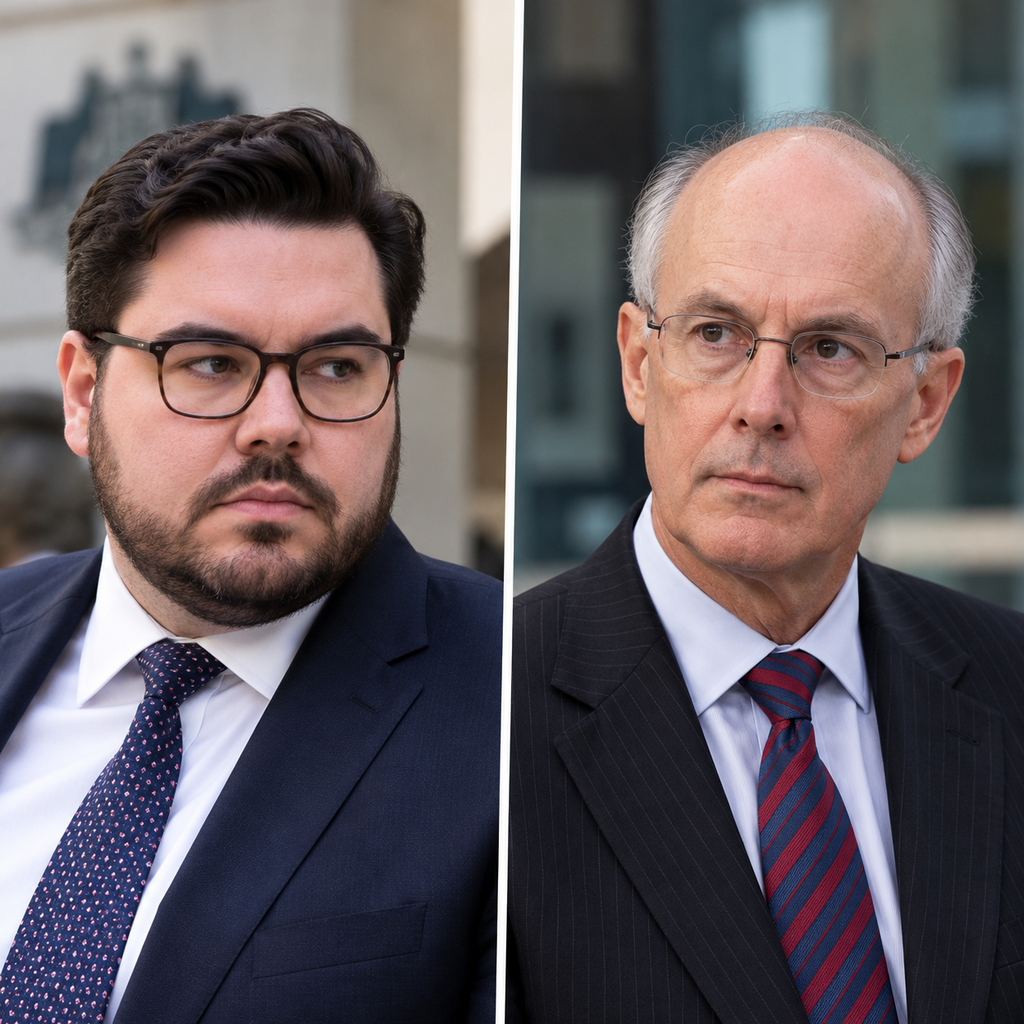
Lehrmann’s response was an unusually forceful allegation against the former head of a powerful public integrity institution. He claimed Brereton had used the commission’s authority to advance what Lehrmann described as a conspiracy portraying him as a foreign spy. His accusation is his account of events; it is not an established finding by a court or an admission by Brereton.
“Over two years the former commissioner used his powers to personally advance a conspiracy that I was a spy and traitor to the nation, selling defence secrets to foreign countries,” Lehrmann said. The accusation invokes national security and personal reputation, two issues that can have serious consequences even where an investigation ends without action.
The former political staffer has also pursued civil proceedings connected to the conduct of the investigation, naming Brereton and Special Minister of State Don Farrell. Those proceedings are separate from the commission’s decision about Operation Ivanhoe. They remain subject to the court process, and Lehrmann’s assertions about improper use of powers have not thereby become facts simply because the commission discontinued its inquiry.
The central accountability question is what should happen when someone who has been subject to an intrusive investigation believes the process itself was unlawful. Public integrity agencies need powers to collect evidence, examine witnesses and investigate allegations that might otherwise remain hidden. Those same powers can impose substantial costs on people who are investigated, particularly where matters involve secrecy or security classifications.
A commission’s decision to stop an inquiry can have several possible explanations. Investigators may conclude that further work is not warranted, that available evidence is insufficient or that another course is more appropriate. Without a detailed finding, the closure should not be read as a broad verdict about conduct outside the scope of the letter. The public should distinguish an operational decision from a judicial judgment.
Reports about Operation Ivanhoe described allegations involving material from the office of former defence minister Linda Reynolds and a diary said by authorities to contain classified information. Those accounts provide the background to the inquiry, not proof that Lehrmann unlawfully obtained or sold secrets. The commission’s communication brings its action on that particular operation to a close, rather than proving the more sensational claims that circulated around it.
Lehrmann has challenged the circumstances of searches and compulsory questioning. A dispute over those steps turns on whether statutory powers were available and exercised lawfully, what notices or authorisations were issued and whether required safeguards were observed. Such questions cannot fairly be resolved by accepting only the account of the person investigated or the fact that an agency considered an allegation serious.
Compulsory investigative powers are often broader than the tools available to ordinary private litigants. Agencies may be able to require documents or testimony under legislation designed to uncover corruption. The justification is that public wrongdoing can be difficult to investigate through voluntary cooperation. The trade-off is an especially strong duty to use those powers for proper purposes and within the limits set by law.
Confidential hearings pose another challenge. Their privacy can protect witnesses, investigations and sensitive information, yet the secrecy can make it hard for outsiders to assess a participant’s complaints. Courts and statutory oversight bodies therefore play important roles in checking whether procedural protections operated as Parliament intended. Neither secrecy nor public suspicion should stand in for verifiable evidence.
The civil proceedings carry their own financial implications. Litigation against government officials can involve substantial legal representation, document review and disputed questions about access to material. Those expenses may be borne by private parties and, depending on applicable arrangements, public entities. No specific bill or payout should be asserted without evidence, but taxpayers have an interest in how public agencies manage litigation risk.
A public body that acts within its powers still has to consider whether the investigation was conducted efficiently and fairly. Conversely, an unsuccessful or discontinued inquiry is not automatically evidence of misconduct by investigators. Investigative decisions involve uncertainty, and a legally authorised inquiry can end without a charge or referral. The difficult task is identifying the difference between an investigation that did not produce a case and one in which powers were wrongly exercised.
The distinction is important for anyone drawn into a corruption inquiry. A person may experience reputational harm, professional disruption and considerable anxiety before the commission reaches a conclusion. At the same time, premature public claims that investigators acted dishonestly can unfairly damage the people responsible for conducting the inquiry. Careful reporting should identify each allegation and its source.
Brereton’s broader tenure at the commission has itself attracted public scrutiny, but that context should not be used to merge unrelated operations. Operation Ivanhoe is distinct from other NACC investigations, including the separately identified Operation Greenough. The closure of one inquiry does not determine the status of another. Each requires its own documentary record and procedural explanation.
The episode also exists alongside other legal proceedings involving Lehrmann. Those matters should not be treated as interchangeable. In separate Federal Court defamation litigation, a judge made a civil finding concerning allegations made by Brittany Higgins under the balance-of-probabilities standard, with the outcome subsequently considered on appeal. Lehrmann denies the allegation. That litigation does not establish whether Brereton misused powers during a national security-related investigation.
Criminal proceedings, civil proceedings and integrity investigations use different legal tests and serve different purposes. Confusing them can create the false impression that one decision vindicates or condemns a person in every other context. The most accurate account sets out which institution made a decision, the legal question it considered and the limits of its conclusion.
There is an obvious national security dimension when an inquiry involves classified defence information. Governments have strong reasons to protect sensitive procurement and intelligence material, particularly where such information could affect partnerships or defence capability. But security classification does not remove the need for lawful investigation, and a suspicion that material is sensitive does not prove an individual committed espionage.
Australia’s submarine arrangements represent major long-term expenditure and strategic commitments. That broader importance helps explain why allegations about documents associated with the program can attract attention. It does not justify extrapolating from an allegation about documents to an unsupported claim that a person actually sold secrets to another country. Lehrmann rejects that characterisation and has used highly charged language in criticising it.
Another issue is the nature of public communication by an integrity body. Agencies often cannot disclose all evidence, particularly when they have used confidential powers. Even so, the way an inquiry is closed can affect public understanding and the reputation of those involved. Clear language explaining what is no longer being pursued, while avoiding broader conclusions not supported by the record, can protect the legitimacy of the institution.
An integrity agency also has to maintain public confidence among people who might report suspected wrongdoing. If every discontinued inquiry were taken as proof of abuse, legitimate investigations could become harder to conduct. If every complaint about investigative overreach were dismissed on the ground that corruption inquiries are inherently sensitive, important safeguards would lose force. Independent review must preserve room for both concerns.
A claim involving alleged misuse of power by a commissioner is especially serious because the office exists to examine integrity in the public sector. Any finding about that allegation must come through a process able to test documents, statutory authority and evidence from the relevant parties. At present, Lehrmann’s claims against Brereton are contested, and there is no basis to present them as established misconduct.
The strongest questions for the legal process are specific. What powers were invoked? What factual grounds were recorded for their use? What material was sought or obtained? Were any decisions influenced by an improper purpose? Did the law provide remedies if requirements were not met? Those are questions about evidence and legal authority, not political preference.
For Australians paying for public integrity institutions, the issue reaches beyond one named investigation. These agencies are expected to detect wrongdoing while protecting civil liberties, reputation and due process. The cost of maintaining oversight can be justified only if there is confidence that powers are used competently and that complaints about misuse can be examined impartially.
Operation Ivanhoe’s closure is therefore a significant procedural development, but not a universal clearing of the legal slate. It ends the commission’s action on the particular submarine-related investigation described in its letter. Lehrmann’s civil claims remain matters for the courts, other commission operations are separate, and no unsupported accusation should be promoted into a finding.
The episode ultimately illustrates the balance required of an anti-corruption system: enough investigative authority to deal with difficult public-interest allegations, and enough independent legal restraint to ensure that power does not outrun its purpose. The distinction between a closed inquiry and a proven abuse of power is not technical wordplay. It is what makes the account fair to every person and institution involved.






