A question about family background brought a press conference to an abrupt and uncomfortable confrontation when federal MP Bob Katter angrily challenged Nine reporter Josh Bavas. Katter was speaking about migration and national identity. Bavas asked about the MP's Lebanese heritage, apparently seeking to connect the policy argument with the story of families who have made a life in Australia. Katter replied with language about punching people, accused the journalist of racism and moved towards him while gesturing forcefully. The exchange raised questions about political accountability and the safety of reporters asking difficult questions.
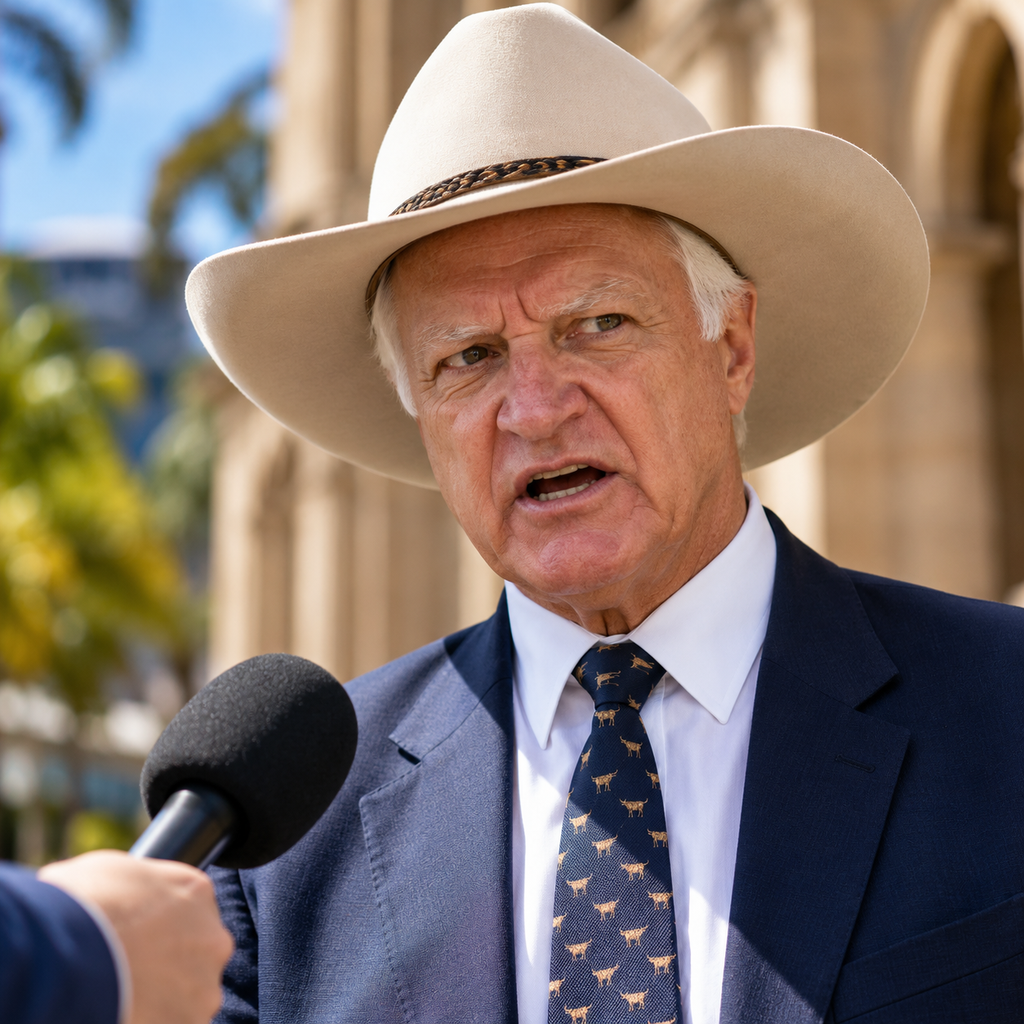
The setting was important. Katter had been discussing his support for a March for Australia event and arguing that newcomers should embrace principles such as democracy and the rule of law. Those policy claims were his opinions about immigration and belonging, not findings by an independent authority. A reporter questioning the consistency of such arguments could reasonably ask how a politician's own family story influenced his thinking. But family origins are personal, and an interviewer must take care not to imply that a person's citizenship or loyalty is somehow reduced by their ancestors' place of birth.
Bavas's attempt to ask about Lebanese ancestry provoked an immediate reaction. Katter said, “I've punched blokes in the mouth for saying that,” and called the journalist a racist. Footage shows the MP approaching, pointing and waving a fist as the exchange intensified. It is crucial not to report that he struck Bavas. The public evidence supports an angry verbal confrontation and threatening gestures, not a completed physical assault. Nor should an image recreate a punch that did not occur, however dramatic such an illustration might look.
Bavas sought to explain the purpose of his question. His point, as reported in the coverage of the encounter, concerned the value and contribution of migrants to Australian life, including families with a long history in the country. The reporter described the response as extraordinary. Katter rejected the premise that his heritage was relevant in the manner suggested and insisted on his Australian identity. Those competing perspectives are part of the record, but they do not amount to a conventional two-sided political debate with exchanged policy proposals.
Nine's head of news and current affairs, Fiona Dear, condemned the MP's behaviour and demanded an apology. The network argued that a journalist should not be intimidated for putting a legitimate question to a public figure. Katter, for his part, called for an apology from the reporter. A demand for an apology is not evidence that one was delivered. The most accurate account is that both sides criticised the other's conduct after the heated encounter and that the journalist was not physically attacked in the available footage.
The underlying migration debate deserves its own scrutiny. Decisions about visas, residency and citizenship have practical consequences for employers, students, universities, regional communities and families. A politician's claims about who should be admitted can influence public opinion well beyond a rally or a press conference. To assess those proposals fairly, audiences need to know whether the speaker is referring to permanent migration, temporary workers, humanitarian entrants or a cultural test. Mixing all migrants together produces more heat than clarity.
Migration policy also has an economic dimension. Employers in health care, construction, agriculture and other industries may rely on people born overseas, while growing populations can place additional pressure on housing, transport and public services when planning fails to keep up. Those different effects cannot be compressed into a claim that all migration is either a universal economic benefit or a universal burden. The sensible questions concern the composition and pace of intake, the needs of particular regions and the government's capacity to provide infrastructure. The Katter–Bavas confrontation did not provide evidence to quantify those impacts.
Family heritage is relevant to the argument because Australia's migration history cuts across many political identities. A person may be an Australian citizen whose parents, grandparents or more distant ancestors came from elsewhere, without that fact explaining their policy preferences. Katter's reaction underscored the sensitivity of that distinction. His insistence on being Australian was compatible with having Lebanese ancestry. The reporter's question tested political consistency; it did not establish that ancestry should determine how the MP voted or what position he was permitted to take on immigration.
This tension also affects how journalists frame questions. It is legitimate to ask an elected representative whether personal experience has informed a position. It is less useful to frame family origins as an accusation or a test of authentic citizenship. The journalist must be able to explain the public-interest connection between biography and policy. Equally, the politician's right to reject a premise does not require physical intimidation. He can refuse, correct a misunderstanding or argue that the question is irrelevant without advancing towards the person asking it.
Political press conferences are not private conversations. They are settings in which reporters represent the public's right to hear explanations about decisions and claims. Journalists may ask pointed, awkward or even clumsily worded questions, and politicians may challenge them. The balance changes when a confrontation includes statements about hitting people and aggressive movements. That behaviour can discourage further questioning even without physical contact. Whether it constitutes a particular legal offence would require facts and legal assessment beyond the footage; it should not be asserted as a criminal finding.
There is a financial issue for media organisations as well. Newsrooms invest in reporting, legal review, security, travel and staff support. Intimidation and hostility can increase the cost of covering public events, especially for smaller regional outlets that lack large security teams. This is a general operational risk rather than a documented bill arising from this encounter. Nine's demand for an apology spoke to the workplace and professional context in which Bavas was doing his job. The story is not only about the embarrassment of a politician caught on camera.
Katter's long public career and distinctive speaking style also shaped the reaction. He is known for confrontational remarks and deeply held views about rural communities and Australian identity. Familiarity with that manner of speaking does not settle whether a particular exchange was acceptable. A colourful political reputation can make an outburst more likely to attract attention, but it cannot turn a threatening gesture into a harmless joke by definition. The actual words, context and footage must be assessed on their own merits.
Claims of racism require particular care. Katter used the label against Bavas, but the accusation was part of a disputed encounter. Reporting it as an established description of the journalist would unfairly convert one participant's allegation into a finding. Bavas's explanation of his question should appear alongside the accusation. Likewise, criticism of Katter's response should focus on documented speech and behaviour rather than inventing a wider intention that he did not express. Both people remain entitled to accurate representation.
Australia's public discussion about migration often shifts quickly from policy settings to personal identity. A debate about the number of visas issued can become a debate about whether particular communities belong. A discussion about housing shortages can be transformed into assumptions about migrants' motives. Such shifts make scrutiny harder, not easier, because they replace testable questions about public administration with arguments about character. Acknowledging that migration creates both opportunities and pressures does not justify treating a reporter's background or a politician's ancestry as evidence of disloyalty.
There is a practical alternative to the spectacle. Politicians can specify which migration settings they want changed, what evidence supports those changes and what effects they expect on infrastructure, labour supply and regional services. Reporters can test the claims against published data and the experience of affected communities. If a personal question is relevant, its purpose can be explained clearly. That approach produces information a voter can use, rather than a confrontation whose most memorable detail is a raised fist.
The right to ask questions extends to regional and independent media as much as to major broadcasters. Smaller reporting teams may have fewer staff members available to help when a public encounter turns hostile, yet their audiences depend on scrutiny of the same decisions about services, infrastructure and government spending. The Katter confrontation involved a national network, but its significance is not limited to that newsroom. The practical standard is whether a reporter can continue asking relevant questions without fear that a person's position or physical presence will be used to end the conversation.
For voters who genuinely want changes to migration settings, anger at one reporter answers very little. Useful proposals would identify the applicable visas, define the evidence for a policy change, assess effects on business and housing, and explain whether regional labour shortages would be addressed. Those choices can be disputed vigorously. They do not require a politician to deny a family history or a journalist to surrender the right to examine an argument.
The public record of the Katter–Bavas exchange is powerful precisely because its limits are clear. An angry statement about punching people was made; the reporter was called racist; a network executive sought an apology; no physical blow was shown. It remains an example of how a legitimate argument about migration can be derailed when the response to scrutiny becomes a personal attack. Australians can disagree strongly about immigration while insisting that political figures answer questions without intimidating the people whose job is to ask them.






