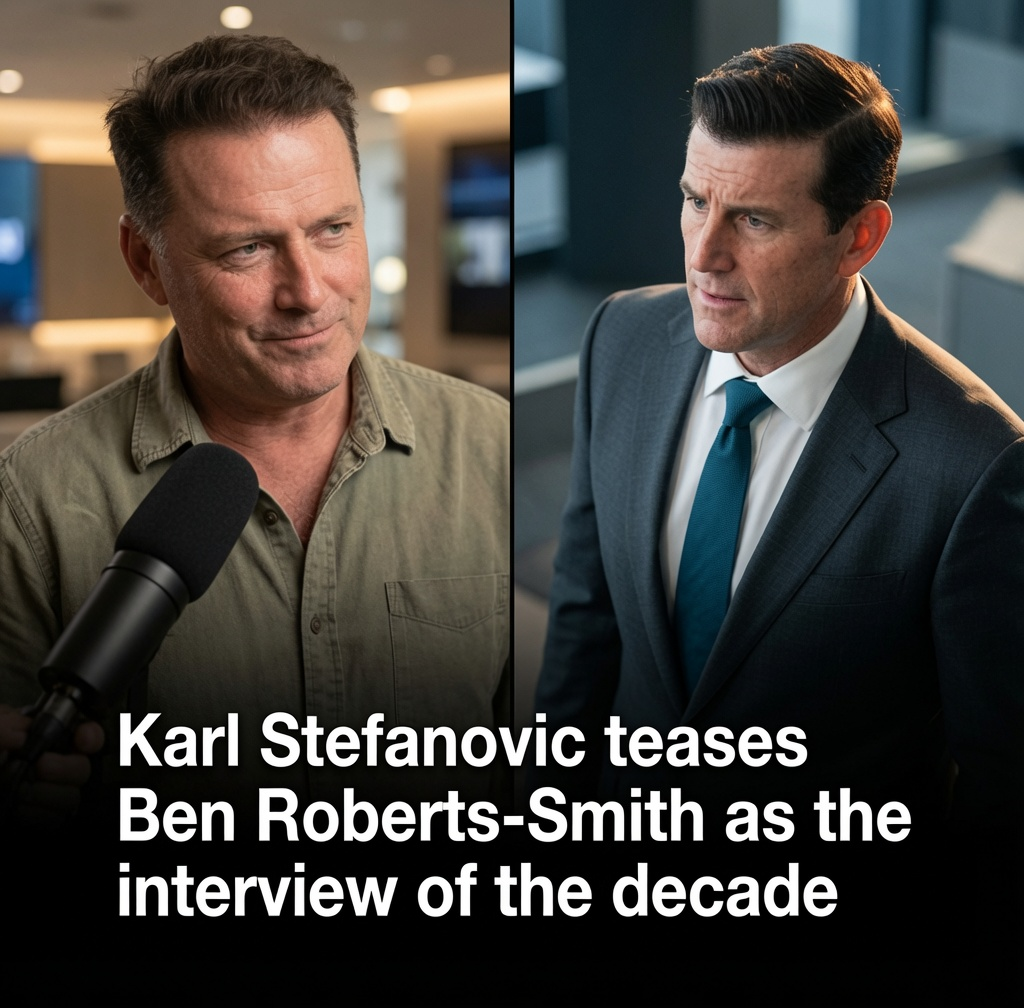
Former Today host Karl Stefanovic has fuelled speculation that his independent podcast could soon feature Australia’s most decorated living soldier, Ben Roberts-Smith VC MG, after refusing to rule out the possibility during a brief encounter with reporters in Sydney.
The comments came as Nine Entertainment continues reshaping its news operations, announcing another round of newsroom redundancies while expanding its digital-first strategy.
According to The Sydney Morning Herald‘s CBD column, Stefanovic was approached after leaving a North Sydney health club and asked directly whether Roberts-Smith would appear on his independent podcast.
Stefanovic initially replied, “I haven’t chatted with him yet,” before adding, when pressed further, “You’ll have to watch, my friend.” The response has prompted widespread speculation that discussions may be underway, although neither Stefanovic nor Roberts-Smith has confirmed that an interview has been arranged.
If such an interview were to proceed, it would likely attract significant national attention.
Roberts-Smith remains one of Australia’s best-known military figures after being awarded the Victoria Cross for Australia and the Medal for Gallantry for his service in Afghanistan. At the same time, he has been at the centre of years of legal proceedings arising from allegations concerning his conduct during military deployments.
In 2023, the Federal Court dismissed Roberts-Smith’s high-profile defamation action against Nine Entertainment newspapers over reporting published by The Sydney Morning Herald, The Age and The Canberra Times, finding that substantial truth had been established for a number of the serious allegations raised in the reporting. Roberts-Smith has appealed that judgment, and the appeal remains before the courts. Because legal proceedings continue, many aspects of the matter remain subject to ongoing judicial consideration.
That legal context would make any extended interview particularly significant.
Roberts-Smith has rarely participated in lengthy media interviews since the commencement of the litigation, making any appearance on a widely followed platform likely to attract intense public and media interest.
Stefanovic’s comments also come during a period of significant professional change.
After more than two decades with Nine, the veteran broadcaster recently departed the network following disagreements surrounding the direction of his independent podcast. Nine Entertainment said both parties had mutually agreed it was no longer possible for Stefanovic to continue hosting Today while simultaneously operating his independent media platform.
His podcast has since featured a range of prominent political and international guests, reflecting Stefanovic’s move away from traditional breakfast television towards long-form independent interviews.
The possibility of a Roberts-Smith interview would represent another high-profile booking, although no recording or publication date has been announced.
The speculation unfolded at the same time Nine announced another round of newsroom restructuring.
The company confirmed approximately 30 editorial positions across its metropolitan mastheads would be made redundant as part of an organisational restructure intended to accelerate its digital-first publishing strategy.
Nine chief executive Matt Stanton described the decision as part of broader changes across the company’s news operations, saying the business was adapting to rapid changes in how audiences consume journalism.
While artificial intelligence forms part of Nine’s long-term newsroom transformation, Stanton said the latest redundancies were “not directly” caused by AI itself but by the broader need to reshape the business for changing media consumption and production models.
The announcement nevertheless sparked concern among journalists and media unions.
The Media, Entertainment & Arts Alliance (MEAA) criticised the reductions, arguing fewer journalists would inevitably increase workloads and place additional pressure on newsroom resources at a time when Australians continue to rely on trusted public-interest journalism.
Nine has responded that it remains committed to investing in quality journalism while modernising newsroom workflows and digital publishing capabilities.
The juxtaposition of Stefanovic’s podcast speculation and Nine’s newsroom changes has highlighted broader changes occurring across Australia’s media industry.
Traditional television broadcasters and newspaper publishers have increasingly invested in digital subscriptions, podcasts, streaming video and audience-driven online content as advertising markets and viewing habits continue to evolve.
Independent podcasts hosted by established television personalities have become an increasingly prominent part of that landscape, allowing presenters greater editorial freedom while building audiences outside conventional broadcast schedules.
Stefanovic is among several high-profile Australian broadcasters who have recently expanded into long-form podcasting, reflecting broader international trends in news and current affairs media.
Whether that model ultimately proves more commercially successful than traditional broadcast television remains uncertain, but podcasts have become an increasingly influential platform for extended political and public-interest interviews.
For Roberts-Smith, any future media appearance would likely be examined closely because of the continuing legal proceedings.
Australian media organisations remain subject to strict legal obligations when reporting on matters before the courts. As a result, any interview would need to navigate ongoing litigation carefully to avoid prejudicing legal processes or making claims that extend beyond issues already addressed publicly.
Neither Roberts-Smith nor his legal representatives have publicly confirmed that an interview with Stefanovic has been arranged.
Likewise, Stefanovic has not elaborated beyond his brief comments to reporters.
As a result, speculation about what could become one of Australia’s most closely watched media interviews remains just that—speculation.
What is clear, however, is that Stefanovic’s transition from mainstream television to independent podcasting continues to generate considerable attention. At the same time, Nine’s latest newsroom restructuring reflects the continuing transformation of Australia’s media industry as publishers seek to balance editorial investment with the commercial realities of a rapidly changing digital environment.






