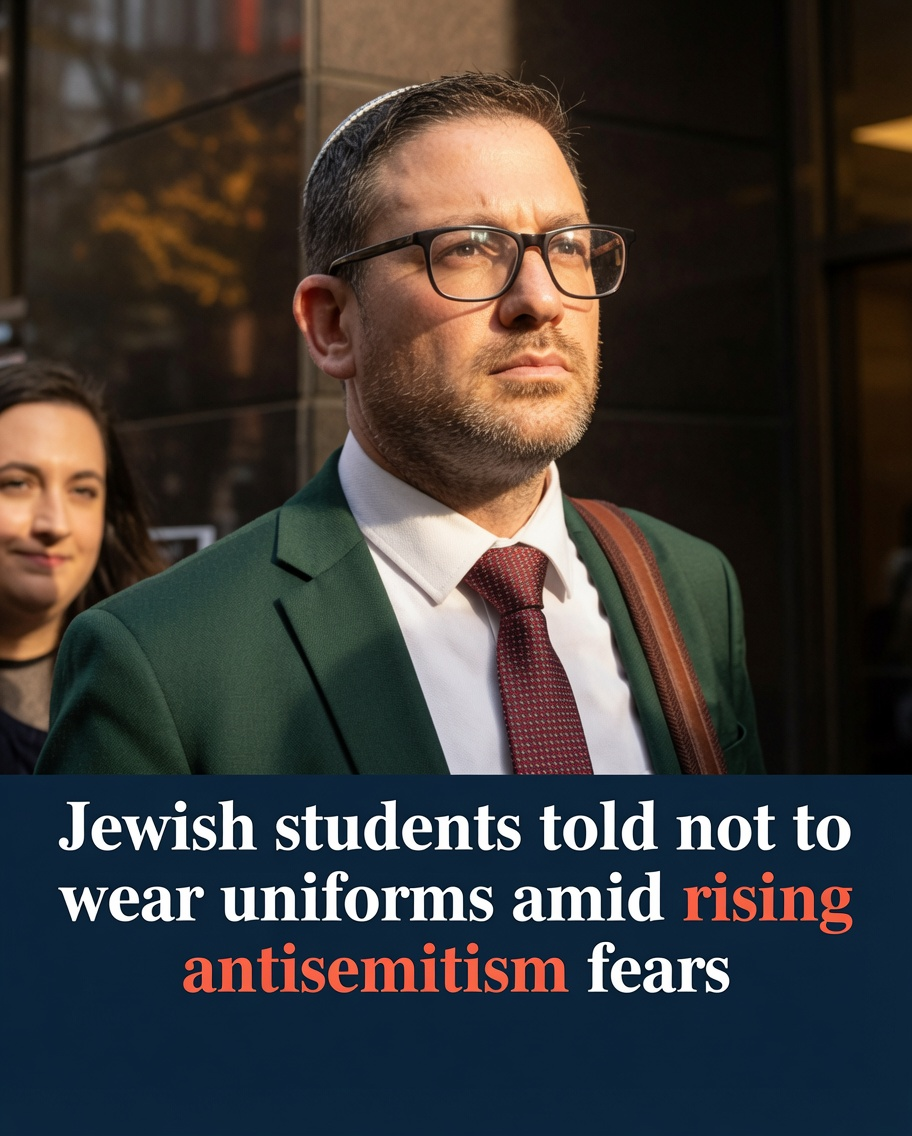
Young Jewish Australians are being taught how to navigate difficult conversations about their faith and, in some cases, encouraged to conceal visible signs of their Jewish identity during school excursions and community activities because of fears they could become targets of antisemitic abuse or violence.
The confronting evidence emerged during public hearings of Australia’s Royal Commission on Antisemitism and Social Cohesion, where community leaders, educators and youth representatives described what they said was a profound deterioration in the sense of safety experienced by many Jewish Australians, particularly children.
Witnesses told the commission that many young Jewish people are growing up in an environment where security planning has become a routine part of school life and community events.
One youth camp leader, identified only as Witness ACV to protect her identity, described changing the way activities are conducted so that children are less visible in public while wearing clothing or symbols that could identify them as Jewish.
She said organisers now carefully assess locations, transport arrangements and public exposure because of concerns about antisemitic incidents.
The commission also heard that some children are coached before school excursions about how to respond if questioned about their religion or background.
According to witnesses, these conversations are intended to prepare students for situations in which they may encounter hostility or harassment because they are Jewish.
Community representatives said such guidance would have been almost unimaginable only a few years ago.
Rabbi Allison Conyer, New South Wales’ first female rabbi, gave emotional evidence describing the experiences of her own family and members of her congregation.
She told the commission that Jewish children have been subjected to abuse including being called “genociders”, excluded from social activities and confronted with hateful language linked to events in the Middle East.
Rabbi Conyer also described an incident in which a passing motorist allegedly shouted that they were “hunting Jews”, illustrating what she said was an increasingly hostile environment confronting Jewish Australians.
Other witnesses described children becoming frightened to attend camps, schools and community events.
The commission heard testimony that some young people had expressed fears for their personal safety while staying at youth camps, with counsellors needing to reassure children who worried they could be attacked during the night.
School leaders also described significant changes to daily life.
Evidence presented to the commission indicated that some Jewish schools have advised students not to wear identifiable uniforms outside school grounds or while travelling because of security concerns.
Several schools have substantially increased spending on security personnel, surveillance systems and protective infrastructure since late 2023 as reported incidents of antisemitism have increased.
Witnesses said these additional security measures come at a significant financial and emotional cost.
Parents, they argued, are increasingly raising children who have never known school life without security guards, police presence or discussions about personal safety linked to their religious identity.
Community leaders told the commission that this has become a defining feature of childhood for many Jewish students in Australia.
The Royal Commission on Antisemitism and Social Cohesion was established by the Federal Government in January 2026 following the Bondi Beach terrorist attack and a broader rise in antisemitic incidents across Australia.
Former High Court Justice Virginia Bell is leading the inquiry, which has been tasked with examining the causes of antisemitism, recommending ways to strengthen social cohesion and advising governments on measures to improve public safety. An interim report has already been released, with the commission’s final report due later this year.
During the current hearings, representatives from Jewish organisations argued that antisemitism has become increasingly visible in schools, universities, workplaces and public spaces.
Several witnesses said criticism of the Israeli government had, in some cases, crossed into hostility directed at Jewish Australians regardless of their personal political views.
Others maintained that many Jewish Australians now feel compelled to consider their personal safety in situations that previously attracted little concern.
The hearings also explored the distinction between legitimate political debate and antisemitism.
Some witnesses argued that criticism of Israeli government policies should remain protected as political expression, while emphasising that harassment or intimidation of Jewish Australians because of their identity is unacceptable.
The commission has received submissions reflecting a wide range of perspectives on where that distinction should be drawn and how governments should respond.
Police engagement was another significant topic.
The Executive Council of Australian Jewry and other community organisations told the commission that, despite ongoing cooperation with police, many community members continue to feel unsafe because of repeated incidents involving threats, vandalism and antisemitic abuse.
They argued that stronger preventive measures and more consistent enforcement would help restore confidence.
Evidence presented during the hearings suggested that concerns extend well beyond isolated incidents.
Witnesses described children becoming reluctant to publicly display Jewish symbols, families reconsidering participation in community events and some people questioning whether Australia remains as welcoming as they once believed.
Community leaders said these changes have occurred gradually but have accelerated following a series of high-profile antisemitic incidents over recent years.
The commission also heard that educators are attempting to prepare students for difficult questions that may arise from international conflicts while helping them distinguish between political disagreement and discrimination directed at individuals because of their religion.
Those involved in youth education said the objective is not to isolate children but to equip them with confidence, resilience and practical strategies for responding to challenging situations in a safe manner.
Experts appearing before the inquiry stressed that protecting religious freedom and ensuring public safety are essential components of Australia’s multicultural society.
They argued that children of every faith should be able to attend school, participate in community activities and express their identity without fear of intimidation or violence.
The commission is expected to consider additional recommendations relating to education, policing, community security and social cohesion before delivering its final report.
Government ministers have previously committed to implementing recommendations aimed at strengthening Australia’s response to antisemitism while maintaining broader protections for civil liberties and freedom of expression.
Exactly what additional measures may follow the current hearings will depend on the commission’s final findings and any subsequent legislative or policy decisions by federal and state governments.
For many of the witnesses, however, the issue is already deeply personal.
They told the commission that the most troubling consequence of rising antisemitism is not simply the increase in security costs or public incidents, but the reality that some Australian children now feel the need to think carefully about whether it is safe to openly express their religious identity.






