Victorian Opposition Leader Jess Wilson has unveiled a detailed law-and-order agenda, promising tougher bail rules, stronger sentencing and increased police support if the Liberal-Nationals Coalition wins government at the November state election.
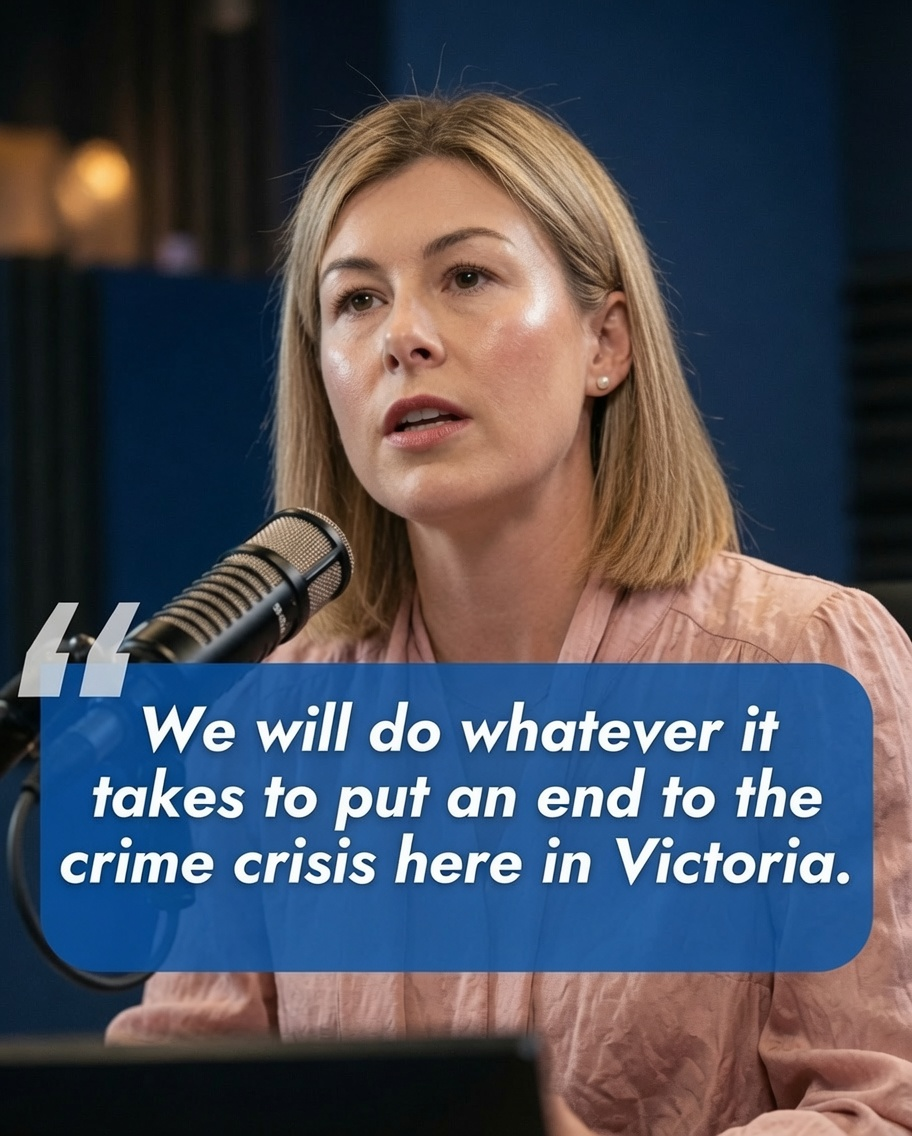
Speaking during an interview on 3AW Mornings with Tom Elliott, Wilson argued that Victorians had lost confidence in the state’s justice system and said a Coalition government would move quickly to strengthen bail laws for repeat offenders.
“For serious offences … if you are given the privilege of bail on your first offence, but then you offend again, there are no ifs, no buts, you are held on remand until your court is heard,” Wilson said.
She added that a Coalition government would “do whatever it takes to put an end to the crime crisis here in Victoria”, describing community safety as her highest priority.
The proposal forms part of a broader Opposition strategy centred on law and order, an issue that has become increasingly prominent following a series of high-profile violent incidents across Melbourne and regional Victoria over the past year.
Recent public concern has focused on youth violence, aggravated burglaries, knife-related offending and organised criminal activity, with incidents at shopping centres and in suburban communities attracting widespread media attention.
Wilson argued that repeat violent offenders should not continue receiving bail after allegedly committing further serious crimes while already released by the courts.
According to the Opposition, tightening remand rules would improve community safety while restoring public confidence in Victoria’s justice system.
The Allan Government has previously defended recent bail reforms, arguing they strike an appropriate balance between protecting the community and preserving the legal principle that people are presumed innocent until proven guilty.
Government ministers have also pointed to additional police funding, stronger knife laws and new legislation banning machetes as evidence that Labor is responding to changing crime trends.
The Coalition, however, maintains those measures came too late and do not go far enough to address repeat offending.
Wilson said sentencing policy must place greater emphasis on protecting victims and the wider community rather than repeatedly giving serious offenders additional opportunities while on bail.
Beyond crime, Wilson used the interview to outline several broader policy priorities that she says would distinguish a Coalition government.
One proposal involves introducing a hiring freeze across much of the Victorian public service.
Wilson argued that reducing growth in the bureaucracy would help restore the state’s finances while allowing greater resources to be directed towards frontline services such as policing, healthcare and emergency services.
She stressed that essential frontline workers would remain a priority, with any workforce reductions intended to focus primarily on administrative functions rather than operational services.
Victoria’s growing debt burden also featured prominently in the discussion.
The Opposition argues that years of large-scale borrowing have reduced the state’s financial flexibility and increased pressure on future budgets through higher interest costs.
Wilson said stronger financial discipline would be required if the Coalition formed government, while maintaining investment in essential infrastructure and frontline services.
The Allan Government has defended its borrowing strategy, arguing that major investments in transport, hospitals, schools and other infrastructure are necessary to support Victoria’s long-term economic growth and rapidly expanding population.
Government figures have also highlighted forecasts showing a return to an operating surplus while acknowledging that debt levels remain elevated due to extensive infrastructure spending and the financial impact of the COVID-19 pandemic.
The interview also touched on the future of the multibillion-dollar Suburban Rail Loop.
Wilson reiterated Coalition concerns about the project’s cost and questioned whether it should remain the state’s highest infrastructure priority while Victoria faces pressure on healthcare, policing and cost-of-living issues.
The Suburban Rail Loop remains one of Labor’s signature infrastructure commitments, with the government arguing it will transform Melbourne’s transport network and support future housing growth.
Opponents contend that the project’s cost could crowd out funding for other essential public services.
Police resourcing formed another major element of Wilson’s agenda.
She said frontline officers require greater support, additional resources and legislative reforms that allow them to respond more effectively to repeat violent offenders.
Police organisations have consistently highlighted growing operational pressures associated with increasing demand, youth offending, organised crime and complex investigations.
Wilson also addressed environmental and regional issues during the interview, including duck hunting.
The topic has remained politically sensitive in Victoria, where debates continue between conservation groups seeking permanent bans and regional communities arguing that regulated hunting remains an important tradition supported by scientific management of waterbird populations.
Political analysts say Wilson’s appearance reflects the Coalition’s broader campaign strategy of focusing heavily on crime, public safety and government accountability ahead of the November election.
Polling in recent months has suggested law and order has become one of the most significant concerns for Victorian voters alongside housing affordability, healthcare and the state’s financial position.
Labor, meanwhile, argues the Opposition’s proposals rely too heavily on tougher sentencing without adequately addressing the underlying causes of offending.
Government ministers have highlighted investments in youth intervention programs, community policing, mental health services and crime prevention initiatives alongside legislative reforms targeting knife crime and organised criminal activity.
The political divide therefore centres not on whether crime should be reduced, but on how that objective is best achieved.
The Coalition argues stronger penalties, stricter bail laws and increased police powers are essential to restoring public confidence.
Labor maintains that enforcement should be combined with prevention, rehabilitation and long-term investment in community safety.
As Victoria moves closer to election day, crime policy is expected to remain one of the campaign’s defining battlegrounds.
Wilson’s proposals signal that a Coalition government would pursue a substantially tougher approach to repeat offending, while the Allan Government continues to defend its existing reforms and broader public safety agenda.
With voters increasingly focused on security, justice and the cost of living, both sides are expected to place law and order at the centre of their election campaigns in the months ahead.






