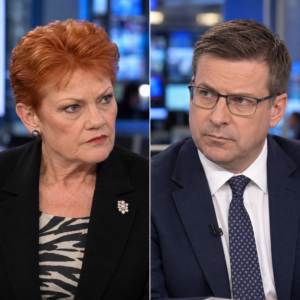
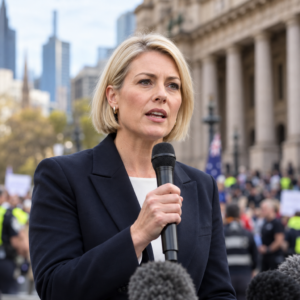
Deputy Liberal leader Jane Hume has ruled out any formal coalition agreement between the Liberal Party and Pauline Hanson’s One Nation, declaring that the Coalition has no intention of entering into a governing partnership with the minor party.
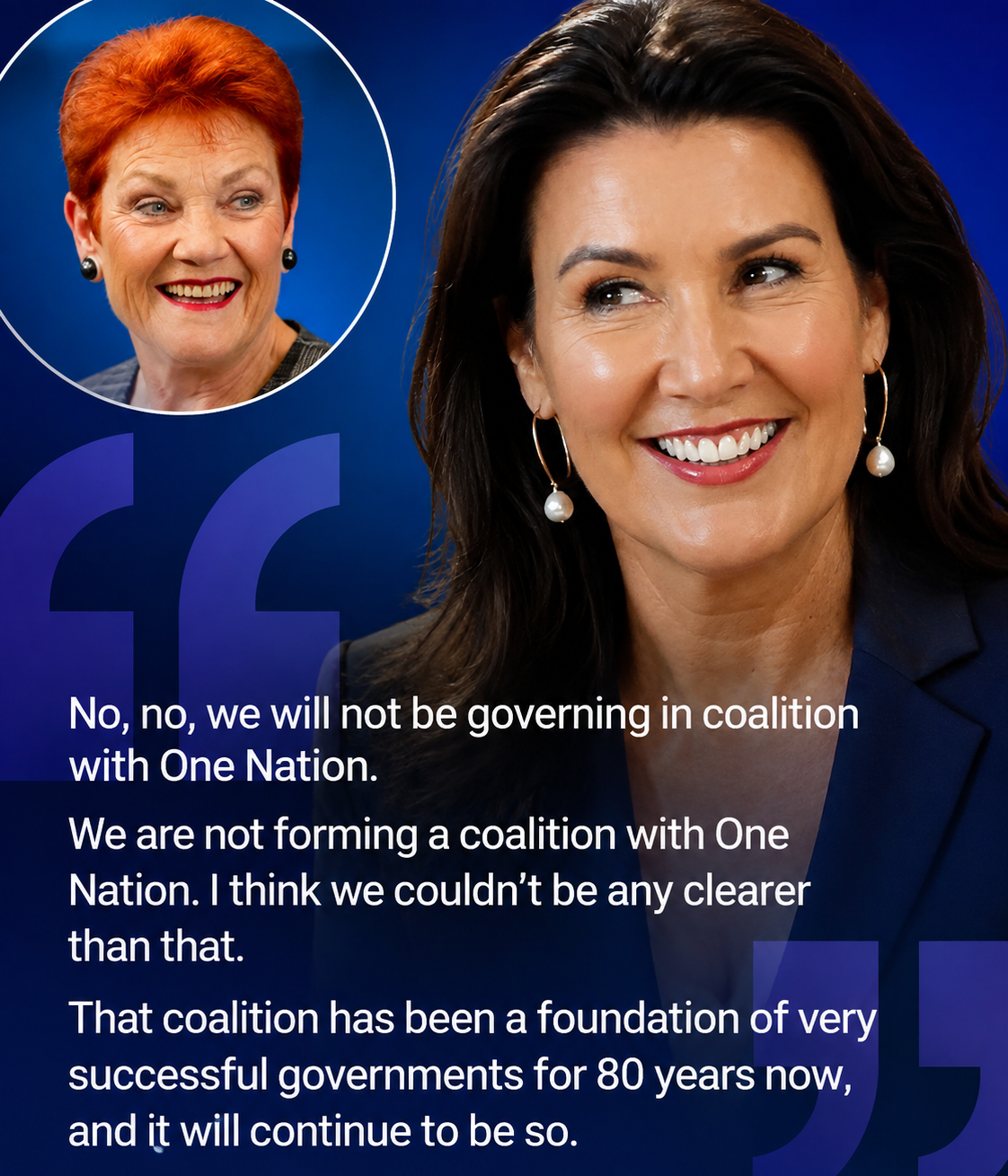
Appearing on ABC’s Insiders, Senator Hume said suggestions that the Liberal Party could eventually form a formal coalition with One Nation were misplaced, making it clear that the longstanding partnership between the Liberal Party and the National Party remains the Coalition’s only governing arrangement.
“No, we will not,” Hume said when asked whether the Liberal Party would enter a formal coalition agreement with Pauline Hanson’s party, seeking to end weeks of speculation surrounding the issue. Her remarks come after several months in which questions about the Coalition’s relationship with One Nation have repeatedly surfaced amid the minor party’s improved polling and electoral momentum.
The comments represent one of the clearest statements yet from the Liberal leadership after earlier interviews from senior Coalition figures generated conflicting interpretations about whether some form of future arrangement could eventually emerge if electoral arithmetic demanded it.
While Hume categorically rejected a formal coalition, her comments do not automatically rule out every form of parliamentary interaction after an election. In Australia’s political system, formal coalition agreements, preference arrangements during election campaigns and post-election negotiations are separate political mechanisms that often become confused during public debate.
A formal coalition involves parties agreeing to govern together, share cabinet positions and operate under a joint agreement. The Liberal Party has maintained such a partnership with the National Party for decades.
Preference arrangements, by contrast, concern how parties recommend voters allocate preferences under Australia’s preferential voting system. These decisions are generally made closer to election day after candidates and policies have been finalised.
The distinction has become increasingly important as One Nation has expanded its electoral footprint and positioned itself as a significant force in several regional and outer suburban electorates.
Questions surrounding the relationship intensified earlier this year after different Liberal figures gave varying responses when asked whether cooperation with One Nation could ever occur following a closely contested election.
Earlier interviews saw senior Coalition figures decline to completely close the door on hypothetical future scenarios, while others stressed that the Liberal Party remained focused solely on governing alongside the Nationals. Those differing responses fuelled political debate and prompted repeated questioning from journalists over whether the Coalition’s position had shifted.
Hume’s latest appearance sought to provide a more definitive answer, reaffirming that the Coalition’s existing partnership remains unchanged despite One Nation’s growing profile.
The issue has attracted heightened attention because opinion polling throughout 2026 has suggested One Nation has been increasing its support in several parts of Australia, particularly among voters dissatisfied with both major parties.
That rise has placed additional pressure on the Coalition as it attempts to recover ground after recent electoral setbacks while simultaneously preventing conservative votes from drifting toward minor parties.
One Nation leader Pauline Hanson has repeatedly argued that her party offers an alternative for conservative voters frustrated with both Labor and the Coalition. At the same time, Hanson has maintained that One Nation intends to contest seats aggressively rather than operate as a junior partner to another political party.
The relationship between the Coalition and One Nation has long been politically sensitive. While both parties sometimes appeal to overlapping voter groups on issues such as immigration, cost of living, energy policy and national security, they remain separate political organisations with distinct policy platforms and leadership structures.
Political analysts have frequently noted that any formal governing alliance would carry significant risks for both sides, potentially alienating moderate Liberal voters while also undermining One Nation’s appeal as an independent alternative to the major parties.
For the Liberal Party, maintaining a clear distinction may also help reassure metropolitan and moderate electorates that have become increasingly competitive in recent elections.
For One Nation, remaining outside a formal coalition allows the party to continue presenting itself as an independent voice capable of criticising both Labor and the Coalition whenever it chooses.
The debate has unfolded against the backdrop of broader questions about how Australia’s centre-right parties should respond to changing voting patterns and the increasing fragmentation of the electorate.
Unlike previous decades, support for Australia’s two major political blocs has become more dispersed, with voters increasingly backing independents and minor parties across both houses of parliament.
That trend has complicated election strategy for major parties, making preference negotiations and crossbench relationships increasingly significant in determining parliamentary outcomes.
Although Hume ruled out a formal coalition agreement, preference decisions for future elections remain a separate matter and are traditionally considered much closer to polling day after candidate fields and campaign strategies are settled.
Those arrangements often vary between electorates and are influenced by local political circumstances rather than broad ideological alignment alone.
The renewed attention surrounding One Nation also follows the party’s expanded campaign activity across several states, including Victoria, where Pauline Hanson recently launched candidates while continuing to criticise both Labor governments and elements of the Coalition.
For now, Hume’s message appears intended to remove uncertainty over one of the most persistent political questions confronting the Coalition in recent months.
Whether that clarification is sufficient to end speculation may depend on future electoral developments, particularly if polling continues to indicate that One Nation could play an influential role in determining the balance of power after Australia’s next federal election.
As campaigning gradually intensifies, both major parties are expected to face continued scrutiny over how they would approach negotiations in the event of a closely divided parliament. Hume’s latest comments, however, leave little doubt about the Liberal Party’s position on one specific question: there will be no formal coalition agreement with Pauline Hanson’s One Nation.