Victoria has entered one of the most significant political transitions in more than a decade after Premier Jacinta Allan resigned, bringing to an end weeks of mounting speculation over her leadership and triggering a rapid transfer of power to Deputy Premier Ben Carroll.
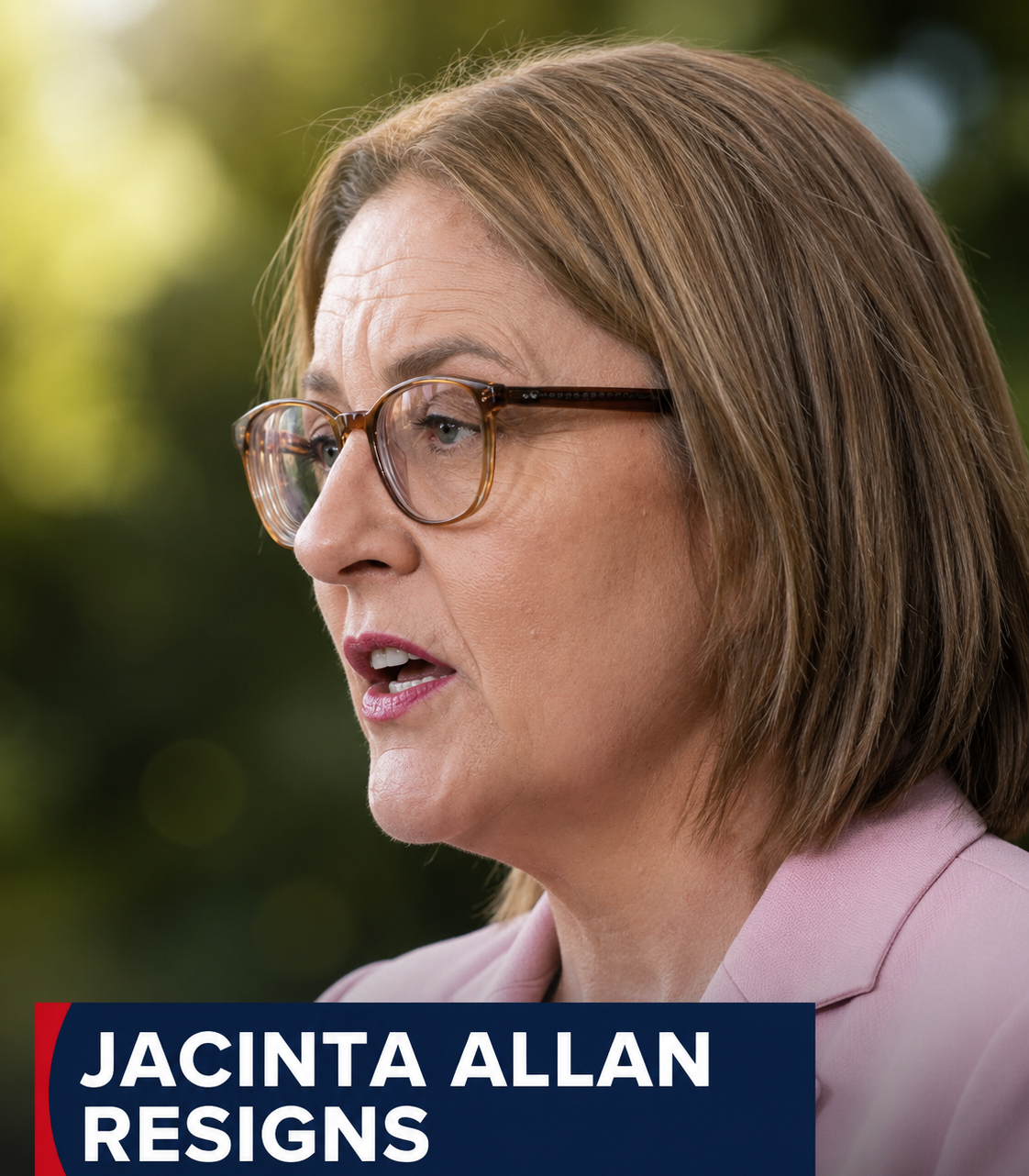
The resignation came just minutes before Victorian Labor MPs were due to vote in a leadership spill that many expected Allan would lose. Rather than force colleagues into a prolonged internal contest only months before the state election, she chose to step aside and publicly endorsed Carroll as her successor.
“I have made the difficult decision to step aside as leader of the Victorian Parliamentary Labor Party and as Premier of Victoria,” Allan said when announcing her resignation.
Although she maintained she believed she could have contested the ballot, Allan argued that a divisive leadership fight would have distracted the government and weakened Labor’s election campaign ahead of the November poll.
Her decision immediately cleared the path for Ben Carroll, who was unanimously elected leader by the Labor caucus before being sworn in as Victoria’s 50th Premier.
The transition marked the end of a turbulent 48-hour period during which senior ministers, factional leaders and MPs held a series of private meetings after concluding that Labor required a leadership reset if it hoped to remain competitive at the upcoming election.
In his first public appearance as premier, Carroll sought to draw a clear distinction between his administration and those of his predecessors.
“I am not Daniel Andrews. I am not Jacinta Allan,” he declared.
The statement was widely interpreted as an attempt to reassure voters that while Labor would remain in government, its leadership style and policy priorities would evolve under his direction.
Carroll acknowledged the achievements of both former premiers but said Victoria faced new challenges requiring fresh leadership.
He pledged to focus on rebuilding trust in government, strengthening relationships with business, improving fiscal discipline and restoring confidence before Victorians vote later this year.
Allan’s resignation followed months of political pressure.
Opinion polling had consistently shown declining support for the Victorian Labor Government, while Allan’s personal approval ratings also weakened as concerns grew over the state’s economic outlook, public debt and cost-of-living pressures.
Labor insiders increasingly questioned whether the government could successfully contest the election without a change in leadership.
At the same time, controversy surrounding Victoria’s massive infrastructure program continued to dominate political debate.
The government’s “Big Build” agenda—one of the largest public infrastructure programs in Australia—became the subject of growing scrutiny after allegations of corruption and organised crime influence within parts of the construction sector.
Although Allan repeatedly resisted opposition calls for a royal commission during her premiership, the issue remained politically damaging as investigations and allegations continued to attract media attention. Importantly, those allegations remain separate from any findings of criminal liability against the former premier herself.
Within hours of taking office, Carroll announced a significant policy shift.
He confirmed his government would establish a royal commission into alleged corruption within the construction industry, describing the inquiry as a necessary step toward rebuilding public confidence in government integrity.
He also promised stronger powers for Victoria’s Independent Broad-based Anti-corruption Commission (IBAC) and further law-and-order reforms before the election.
The announcement represented one of the clearest policy departures from Allan’s administration.
Political observers viewed it as evidence that Carroll intended to demonstrate immediate change rather than simply continuing the previous government’s agenda.
His administration has also indicated it will review major infrastructure priorities while placing greater emphasis on financial discipline and engagement with the business community.
Beyond policy, the leadership transition also reshaped Labor’s internal factional balance.
Carroll’s election returned Victoria’s Labor Right faction to the premiership for the first time since the Bracks–Brumby era, ending more than a decade of dominance by the Socialist Left under Daniel Andrews and Jacinta Allan.
ABC analysis described the leadership spill as a significant setback for the Socialist Left, with several senior figures caught by surprise as support rapidly shifted behind Carroll.
The political fallout has continued beyond Allan’s resignation.
Several senior ministers closely aligned with the former premier have since announced plans to leave cabinet or Parliament, signalling a broader generational and factional transition within Victorian Labor.
The departures are expected to provide Carroll with an opportunity to reshape the ministry ahead of the election campaign.
Prime Minister Anthony Albanese praised Allan following her resignation, describing her as “a very decent human being” who had dedicated decades of service to Victoria.
He thanked her for her work across education, health and transport portfolios and wished her well for the future, while expressing confidence in the state’s new leadership.
Despite stepping aside, Allan urged colleagues to unite behind Carroll, insisting Labor’s priority should remain governing Victoria rather than continuing internal disputes.
She chaired the caucus meeting before formally handing over leadership, seeking to present a united front as the government prepares for one of its most challenging elections in recent history.
For Carroll, however, the difficult work is only beginning.
Leadership changes often provide governments with a short-term political reset, but they do not automatically erase voters’ concerns over economic management, infrastructure spending, housing affordability, crime and the cost of living.
Political analysts note that Carroll has only a few months to persuade Victorians that Labor has genuinely changed course rather than simply replacing one premier with another.
The opposition has argued that replacing the premier does not change the government’s record after more than a decade in office.
Coalition MPs have maintained that voters will ultimately judge Labor on issues including debt, taxation, public safety and infrastructure management rather than leadership personalities alone.
Labor, by contrast, hopes Carroll’s arrival will provide an opportunity to reconnect with voters while preserving the experience of an established government.
History offers mixed evidence on whether late leadership changes improve electoral fortunes.
While a new leader can generate renewed momentum and media attention, political scientists generally agree that elections are ultimately determined by broader questions of policy performance and public confidence.
That reality means Carroll’s declaration that he is “not Daniel Andrews” and “not Jacinta Allan” will now be tested not only through speeches, but through the decisions his government makes over the coming months.
With Victoria heading toward a closely watched state election, the transition marks the beginning of a new chapter for Labor—and perhaps one of the most consequential political contests the state has faced in years.






