Jacinta Allan has resigned as Premier of Victoria, ending less than three years in the state’s top job and bringing to a close one of the most dramatic leadership upheavals in Victorian politics in recent years.
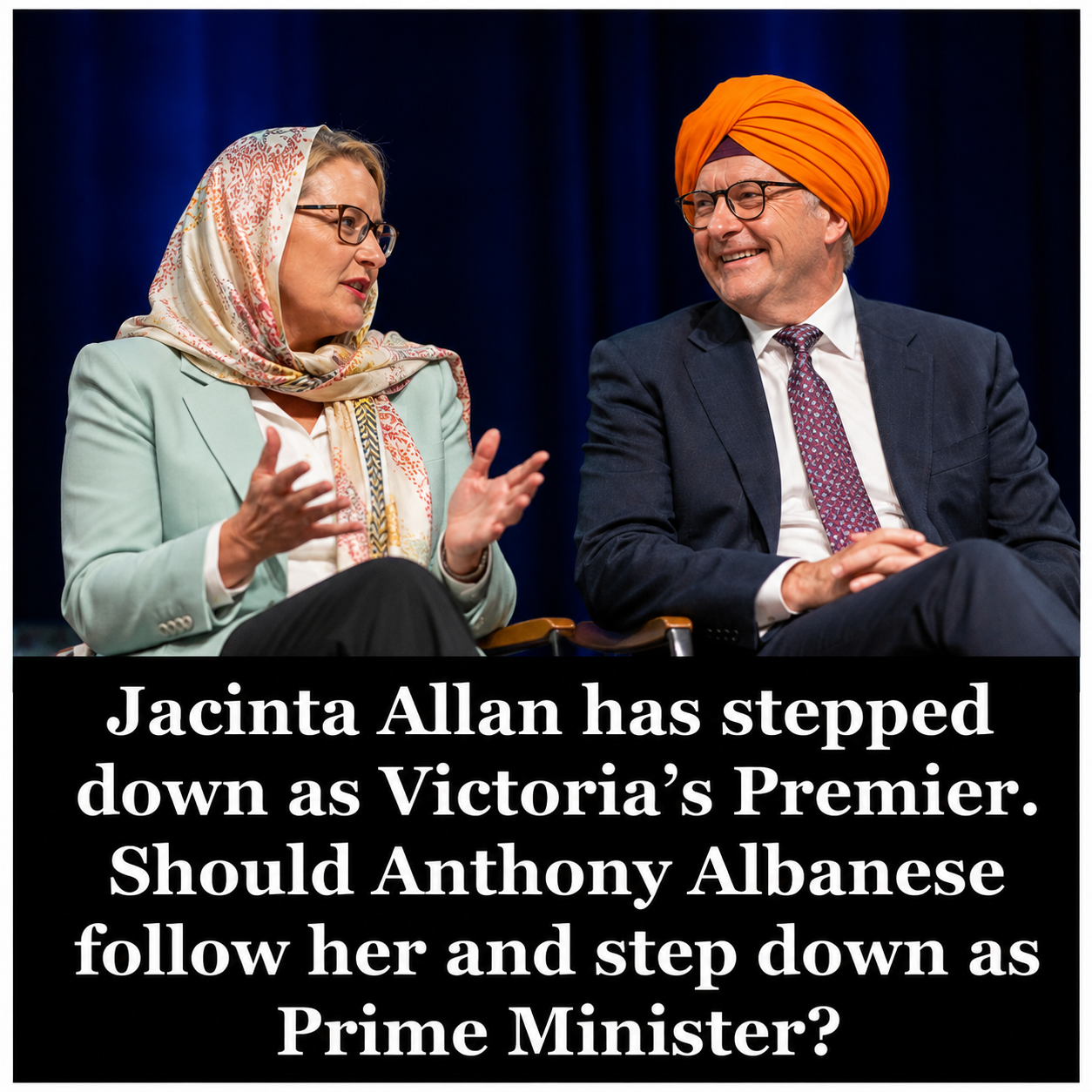
The decision came after an extraordinary 48-hour period during which Allan initially vowed to contest a leadership challenge before ultimately concluding that a prolonged internal battle would damage Labor’s prospects only months before Victorians head to the polls in November.
Announcing her resignation, Allan said she believed she could have won a ballot of Labor MPs but decided that forcing caucus into a divisive contest so close to the election was not in the party’s best interests.
“I have made the difficult decision to step aside as leader of the Victorian Parliamentary Labor Party and as Premier of Victoria,” Allan said.
She added that although she remained confident in her ability to lead, preserving party unity ahead of the election was ultimately more important than pursuing a personal political contest.
In the same statement, Allan gave Deputy Premier Ben Carroll her “unqualified support”, effectively ensuring that he would become Victoria’s next premier without a prolonged leadership contest.
Within hours, Labor’s parliamentary caucus unanimously endorsed Carroll as the party’s new leader, making him Victoria’s 50th Premier.
The resignation marked the culmination of mounting pressure that had been building inside the Victorian Labor Party for months.
Declining opinion polling, weakening personal approval ratings and growing concerns about Labor’s electoral prospects had fuelled increasing unease among government MPs. Senior figures ultimately concluded that changing leaders offered the party its best opportunity to reset before voters go to the polls later this year.
Behind closed doors, a delegation of senior ministers met Allan shortly before the leadership spill to inform her that she no longer enjoyed majority support within the parliamentary caucus.
Although Allan initially indicated she intended to fight for the leadership, negotiations continued throughout Monday before she reversed course the following morning and announced her resignation.
The leadership change also reflected shifting factional dynamics inside Victorian Labor.
Allan emerged from the party’s Left faction and became premier in September 2023 following Daniel Andrews’ resignation. Ben Carroll, meanwhile, has long been regarded as a leading figure within Labor’s Right faction.
Political analysts say Carroll’s elevation represents the first time in more than a decade that the Victorian Labor Right has regained the state’s top political office, signalling a significant shift in the party’s internal balance of power.
Prime Minister Anthony Albanese was among the first national leaders to pay tribute to Allan following her resignation.
He described her as “a very decent human being” and praised her long career in public life, highlighting her work in education, transport and health during more than two decades in Parliament.
“She’s someone who can be proud of her achievements over a long period of time, and I wish her well for her future,” Albanese said.
Allan entered the Victorian Parliament in 1999 as the Member for Bendigo East and became one of Labor’s most experienced ministers before succeeding Daniel Andrews as premier in September 2023.
During her time in government she held major portfolios including transport and infrastructure, overseeing projects such as the Metro Tunnel and the Suburban Rail Loop while also leading planning reforms aimed at increasing housing supply.
However, her premiership increasingly became overshadowed by financial pressures, cost-of-living concerns and ongoing controversy surrounding Victoria’s extensive infrastructure program.
One of the most politically damaging issues involved allegations of misconduct connected to Victoria’s Big Build program and the Construction, Forestry and Maritime Employees Union (CFMEU).
Calls for a royal commission intensified as details of alleged corruption emerged.
While Allan resisted demands for a judicial inquiry during her premiership, Carroll has indicated he supports establishing a royal commission into aspects of the construction sector in an effort to restore public confidence in government integrity.
The transition also comes as Labor attempts to improve its electoral standing before November’s state election.
Recent polling has suggested the government faces one of its most challenging campaigns since returning to office in 2014, with dissatisfaction over public debt, infrastructure costs, housing affordability and government transparency all weighing on voter sentiment.
Carroll has already outlined several priorities for his new administration.
He has pledged to strengthen Victoria’s economic credentials, improve engagement with the business community, address ongoing industrial disputes—including negotiations involving public school teachers—and rebuild confidence in the state’s public institutions.
He has also promised a renewed focus on integrity, fiscal responsibility and more disciplined project management.
In his first public remarks as premier, Carroll emphasised that his government would chart its own course.
He acknowledged the achievements of both Daniel Andrews and Jacinta Allan but argued Victorians expected fresh leadership capable of responding to new economic and political challenges.
He has repeatedly stated that his administration will place greater emphasis on rebuilding trust before the election.
The political fallout from Allan’s resignation has continued beyond the leadership vote itself.
Several senior ministers closely aligned with the former premier have since announced plans to retire from Parliament, highlighting the depth of change occurring within the Victorian Labor Party as Carroll assembles a new ministry.
Despite the internal turmoil, Allan has sought to present a united front.
She chaired Labor’s caucus meeting before formally handing over leadership and urged colleagues to unite behind Carroll, saying maintaining a Labor government remained her overriding priority.
Observers noted that her decision to withdraw before a divisive ballot avoided the type of prolonged factional conflict that can leave lasting political scars only months before an election.
Political analysts believe Carroll now faces the difficult task of convincing voters that Labor has genuinely turned a page.
Leadership changes can sometimes provide governments with a short-term political reset, but history suggests they do not automatically erase public concerns about policy, economic management or integrity.
The new premier will therefore have limited time to demonstrate that his administration represents more than simply a change of faces before Victorians cast their ballots.
For Allan, the resignation closes a parliamentary chapter spanning more than a quarter of a century, during which she rose from a regional backbencher to become only Victoria’s second female premier.
For Labor, it marks the beginning of a high-stakes campaign under new leadership as the party attempts to retain office after more than a decade in government.
Whether Carroll’s elevation proves sufficient to reverse Labor’s political fortunes will become one of the defining questions of Victoria’s 2026 election campaign.






