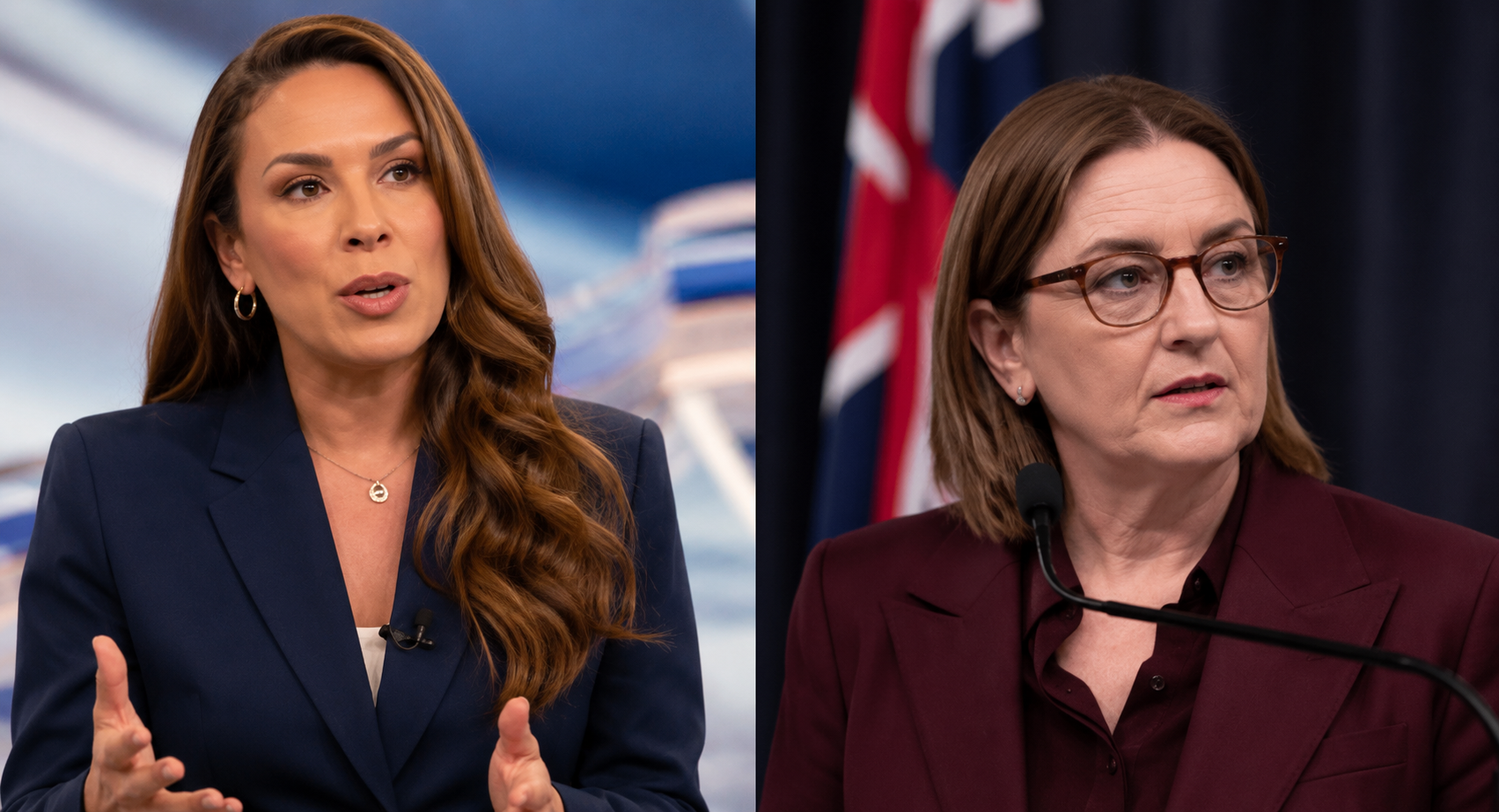
Former Victorian premier Jacinta Allan has defended her record in office despite resigning amid a Labor leadership crisis, insisting she remains proud of what her government achieved over the past three years and maintaining she believed she could still have won the November state election.
Her farewell remarks, delivered during an emotional resignation announcement at Parliament House, immediately sparked fierce political debate, with critics arguing the outgoing premier failed to acknowledge the problems that contributed to her downfall and Labor’s declining electoral position.
After weeks of intense internal pressure, Allan announced she would step aside rather than force a divisive leadership contest against Deputy Premier Ben Carroll, saying preserving party unity had become more important than continuing her own leadership.
“I leave immensely proud of what we have achieved these past three years,” Allan told reporters.
She also maintained that she believed Labor could still have won the upcoming election under her leadership, but said the time and resources required for an internal contest so close to polling day would not be in the best interests of either the party or the Victorian community.
Those comments quickly became one of the most discussed moments of her resignation.
While supporters praised Allan for placing party stability ahead of personal ambition, opponents argued her assessment of her own premiership bore little resemblance to the political reality that had unfolded over recent months.
Television presenter Laura Jayes was among those questioning Allan’s characterisation of her time in office, arguing the departing premier had failed to recognise the extent of Victoria’s political and economic difficulties.
Speaking shortly after Allan’s press conference, Jayes said the former premier appeared unwilling to accept why support for her leadership had collapsed within her own parliamentary party.
She argued that many Victorians had become increasingly concerned about issues including rising state debt, cost-of-living pressures, crime, governance and allegations surrounding major infrastructure projects, making Allan’s optimistic assessment difficult for many voters to reconcile with their own experiences.
The criticism reflected a broader political argument rather than a judicial or official finding about Allan’s administration, illustrating the sharply divided views surrounding Labor’s record after more than a decade in government.
Throughout the leadership crisis, Labor MPs had become increasingly anxious about opinion polling suggesting the government risked losing office after twelve years in power.
Those concerns intensified after several senior ministers informed Allan that she no longer enjoyed majority support inside the parliamentary Labor Party, ultimately prompting her decision to resign before a formal leadership ballot could take place.
The leadership transition itself proved unexpectedly dramatic.
Although Ben Carroll entered Tuesday’s caucus meeting as the overwhelming favourite to succeed Allan, Attorney-General Sonya Kilkenny briefly launched her own leadership bid, creating confusion inside the Labor party room before eventually withdrawing.
During the procedural transfer of power, Transport Infrastructure Minister Gabrielle Williams temporarily became Labor leader for only a matter of minutes before Carroll’s election was formally completed. She was then elected deputy leader, finalising Victoria’s new leadership team.
Carroll now becomes Victoria’s 50th premier at one of the most challenging moments for the state government.
The 51-year-old inherits an administration facing significant electoral pressure ahead of the November election, with Labor attempting to convince voters that a change in leadership represents a genuine change in direction.
In his first public appearance as premier, Carroll sought to draw a clear distinction between his administration and those of both Daniel Andrews and Jacinta Allan.
“I am not Daniel Andrews. I am not Jacinta Allan. I will do things differently,” he said while outlining plans to restore public confidence in government.
Among his first commitments was the establishment of a royal commission into Victoria’s construction sector, alongside proposals for stronger integrity measures and a specialist prosecutor to investigate serious corruption allegations.
Carroll presented those initiatives as evidence that his government intended to place accountability and transparency at the centre of its agenda.
Despite the leadership change, many of the political issues confronting Labor remain unchanged.
Victoria continues to face debate over state finances following years of major infrastructure investment, while housing affordability, healthcare demand, transport pressures and community safety remain central issues in the approaching election campaign.
Opposition parties argue those challenges developed under Labor’s watch and cannot be resolved simply by replacing the party leader.
Labor, however, hopes Carroll’s appointment will provide an opportunity to reset the government’s relationship with voters before they head to the polls later this year.
Allan’s supporters maintain that her premiership should be judged in the broader context of governing through major infrastructure expansion, continued population growth and economic recovery following the COVID-19 pandemic.
They argue her government delivered substantial investment in transport, education and health while continuing projects initiated under former premier Daniel Andrews.
Critics counter that escalating debt, project cost overruns and declining public confidence ultimately overshadowed those achievements and contributed directly to Labor’s deteriorating political position.
The differing interpretations of Allan’s legacy have become one of the defining debates surrounding her departure from office.
For some observers, her resignation represented an acknowledgment that Labor required new leadership to remain electorally competitive.
For others, it marked the end of a premiership that struggled to establish a distinct identity after succeeding Andrews in 2023.
Political analysts note that leadership changes so close to an election are inherently risky.
While a new premier can generate renewed attention and create an opportunity for policy reset, there is often limited time to convince voters that meaningful change has occurred.
Carroll therefore faces the difficult task of balancing continuity with renewal—retaining Labor’s traditional strengths while persuading Victorians that his government will govern differently from the administration he served as deputy premier.
At the same time, Allan’s own comments ensure debate over her legacy is unlikely to disappear.
Her insistence that she remains proud of her record stands in sharp contrast to the views expressed by many political opponents and commentators, highlighting the highly contested nature of Victorian politics as the election approaches.
Whether voters ultimately remember Allan’s premiership for its infrastructure ambitions, its policy achievements or the controversies that surrounded its final months will become clearer when Victorians cast their ballots in November.
For now, however, the political spotlight has shifted firmly to Ben Carroll, whose ability to reshape Labor’s fortunes will determine whether the party’s dramatic leadership transition proves to be a successful reset—or simply the final chapter of a government that has governed Victoria for more than twelve years.






