For much of the past three decades, Pauline Hanson has been one of the most recognisable—and divisive—figures in Australian politics.
Her critics have long argued that her popularity would eventually fade as controversies accumulated. Yet despite repeated political setbacks, One Nation has continued to attract support, and recent polling suggests the party is drawing backing from a far broader section of the electorate than many political observers expected.
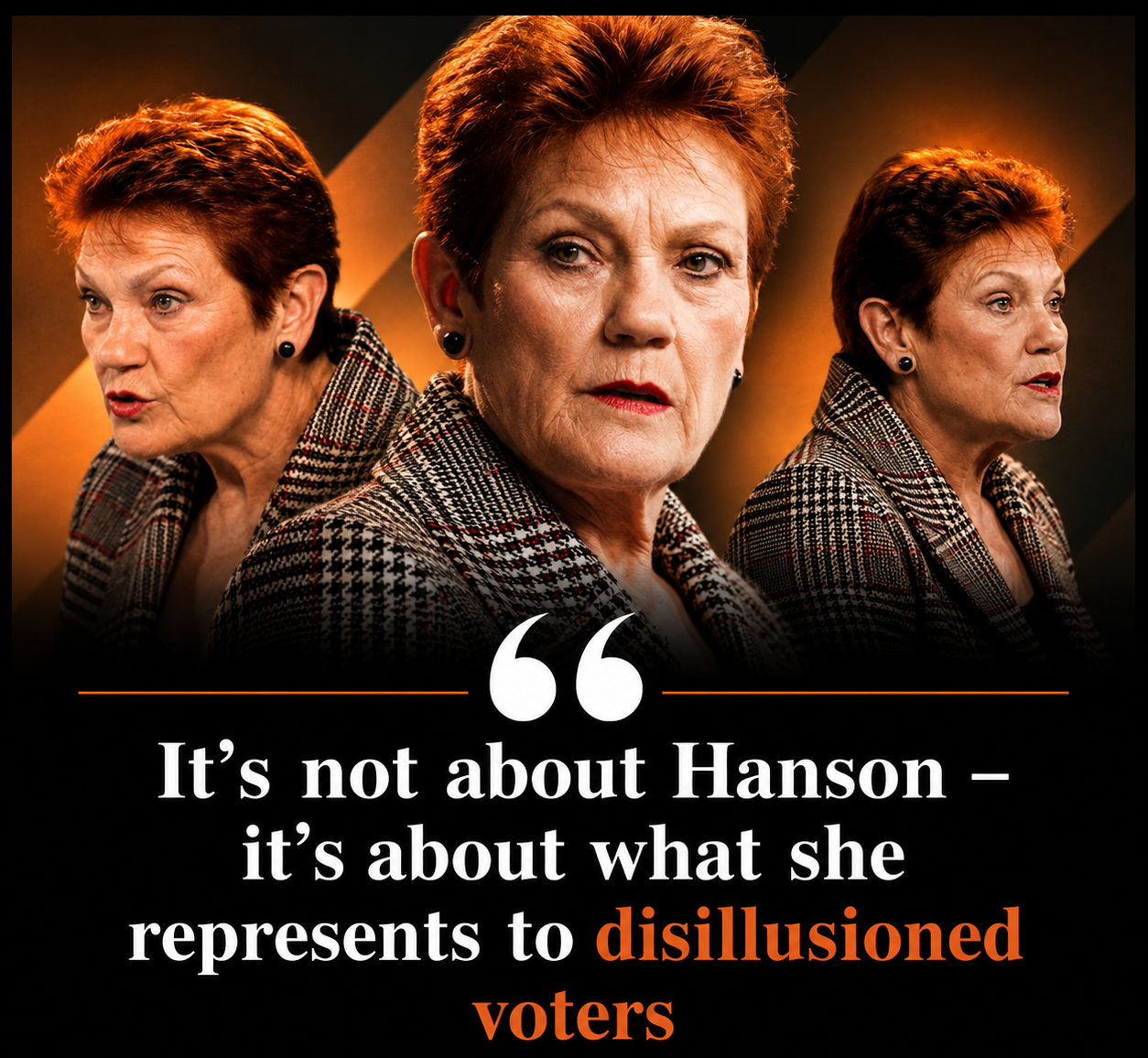
The question increasingly confronting Australia’s political establishment is no longer simply why Pauline Hanson remains relevant.
Instead, it is why so many Australians appear willing to look beyond the major parties altogether.
Recent national polling has indicated that One Nation has become one of the country’s fastest-growing political forces, with some surveys showing support approaching levels once considered unimaginable for a minor party. Although different polling companies report varying results, they point to the same underlying trend: dissatisfaction with Labor and the Coalition is creating political space for alternatives.
For many analysts, that dissatisfaction has little to do with Hanson herself.
Instead, it reflects a broader feeling among voters that Australia’s political class has become disconnected from everyday concerns.
Cost-of-living pressures remain at the top of those concerns.
Inflation has eased from its peak, but many households continue to struggle with mortgage repayments, rent increases, insurance premiums, electricity bills and grocery costs. For families who feel their standard of living has deteriorated despite official economic improvements, political frustration has become increasingly personal.
Housing has become another defining issue.
Australia continues to face severe shortages of affordable housing, while rents remain historically high in many cities. First-home buyers have found it increasingly difficult to enter the property market, leading many voters to question whether either major party has produced solutions capable of matching the scale of the problem.
Immigration has become closely linked to those concerns.
Although economists generally argue migration supports long-term economic growth and helps address workforce shortages, many Australians believe rapid population growth has intensified pressure on housing, infrastructure and public services.
One Nation has consistently argued that migration levels should be substantially reduced, making border control one of the party’s defining political messages.
Whether voters agree with every One Nation policy is, in many respects, beside the point.
Political researchers have long observed that protest voting often reflects dissatisfaction with existing institutions rather than wholehearted endorsement of an alternative platform.
That appears increasingly relevant in Australia’s current political climate.
Several recent voter studies have found widespread pessimism about the country’s direction, with concerns extending beyond economics to include confidence in government, trust in public institutions and perceptions that ordinary Australians have little influence over national decision-making.
This sense of alienation helps explain why Hanson continues to resonate with sections of the electorate despite remaining one of Australia’s most controversial politicians.
Her supporters frequently describe her as someone willing to say publicly what they believe major-party politicians avoid discussing, particularly on immigration, national identity and the cost of living.
Critics, by contrast, argue that Hanson simplifies complex issues, promotes divisive rhetoric and frequently targets minority communities in ways that undermine social cohesion.
Those contrasting perceptions have defined her political career since the 1990s.
What appears to have changed is the size of the audience willing to consider her arguments.
Recent polling suggests One Nation’s growth is strongest outside Australia’s inner-city electorates.
Regional communities, outer suburban areas and working-class districts experiencing economic pressure have become particularly important battlegrounds. Some surveys indicate the party has made significant gains among blue-collar workers, lower-income households and voters without university qualifications.
These demographic trends echo patterns seen in several other Western democracies over the past decade.
Across Europe and North America, populist movements have often gained momentum where voters perceive that mainstream political parties have become more focused on institutional consensus than everyday economic concerns.
Australia’s political system has historically proved more resistant to those trends, but recent developments suggest that resistance may be weakening.
Neither major party has escaped criticism.
Labor has defended its economic agenda as necessary to manage inflation while investing in housing, health and infrastructure. The Coalition, meanwhile, continues rebuilding after its federal election defeat and has sought to reconnect with voters concerned about taxation, energy and government spending.
Yet both parties face a common challenge: convincing disillusioned Australians that established politics can still deliver meaningful change.
That challenge has become more complicated as One Nation positions itself not merely as another minor party but as an anti-establishment alternative.
Political scientists have often described One Nation’s appeal as resting less on detailed policy than on its broader rejection of Australia’s political elite. That anti-establishment identity has remained remarkably consistent throughout the party’s history, even as individual policies have evolved.
The party’s critics argue this approach frequently produces simplistic solutions to complex national problems.
Supporters respond that mainstream governments have spent years offering complex explanations while everyday living standards have continued to deteriorate.
This clash of perspectives increasingly dominates Australia’s political conversation.
Some commentators warn against dismissing One Nation voters as motivated solely by anger or prejudice.
Doing so, they argue, risks overlooking the economic insecurity and institutional distrust driving many Australians towards protest politics.
Even politicians who strongly oppose Hanson have acknowledged that concerns about housing affordability, migration, regional services and cost-of-living pressures deserve serious policy responses rather than political slogans.
That may ultimately be the central lesson emerging from One Nation’s rise.
The party’s growing support does not necessarily indicate that a third of Australians suddenly share every aspect of Pauline Hanson’s worldview.
Rather, it suggests many voters believe the existing political system is no longer adequately responding to their concerns.
Whether One Nation can convert polling momentum into sustained electoral success remains uncertain.
Australia’s preferential voting system, candidate quality and campaign dynamics often produce election outcomes that differ significantly from headline polling numbers. Recent surveys have also shown One Nation’s support fluctuating following periods of intense public scrutiny surrounding Hanson’s statements and political alliances.
Even so, the broader warning for Australia’s major parties is becoming increasingly difficult to ignore.
If rising support for One Nation is treated simply as another chapter in Pauline Hanson’s long political career, they may miss the larger story unfolding beneath it.
For a growing number of Australians, the vote is no longer primarily about Hanson.
It is about expressing frustration with a political establishment they believe has failed to keep pace with the pressures reshaping everyday life.
Whether Labor, the Coalition or One Nation ultimately benefits at the ballot box, Australia’s next political contest is likely to be decided less by personalities than by which party can most convincingly address the economic anxiety, institutional distrust and desire for change now evident across large sections of the electorate.






