For nearly three decades, Pauline Hanson has occupied a unique place in Australian politics.
Admired by supporters as someone willing to say what others will not, and condemned by critics for some of the country’s most divisive political rhetoric, Hanson has remained one of Australia’s most recognisable political figures despite repeated predictions that her influence would eventually fade.
Instead, the opposite appears to be happening.
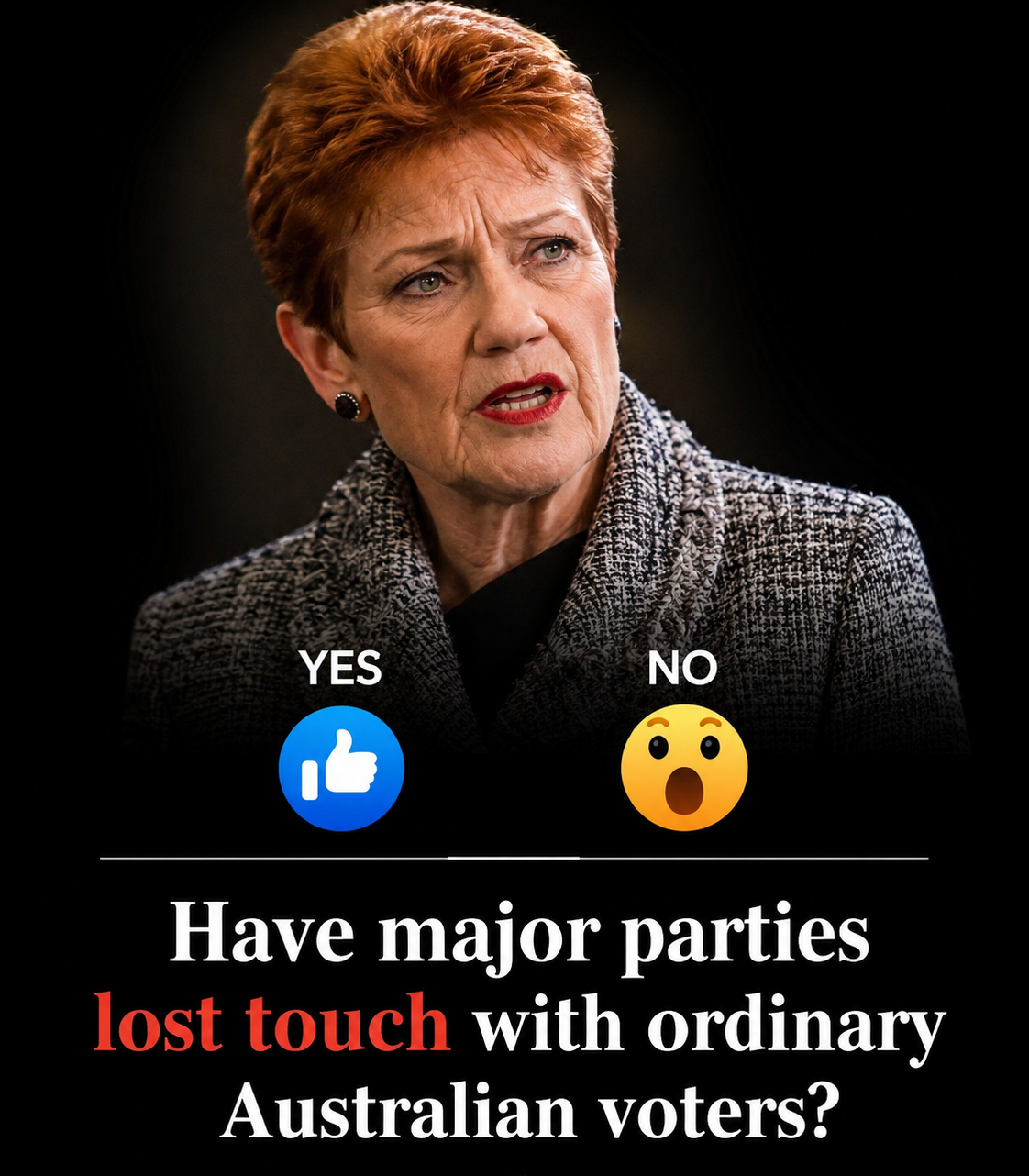
Recent polling has suggested One Nation is attracting support on a scale that would have seemed extraordinary only a few years ago. While individual surveys vary, the broader trend has become difficult to ignore: increasing numbers of Australians are looking beyond Labor and the Coalition in search of political alternatives.
That trend raises an important question.
Is Australia’s growing support for One Nation really about Pauline Hanson herself, or is Hanson simply becoming the political vehicle for a much deeper frustration with the country’s political establishment?
Many political commentators argue the latter.
The attraction of One Nation increasingly appears to reflect a protest against mainstream politics rather than universal agreement with every policy advocated by the party.
Australia has experienced years of mounting pressure on household budgets.
Although inflation has moderated from its peak, many families continue to face high mortgage repayments, rising rents, increasing insurance premiums, expensive groceries and persistent electricity costs.
For households whose disposable income has steadily eroded, official economic indicators often feel disconnected from everyday experience.
Housing has become another defining issue.
Across much of the country, affordability remains one of the biggest concerns for younger Australians and families attempting to purchase their first home. Rental vacancy rates remain low in many regions, while population growth has intensified competition for available housing.
Immigration has consequently become one of Australia’s most politically sensitive topics.
Economists generally argue migration supports long-term economic growth, addresses labour shortages and offsets population ageing. However, many voters increasingly associate rapid population growth with housing shortages, congested infrastructure and pressure on public services.
One Nation has consistently argued that Australia’s migration intake should be significantly reduced, making border control and lower immigration central pillars of the party’s political identity.
Whether voters fully endorse every One Nation proposal is a separate question.
Political scientists have long observed that support for populist or anti-establishment parties often reflects dissatisfaction with existing institutions more than complete agreement with alternative policies.
Australia’s compulsory voting system reinforces that phenomenon. Rather than staying home, frustrated voters frequently use their ballot to register dissatisfaction with governments, oppositions or the broader political class.
That appears to be happening with increasing frequency.
Recent research commissioned by business groups and public policy organisations has painted a bleak picture of national confidence.
Large majorities of Australians believe the country is moving in the wrong direction, with widespread dissatisfaction extending across cost of living, housing, healthcare and economic management. The pessimism is particularly pronounced among regional voters, older Australians and people without university qualifications—demographics where One Nation has traditionally performed strongly.
For those voters, Hanson often represents something beyond policy.
Supporters frequently describe her as authentic, direct and unconcerned about political correctness. They see a politician who appears willing to challenge institutions they believe have become disconnected from ordinary Australians.
Her critics reach the opposite conclusion.
They argue Hanson frequently oversimplifies complex issues, inflames social divisions and promotes policies that would be difficult—or impossible—to implement effectively.
Yet even many of her opponents acknowledge that dismissing One Nation voters as merely angry or uninformed risks misunderstanding what is driving the party’s support.
The anti-establishment sentiment extends well beyond immigration.
Trust in governments, political parties, traditional media and other institutions has declined in many Western democracies over the past decade. Australia has not been immune to that broader trend.
Successive governments from both major parties have promised solutions to housing affordability, productivity, infrastructure, taxation and energy prices. For many voters, progress has appeared too slow or too limited to restore confidence.
That frustration creates opportunities for parties positioning themselves as outsiders.
One Nation has consistently presented itself as challenging what it characterises as a political elite disconnected from ordinary Australians.
Its platform combines lower immigration, economic nationalism, scepticism towards global institutions, criticism of climate policies and opposition to what it describes as excessive political correctness. Those themes have remained relatively consistent throughout the party’s history, even as individual policies have evolved.
Polling suggests that message is resonating beyond One Nation’s traditional rural base.
Support has expanded into outer metropolitan suburbs where households are particularly exposed to mortgage stress, housing affordability pressures and rising living costs.
Some recent surveys have even suggested One Nation is attracting voters who previously alternated between Labor and the Coalition rather than remaining loyal to either major party.
The Coalition faces a particularly difficult challenge.
Historically, many conservative protest voters eventually returned to Liberal or National candidates at election time.
Recent polling suggests that pattern has weakened, with One Nation retaining a larger share of conservative support than in previous election cycles.
Labor faces its own problems.
Although it continues to hold many metropolitan seats, concerns over housing affordability, migration levels and the cost of living have weakened support among some working-class voters who once formed part of Labor’s traditional electoral base.
The result is an increasingly fragmented political landscape.
Minor parties and independents continue to command a larger share of the national vote than in previous decades, making majority governments harder to achieve and increasing the importance of preference flows under Australia’s preferential voting system.
Political analysts caution, however, that strong polling does not automatically translate into equivalent parliamentary representation.
Candidate quality, local campaigning, preference deals and the distribution of support across electorates can all produce election results that differ substantially from national primary vote figures. Australia’s electoral system often rewards geographically concentrated support rather than evenly distributed votes.
Even so, One Nation’s growing popularity carries an important message for the political establishment.
The party’s support is unlikely to diminish simply through criticism of Pauline Hanson or her rhetoric.
If voters are turning towards One Nation primarily because they believe mainstream politics no longer addresses their concerns, attacking the messenger without addressing the underlying issues may prove ineffective.
Cost-of-living pressures, housing shortages, migration, infrastructure capacity and declining trust in institutions have become interconnected political challenges rather than isolated policy debates.
Those concerns increasingly shape how Australians evaluate governments of every political persuasion.
Whether One Nation ultimately converts growing support into lasting electoral success remains uncertain.
Australia’s political history contains numerous examples of minor parties enjoying periods of rapid popularity before encountering organisational, electoral or leadership difficulties.
Yet the broader warning embedded within the party’s rise appears harder to dismiss.
For many Australians, the vote is becoming less about Pauline Hanson herself than about expressing dissatisfaction with a political system they believe has become detached from their everyday lives.
If Labor and the Coalition interpret One Nation’s resurgence simply as another chapter in Hanson’s long and controversial political career, they risk overlooking the larger forces reshaping Australian politics.
Those forces—economic anxiety, declining institutional trust, housing affordability, migration pressures and frustration with established political parties—are unlikely to disappear regardless of who leads One Nation in the years ahead.






