A senior figure in Victoria’s Liberal Party has walked away from the organisation after decades of involvement, announcing she will instead support Pauline Hanson’s One Nation in a move that adds to the pressure on a party already grappling with internal divisions ahead of the state election.
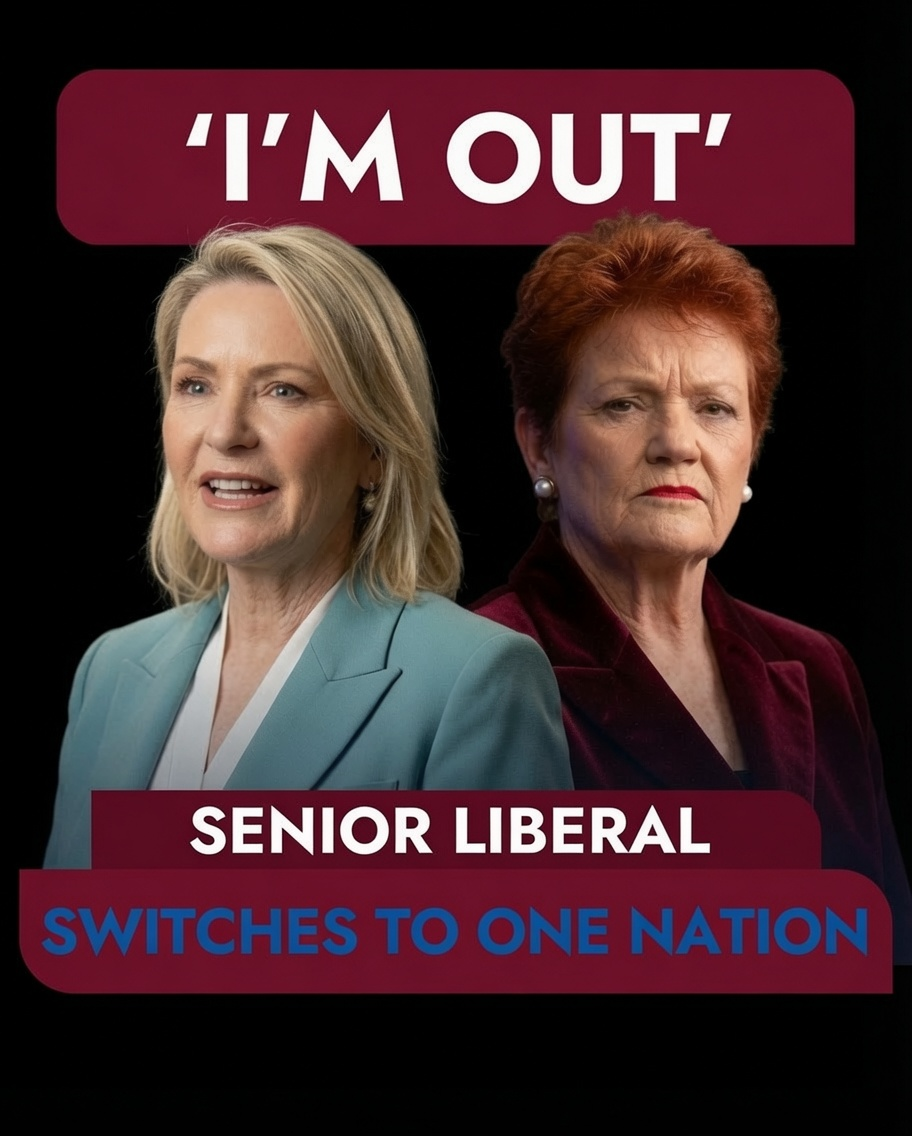
Colleen Harkin, a former Liberal candidate for the federal seat of Macnamara and a long-serving party member, confirmed she had resigned from the Liberal Party and intends to join One Nation after concluding the party no longer reflects the principles that originally attracted her.
Her departure comes at a politically sensitive time, with Victoria’s Liberal opposition attempting to rebuild following years of factional conflict while One Nation seeks to capitalise on growing dissatisfaction among conservative voters.
Explaining her decision, Harkin said she had spent years trying to help restore what she viewed as the Liberal Party’s traditional values before ultimately deciding that effort was no longer worthwhile.
“I have not changed. The Party has,” she wrote in her resignation message to fellow Liberal members.
According to Harkin, she had volunteered, fundraised, donated and campaigned for the Liberal Party for decades because she believed it stood for principles worth defending. However, she argued the party had lost both its direction and its policy conviction.
She described the organisation as being weakened by factional infighting and political expediency, saying she could no longer continue supporting it.
The resignation followed Harkin’s attendance at a recent One Nation fundraising event in Melbourne, where she said she was impressed by both the atmosphere and the diversity of people attending.
Speaking publicly after the event, Harkin said many of those present had not previously been politically active but were concerned about Australia’s future and wanted stronger debate on issues they believed were being overlooked.
“I think One Nation are prepared to have the hard conversations,” she said, arguing that willingness to tackle controversial issues had become one of the major differences separating the minor party from the Liberals.
She also rejected stereotypes surrounding One Nation supporters, saying the attendees she met represented a broad range of professional and educational backgrounds.
The move represents more than simply another individual resignation.
Harkin has been a well-known figure inside Victorian Liberal circles, previously serving on the party’s state executive and remaining active in internal policy debates. She also serves as Director of Education at the Institute of Public Affairs, one of Australia’s best-known conservative think tanks.
Her profile means the resignation is likely to attract attention well beyond the Victorian Liberal membership.
The departure also follows Harkin’s prominent involvement in legal action against the Victorian Liberal Party concerning a $1.55 million loan provided through party investment company Vapold to assist former Liberal leader John Pesutto in meeting legal costs arising from the defamation case brought by MP Moira Deeming.
Harkin has argued the dispute raises broader questions about governance and accountability inside the party and indicated the legal proceedings will continue despite her resignation.
The latest defection arrives during a difficult period for the Liberal Party nationally and in Victoria.
Following disappointing electoral performances and ongoing internal disagreements over policy direction, the party has faced growing debate about how it should position itself against Labor while also responding to the rise of smaller conservative parties.
One Nation has increasingly sought to attract voters who believe the major parties have become disconnected from concerns surrounding cost of living, migration, energy policy and government spending.
Although One Nation remains a minor party, recent polling and political commentary have suggested it has gained momentum in several parts of Australia, particularly among conservative voters dissatisfied with the traditional Liberal-National Coalition.
The Liberals, however, have repeatedly ruled out any formal coalition arrangement with One Nation despite persistent speculation generated by the smaller party’s improved polling numbers.
Senior Liberal figures have instead argued their priority remains rebuilding support as an independent centre-right alternative while differentiating themselves from both Labor and minor parties.
For One Nation, attracting former Liberal members carries symbolic as well as practical importance.
High-profile defections can reinforce the party’s argument that some conservatives believe the Liberal Party has drifted away from its traditional principles, even if individual resignations do not necessarily translate into significant electoral shifts.
Political analysts note that Victoria presents both opportunities and challenges for One Nation.
The party has historically struggled to achieve the same electoral success in Victoria as it has in Queensland or parts of regional New South Wales. Nevertheless, dissatisfaction among sections of conservative voters has created opportunities for the party to increase its profile ahead of the next state election.
Whether that support converts into parliamentary seats will depend on candidate selection, campaign organisation and the broader political environment during the election campaign.
For the Liberal Party, the more immediate concern is preventing the perception that dissatisfaction is spreading through its own ranks.
Leadership has attempted to project unity while focusing attention on policy alternatives to the Allan Labor Government rather than continuing internal disputes.
However, resignations from long-serving members inevitably generate questions about party morale and organisational stability.
Harkin’s departure is unlikely on its own to reshape Victoria’s political landscape, but it contributes to a broader narrative surrounding the future of Australia’s centre-right politics.
Across recent election cycles, both Labor and the Coalition have experienced declining primary vote shares while minor parties and independents have attracted increasing support.
That trend has encouraged parties across the political spectrum to reassess how they connect with voters whose priorities increasingly extend beyond traditional party loyalties.
For One Nation, every well-known recruit provides additional visibility as it attempts to expand beyond its established electoral base.
For the Liberals, each departure serves as another reminder of the ongoing challenge of maintaining unity while rebuilding electoral competitiveness.
As Victoria moves closer to its next state election, both parties will be watching closely to see whether Harkin’s decision proves to be an isolated personal choice or the beginning of a broader movement among conservative members seeking an alternative political home.






