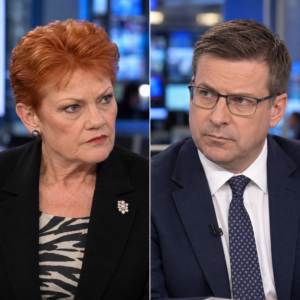
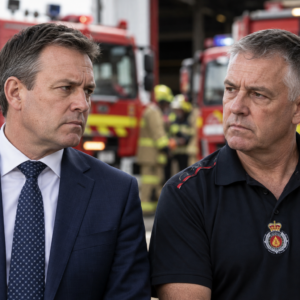
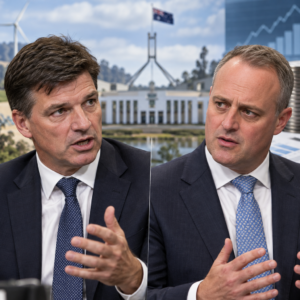
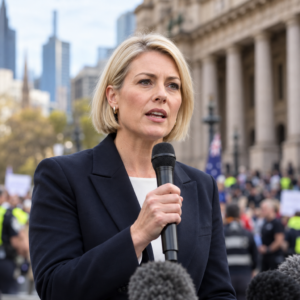
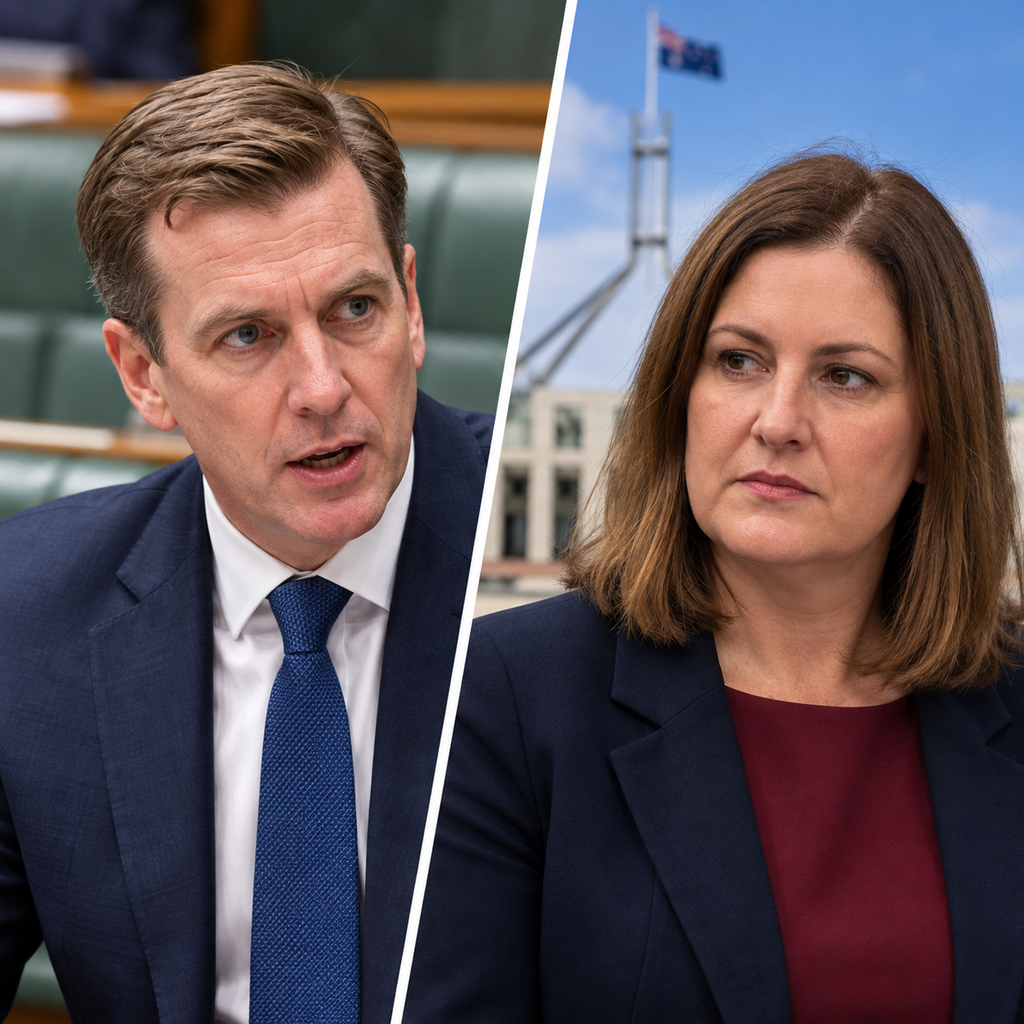
Liberal MP Garth Hamilton’s walkout from the House of Representatives was a highly visible protest against remarks by Emergency Management Minister Kristy McBain, but it also rekindled a dispute about bushfire management, political responsibility and the treatment of firefighters. Hamilton accused McBain of lying about opposition leader Angus Taylor’s earlier comments. That was Hamilton’s accusation, not a finding that the minister had knowingly said anything false.
The confrontation developed during Question Time, when McBain referred to reports about Taylor and the handling of a major bushfire in the Snowy Mountains. Hamilton objected to the way the remarks were presented, used language considered unparliamentary and left the chamber. Speaker Milton Dick named him, and the House suspended him for twenty-four hours. Those parliamentary consequences are established aspects of the incident, separate from the competing claims about the original bushfire discussion.
Hamilton’s conduct drew attention because chamber proceedings are governed by rules intended to permit intense disagreement without preventing parliamentary business. Members may challenge what a minister says, request a withdrawal or argue through the Speaker. An outburst and departure can become the story in their own right, overshadowing the question that prompted it.
Hamilton later complained that McBain had misrepresented Taylor’s position. “This is what Question Time has become. An hour of the government avoiding their responsibility to talk about the issues that are facing Australians, how difficult it is out there, and they just try and turn these gutter attacks onto Angus [Taylor],” he said. His criticism was political and pointed; it did not resolve whether the underlying remarks were fairly characterised.
Taylor gave his own account of his comments about fire management and sought to distance himself from any suggestion that he blamed frontline firefighters. “I did not blame firefighters, and I blamed the mismanagement of the national parks bureaucracy,” he said. His statement distinguishes the work of emergency crews from decisions taken by public land-management bodies. Whether others accurately represented his earlier comments remains a matter of dispute.
The immediate parliamentary sequence is important. McBain referred to reporting that included criticism of Taylor’s description of historic bushfire decisions. Hamilton protested and was disciplined under the rules of the House. Taylor then rejected the suggestion that he had criticised firefighters themselves. Reporting the episodes in that order makes clear that Taylor’s comments were a separate response, rather than a direct statement made by McBain during an exchange with him.
Political arguments over bushfires can be especially emotionally charged because they concern real losses, vulnerable communities and the work of people who confront dangerous conditions. Even a dispute about phrasing can become personal if it is understood as diminishing the efforts of volunteers or professionals who have faced the fires. That makes precise attribution essential for all sides.
Land-management debates frequently focus on fuel loads, prescribed burning, access roads, environmental protections and emergency preparedness. These are complex subjects. A comment critical of park-management bureaucracy does not necessarily carry the same meaning as blaming firefighters working on the ground. Equally, an argument about administrative decisions needs evidence before it can support a broad claim that particular officials deliberately allowed a blaze to spread.
Prescribed burning is one example of why simple political slogans may be inadequate. Reducing vegetation in carefully chosen areas can form part of risk management, but weather, terrain, environmental constraints and the proximity of homes affect whether and when work can be performed. No single measure eliminates fire danger, and the effectiveness of management needs to be assessed in local conditions rather than assumed from party affiliation.
Bushfire response also spans several levels of government and many organisations. State authorities, local councils, volunteer services, land managers and federal agencies can have different responsibilities. Confusion over who made a decision may make a political attack dramatic while giving residents little useful information about who is accountable for a particular road, warning system or mitigation project.
For residents of fire-prone towns, the dispute has practical stakes beyond Question Time. Insurance premiums, rebuilding costs and access to emergency services can shape the financial impact of living in an exposed area. A family choosing whether to renew cover may be concerned with property risk and affordability rather than the wording of a federal politician’s exchange.
Bushfire insurance is influenced by many factors, including property characteristics, local exposure, claims history and the cost of rebuilding after severe events. A single parliamentary argument cannot explain a premium quote. But policies on mitigation, hazard assessment and land management can matter to communities seeking to reduce risks over a longer period.
Homeowners may also encounter the cost of preparing their properties. Clearing gutters, maintaining defensible space where lawful, preparing an emergency plan and understanding local alerts require time and sometimes money. These are examples of risk management decisions rather than proof that any particular political claim about national parks is correct.
Businesses in regional communities can suffer consequences even where their premises do not burn. Road closures may prevent customers from arriving; smoke can disrupt tourism; workers may need time to care for family; and supply chains can be interrupted. The economic consequences of fire extend beyond the direct insurance value of destroyed property.
That wider context makes government communication particularly important. People need to know which authority controls a warning, what resources are available and which actions are recommended for their area. Personal accusations inside Parliament can attract attention but do little to clarify operational responsibilities unless accompanied by precise information.
McBain’s portfolio connects her to emergency-management policy, while Taylor’s comments concerned interpretations of past decisions and the treatment of national parks. Those roles help explain why the argument drew interest. They do not mean that a minister answering a Question Time question has been independently found to have lied because an opposition member disagrees with her account.
Parliamentary discipline is also a separate issue from the merits of a political complaint. The House can suspend a member for conduct that breaches its standards while leaving the subject of the complaint unresolved. A reader should not be led to believe that Hamilton’s suspension proved Taylor’s bushfire position wrong, or that his anger proved McBain’s remarks false.
The Speaker’s authority is designed to protect the functioning of the chamber. Naming a member is a formal step, not an informal criticism from a political opponent. It reflects conduct during proceedings. A suspension may carry reputational consequences for the MP, although its legal and procedural significance should not be stretched into conclusions about the policy debate.
The confrontation fits a wider pattern of governments and oppositions using Question Time to frame each other’s positions. Ministers often respond to prepared questions with pointed political criticism. Opposition MPs may argue that this avoids direct discussion of household pressures. Both claims can be examined by comparing the question asked with the substance of the answer, not by treating a heated exchange as a substitute for analysis.
Hamilton said Australians were grappling with difficult issues. In fire-affected regions, those issues can include evacuation planning, the cost of resilience measures and whether communities have confidence in emergency warnings. Politicians could address such concerns by identifying which programs are funded, what work has been completed and how risk reduction is being evaluated.
A useful policy discussion would distinguish the preparation of national parks and other public land from the performance of firefighters during an active emergency. It would also compare proposed measures with scientific advice and local experience. Such distinctions would protect the credibility of emergency crews while permitting legitimate scrutiny of agencies and governments.
Statements about historic fire events must be handled carefully, particularly when later politicians invoke them in a different context. The debate may involve old comments, reports and criticism by people who experienced the fires. A new exchange about those materials is not itself evidence that old events unfolded exactly as one party now describes them.
Readers deserve to know which propositions are documented. Hamilton walked out, used unparliamentary language and was suspended; he accused McBain of lying; Taylor denied blaming firefighters and criticised park-management bureaucracy. The fairness of the competing political characterisations remains contested and cannot be resolved simply by repeating one side’s words in the narrator’s voice.
The most useful lesson is the difference between parliamentary theatre and public accountability. A dramatic departure can be newsworthy, and a minister’s remarks can legitimately be challenged. But the people most affected by bushfire policy benefit from careful explanations of land management, emergency responsibilities and practical preparedness, not assumptions that volume equals accuracy.
Hamilton’s protest ensured the argument would be noticed. Whether the dispute improves understanding of bushfire risk depends on what follows: evidence about the disputed comments, a clear separation of frontline firefighting from bureaucratic decisions and substantive answers about the policies that affect communities. Those questions are more durable than the scene of a member leaving the chamber.
Another constructive question concerns how a government measures the results of bushfire mitigation spending. A completed project, a new fire trail or an additional prescribed burn can be counted, but the ultimate goal is reduced harm to people and property. Communities need understandable reporting about local risk, not a political shortcut implying that one measure guarantees safety under every weather condition. That information would do more to help residents than treating the parliamentary confrontation as a final verdict on historic fire policy.