Mining billionaire Gina Rinehart has formally launched legal action against the Australian Broadcasting Corporation (ABC) and several of its most senior executives after the national broadcaster declined to remove or apologise for a controversial satirical segment broadcast during Race Around the World.
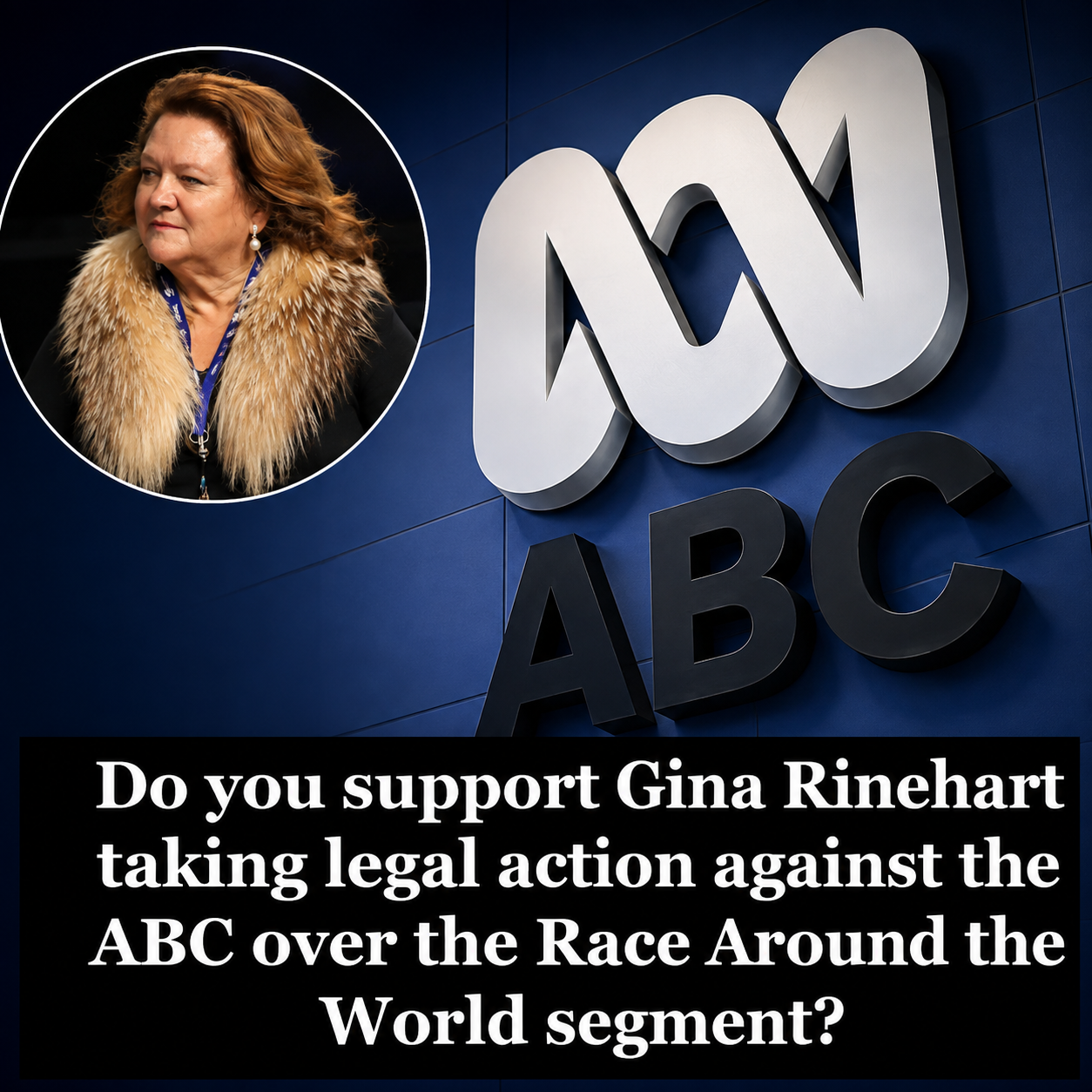
The dispute has rapidly evolved from a broadcasting controversy into a high-profile legal battle involving Australia’s largest public broadcaster, raising broader questions about editorial independence, the limits of satire, corporate accountability and whether public broadcasters should air material containing graphic depictions of violence directed at identifiable individuals.
According to Hancock Prospecting, the company chaired by Ms Rinehart, the disputed segment breached multiple Australian civil and criminal laws and created what it describes as a serious and unnecessary risk to her personal safety.
After receiving what the company says was no meaningful response to its initial complaints, Hancock Prospecting formally placed ABC Chair Kim Williams, Deputy Chair Lisa Caffery and Managing Director Hugh Marks on notice of its legal claims.
Hancock Prospecting’s allegations
Hancock Prospecting says it first contacted the ABC seeking several remedies after the segment aired, including:
- the immediate removal of the material from ABC platforms;
- a public apology;
- an internal investigation into how the segment was commissioned, approved and broadcast; and
- assurances that similar content would not be published again.
The company argues that the broadcaster failed to provide a substantive response before legal correspondence was escalated to the ABC’s board and executive leadership. It alleges the segment crossed the line between protected satire and unlawful conduct by depicting graphic and violent remarks directed at Ms Rinehart.
Hancock Prospecting has not publicly released the full particulars of every legal claim but has stated that it believes multiple provisions of Australian law may have been breached.
The ABC’s response
The ABC has defended the broadcast, describing the segment as “editorially justifiable” while confirming it has received legal correspondence from Hancock Prospecting.
The broadcaster has said it will respond to the legal claims through the appropriate legal process rather than through public debate.
At the same time, the ABC has referred audience complaints to its independent Ombudsman, which investigates complaints relating to editorial standards and compliance with the broadcaster’s editorial policies.
The broadcaster has indicated it will await the outcome of that process while considering the legal issues raised by Hancock Prospecting.
Filmmaker says the work was intended as satire
The disputed segment was created by filmmaker Kate McGuinness as part of Race Around the World.
Following widespread criticism, McGuinness said the work was intended to be absurdist satire rather than an endorsement or encouragement of violence.
She apologised to anyone who was offended by the film but maintained that its purpose had been to use exaggerated humour rather than promote harm toward any individual.
The ABC published her explanation while continuing to defend the editorial decision to broadcast the segment.
Political reaction
The controversy has drawn criticism from across the political spectrum.
Acting Prime Minister Richard Marles described the segment as “entirely unacceptable”, reflecting growing concern among federal politicians about whether material of this nature should have appeared on Australia’s national broadcaster.
Communications Minister Anika Wells likewise criticised the content but emphasised that the ABC remains editorially independent and that the broadcaster’s complaints process should be allowed to run its course.
Her comments sought to balance condemnation of the broadcast with the long-standing principle that governments should not interfere directly in editorial decisions made by the ABC.
Other politicians have also questioned the broadcaster’s editorial judgement, while some media commentators have argued the dispute raises important questions about consistency in how the ABC applies its editorial standards when controversial material targets public figures.
Role of the ACMA
The Australian Communications and Media Authority (ACMA), Australia’s independent communications regulator, has confirmed it is monitoring the situation.
However, the regulator has indicated it will generally wait until the ABC’s internal complaints process has concluded before deciding whether there are grounds to undertake its own investigation.
That approach is consistent with the regulatory framework governing complaints involving the national broadcaster, where internal review mechanisms ordinarily operate before external regulatory intervention is considered.
Editorial freedom versus public responsibility
The dispute has reignited debate over where the boundary lies between artistic expression and responsible broadcasting.
Supporters of the ABC’s position argue that satire has historically played an important role in political and social commentary, often relying on exaggeration, irony and provocative imagery to make broader points.
Critics, however, argue that freedom of expression does not remove the responsibility to avoid broadcasting material that appears to normalise or trivialise violence against identifiable individuals.
The legal proceedings are expected to test how Australian law balances those competing principles when allegedly offensive or violent satirical content is broadcast by a publicly funded media organisation.
Why the case matters
The outcome of the dispute could have implications well beyond the parties directly involved.
If the matter proceeds through the courts, it may provide further guidance on the legal boundaries governing satire, reputational harm and the obligations of broadcasters when publishing controversial content involving real people.
It may also influence future editorial decision-making within publicly funded media organisations, particularly where creative works contain violent imagery or language directed at identifiable individuals.
For the ABC, the case represents another significant test of its editorial governance and complaints-handling processes. For Hancock Prospecting and Gina Rinehart, it reflects a broader argument that public broadcasters should be held accountable when editorial decisions are alleged to exceed acceptable legal and ethical standards.
While the ABC continues to defend the segment as editorially justified and maintains that the filmmaker intended it as satire, Hancock Prospecting argues the issue is no longer simply one of artistic expression but one of legal responsibility.
With legal correspondence now formally issued and the ABC’s Ombudsman continuing its review, the dispute appears set to remain under close public and political scrutiny in the weeks ahead. Any further regulatory action by ACMA is likely to depend on the findings of the broadcaster’s internal complaints process and the progress of the legal proceedings.