Julia Gillard’s declaration that she did not fake the Moon landing or assassinate John F Kennedy remains one of the more memorable parliamentary responses to questioning about the AWU Workplace Reform Association. The remark was a sarcastic response to opposition deputy Julie Bishop’s questions about the legal work Gillard performed before becoming prime minister. It is a historical exchange, not a new confrontation between the two former political leaders.
The controversy concerned an association connected to officials of the Australian Workers’ Union and the legal advice Gillard had provided while working as a solicitor. Bishop pressed Gillard over the circumstances in which the organisation was established, the use of the union’s name and whether the relevant legal requirements had been met. Gillard denied wrongdoing and argued that the opposition was revisiting accusations that had already been debated extensively.
Bishop’s questions included whether steps had been taken to ensure the use of the union’s name complied with legislation governing incorporated associations. She also asked about the authority of the organisation to operate a bank account bearing the name and about the people involved in establishing it. These were allegations and questions about process; they were not judicial findings that Gillard had acted unlawfully.
Gillard answered with a conspicuously exaggerated comparison. “I didn’t fake the Moon landing, I wasn’t responsible for the assassination of JFK,” she said in Parliament. The deliberately absurd examples conveyed her view that the accusations and insinuations directed at her had gone too far. They should not be mistaken for a literal discussion of either event or evidence about the underlying association.
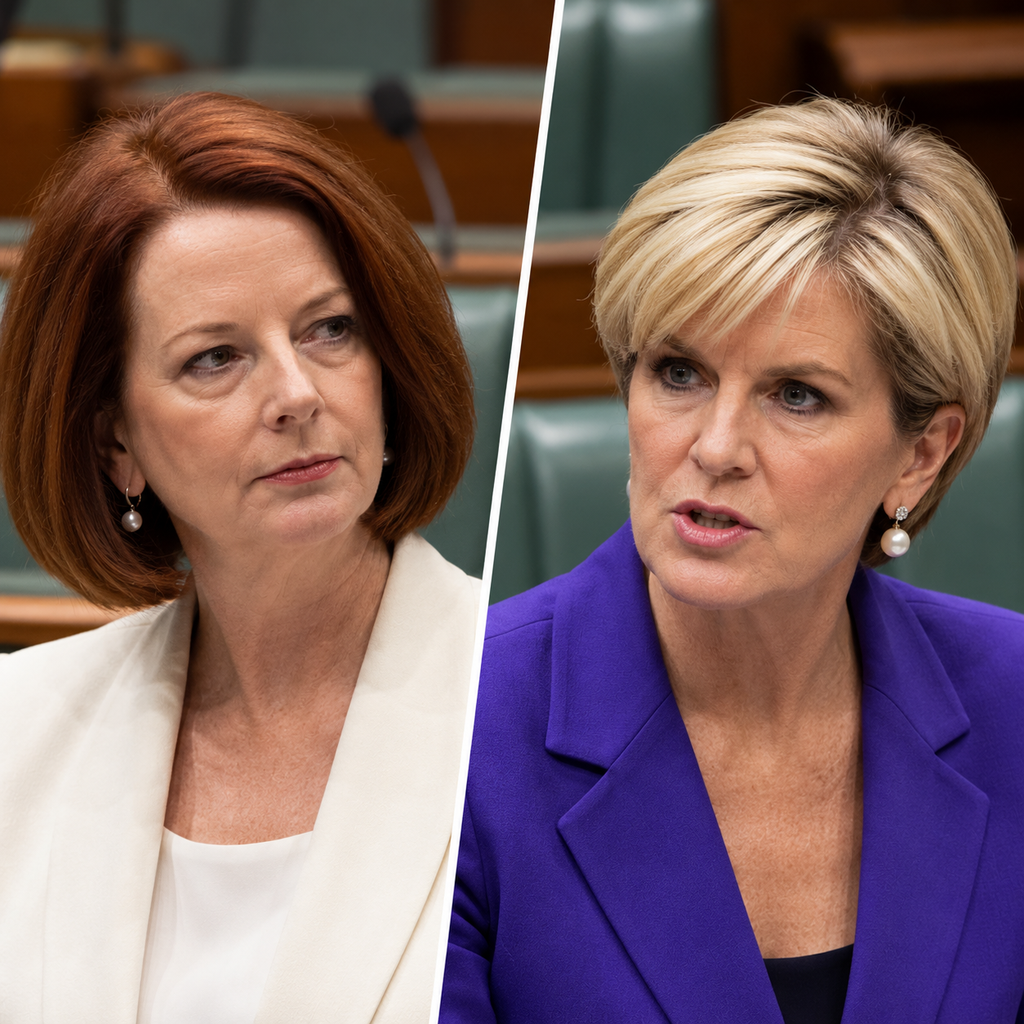
Her broader defence was that she had provided legal advice to people she understood to be union officeholders and that the relevant public authority had responsibility for deciding incorporation. She maintained that she had not committed wrongdoing. The opposition continued to press for explanations about her professional role and the knowledge available to her when the organisation was created.
The central legal distinction is between helping prepare an application and being the authority that accepts or rejects it. Lawyers may provide advice, draft documentation and communicate with clients. The registrar or other statutory decision-maker is responsible for applying the legal requirements within its jurisdiction. Those roles can overlap in a case history without being interchangeable, and attributing responsibility requires attention to what each participant actually did.
Incorporated associations are often used by community groups, sporting organisations, unions and other bodies to hold property, receive funds and manage activities. Registration can create a legal structure separate from the individual members. That structure brings administrative obligations, but the mere fact that an association was established does not show that money was mishandled or that the lawyer who advised clients committed an offence.
An organisation’s name can have practical consequences. Members, banks, suppliers and donors may understand a name as signalling a connection to an established institution. That is why questions about authority to use a union’s name, and whether the public registration process was properly followed, can be legitimate matters of scrutiny. They still need documentary evidence and a legal framework before any conclusion of wrongdoing can be made.
The distinction between allegations involving an association and allegations against a particular solicitor is equally important. An organisation could be improperly managed by one set of people without automatically establishing that every person who helped incorporate it knew of, authorised or benefited from the conduct. Legal and political accountability depend on individual acts, knowledge and responsibilities, not simply proximity to a disputed arrangement.
Gillard’s critics wanted to know what information was available when she acted for her clients. Gillard argued that she had not been aware of alleged later misuse and that she could not report matters she did not know about. Her explanation was a defence against the allegation that she should have recognised wrongdoing. It was not a comprehensive adjudication of every question about the association’s operation.
Legal professional duties can involve confidentiality, conflicts of interest, accurate documentation and acting within instructions. A lawyer’s obligation to a client does not confer permission to facilitate unlawful conduct. But assessing an individual practitioner’s performance requires the law and professional standards applicable to the circumstances, along with evidence of what the lawyer was told and what advice was actually given.
Those details matter because retrospective political debate often compresses a long sequence of events into a simple narrative of guilt or innocence. An application to incorporate an association, the opening of a bank account and alleged use of funds can occur at different stages and involve different people. A fair account must resist the temptation to attach every later question to the earliest visible legal adviser.
The dispute also raised questions about financial governance. Banks and incorporated organisations rely on records establishing who can open an account, authorise transactions and represent the entity. Clear controls can help prevent funds from being redirected without approval. That is a relevant general lesson from the controversy, not proof that any unverified allegation about Gillard was true.
For organisations operating on limited budgets, sound financial administration is essential. A community association may depend on volunteers, but it still benefits from documented decisions, appropriate signatories, separation of duties and accounts that members can inspect. Weak processes can create financial disputes even without a politician being involved. Strong processes can make disputes easier to investigate and resolve.
The historical argument was therefore capable of generating useful questions about organisational governance. Was the association’s purpose clearly stated? Who had authority to act for it? What role did the union itself play? Were the relevant registration documents accurate? Such questions can be examined through records, while parliamentary speculation alone cannot provide definitive answers.
The political setting was a second layer of the story. Gillard was prime minister and Bishop was the deputy opposition leader. The opposition’s questioning had an immediate political purpose as well as a purported accountability purpose. Gillard’s reply was designed to rebut the accusations and undermine their credibility in front of Parliament and a wider audience.
Parliamentary privilege also affects how such exchanges are understood. MPs have considerable freedom to question ministers and criticise public conduct during proceedings. That protection serves democratic scrutiny, but it does not transform every accusation into verified evidence. A journalist must still distinguish what was asked in the chamber from what a court or regulator has independently established.
The Moon landing remark was effective because it changed the tone of the discussion. Instead of engaging only with the technical questions about incorporation, Gillard framed the opposition’s approach as an increasingly extravagant list of suspicions. The rhetorical move may have helped her politically, but it did not answer every governance question on its own. A powerful line and a complete evidentiary explanation are different things.
Bishop’s questions also deserve to be described accurately rather than collapsed into a vague claim that she accused Gillard of every crime associated with the controversy. She asked about particular steps and legal obligations, including the association’s name and authority. Readers can judge the fairness of those questions more clearly when the issues are stated precisely.
The account of the event should acknowledge that allegations circulated outside Parliament as well. Former union figures, journalists and political opponents made various claims about the association. Gillard publicly disputed suggestions that she had committed wrongdoing. The existence of intense reporting did not itself establish criminal or professional misconduct, and the differing roles of the people involved should not be blurred.
Questions about access to historic banking records formed part of the wider public argument. Old records can be difficult to recover, especially when the events under examination are remote and organisations have changed. Missing documentation can complicate an investigation, but its absence alone does not prove a particular accusation. A credible assessment requires evidence that can be tested, not an inference built solely on gaps.
For readers interested in corporate and community governance, the issue connects to ordinary risks: misleading organisational names, uncertainty about control of accounts, unrecorded decisions and disputes over who authorised payments. Businesses and associations can lower those risks through proper recordkeeping and independent oversight. Those are general governance principles rather than a retrospective judgment about an individual politician.
The legal system distinguishes suspicion, professional criticism, investigation and proven liability. A lawyer’s past involvement in advice for an association may justify scrutiny, but liability depends on evidence and legal tests. It would be inaccurate to turn Bishop’s questions into an established legal finding against Gillard or to imply that the prime minister was criminally convicted over the association.
The exchange is often remembered as a contest of parliamentary personalities. Gillard deployed sarcasm; Bishop persisted with detailed questions. Their disagreement was genuine, but the short quotation has frequently travelled further than the background needed to understand it. Repeating the line without explaining the AWU association and the legal questions risks turning political history into a misleading anecdote.
What made the episode notable was the collision between two public expectations. Senior politicians should answer serious questions about their prior professional work where those questions are relevant to public trust. At the same time, allegations should not be repeated as though they were proved merely because an opponent has asked them many times. Both standards matter in a fair democracy.
An accurate account leaves the roles and conclusions separate. Bishop challenged Gillard about legal advice and an association’s establishment; Gillard denied wrongdoing, explained her professional role and ridiculed the breadth of the suspicions. The argument took place in a former parliamentary era. Nothing about recalling it makes the underlying allegations newly proved or the historical remarks newly delivered.
The lasting value of the story is a reminder that public accountability is strongest when sharp questions are paired with documents, legal context and a willingness to distinguish what is known from what is alleged. Gillard’s Moon landing line captured a moment of political theatre. The substantive issue beneath it was how to judge professional decisions, organisational controls and political claims without confusing scrutiny with a verdict.






