Just weeks ago, Ben Carroll publicly looked Victorian Premier Jacinta Allan in the eye and ruled out any leadership challenge.
Standing alongside the premier, the Deputy Premier dismissed speculation that he intended to replace her, insisting he remained fully committed to her leadership as Victoria prepared for the difficult months ahead.
Less than six weeks later, everything changed.
Carroll has now confirmed he will nominate for the leadership of the Victorian Labor Party, setting up the most serious internal challenge to Jacinta Allan since she succeeded Daniel Andrews in 2023. The dramatic reversal has plunged Victoria’s government into political turmoil only months before voters head to the polls in the 2026 state election.
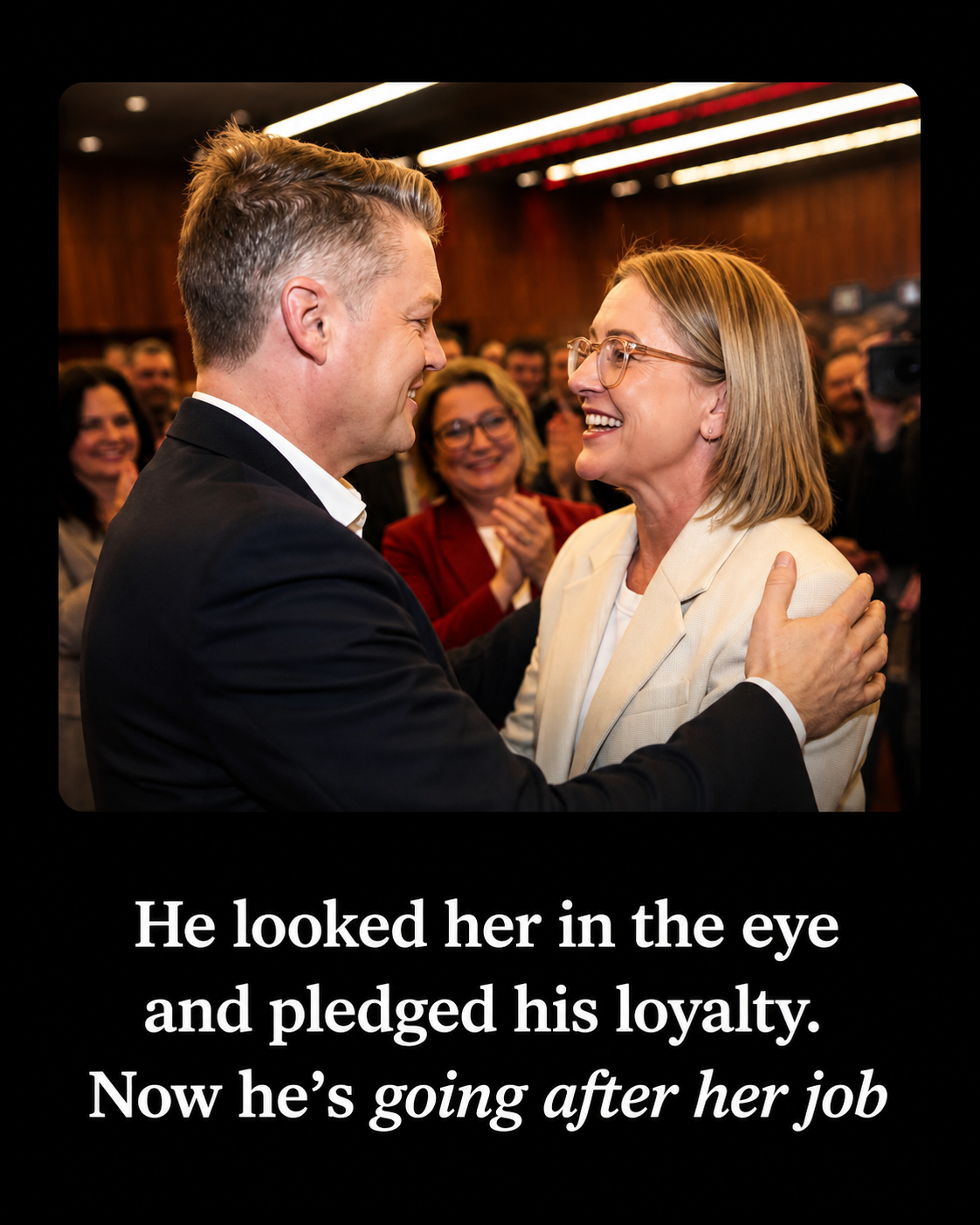
The speed of Carroll’s change in position has stunned colleagues inside Labor.
According to multiple reports, a growing number of ministers and backbench MPs concluded that Allan no longer commanded majority support within the parliamentary caucus. After internal discussions intensified over recent days, Carroll informed the Premier he would seek the leadership himself rather than continue serving as her deputy.
The challenge marks a remarkable political turnaround.
Only weeks earlier, Carroll had sought to end persistent rumours by publicly declaring that he would not move against Allan. That reassurance now stands in sharp contrast with his decision to enter the contest, prompting questions about what changed inside Victoria’s governing party.
At the centre of the story is a politician who, despite holding one of Victoria’s most senior offices, has often maintained a relatively low national profile.
Benjamin Alan Carroll, 51, has represented the Melbourne electorate of Niddrie since 2012. Before entering Parliament, he studied law at La Trobe University, worked in insurance and later served as a political adviser to former Labor leaders Steve Bracks, Justin Madden and Stephen Conroy.
His steady rise through Labor ranks reflected a reputation as an effective organiser and administrator rather than a headline-grabbing political campaigner.
After joining Daniel Andrews’ ministry, Carroll accumulated a series of portfolios including Industry, Employment, Public Transport, Roads, Corrections and Youth Justice before becoming Deputy Premier when Allan succeeded Andrews in September 2023. He also retained responsibility for Education, one of the government’s largest and most politically sensitive portfolios.
As Education Minister, Carroll sought to position himself as a pragmatic reformer.
His tenure included the rollout of mandatory phonics instruction across Victorian primary schools and reforms designed to improve literacy outcomes. Supporters argued those policies helped deliver improved student performance, while critics questioned aspects of the government’s broader education agenda.
Carroll also demonstrated a willingness to make difficult administrative decisions.
Following the accidental release of examination material in 2024, he removed the leadership of Victoria’s curriculum authority and pledged reforms aimed at restoring public confidence in the state’s assessment system. The episode enhanced his reputation among some Labor colleagues as a minister prepared to accept responsibility during periods of political pressure.
Despite that record, Carroll remained publicly loyal to Allan for most of her premiership.
When Daniel Andrews resigned in 2023, Allan became Premier unopposed after negotiations between Labor’s internal factions. Carroll briefly considered challenging during the succession process before ultimately accepting the deputy leadership, allowing the party to present a united front.
That unity has steadily eroded.
Victoria’s Labor Government has endured months of deteriorating polling, criticism over rising state debt, continuing concerns about violent crime, pressure surrounding major infrastructure projects and allegations linked to organised crime infiltration of construction sites. Collectively, those issues have damaged public confidence and intensified calls for political renewal within the governing party.
Internal dissatisfaction reportedly spread across both Labor’s Left and Right factions, making Allan increasingly vulnerable despite her earlier control of the parliamentary party.
Several influential MPs are understood to believe the government requires a leadership reset if it is to remain competitive at the next election. Carroll has emerged as the only candidate viewed as capable of attracting support across factional lines.
According to reports, Carroll has argued privately that Labor needs a different public face to reconnect with voters who have become increasingly frustrated over cost-of-living pressures, public services and confidence in government.
He is also reported to favour a stronger response to allegations surrounding the state’s major infrastructure projects, including consideration of a royal commission into claims of criminal infiltration connected with elements of the construction sector.
Jacinta Allan, however, has refused to step aside.
The Premier has declared that she intends to contest any leadership ballot, insisting she remains the best person to lead Victoria into the election. Rather than resigning under pressure, Allan has challenged her critics to test their support through the party’s formal leadership rules.
Those rules mean the outcome may not be immediate.
If enough MPs support a leadership spill and both Allan and Carroll nominate, the contest could extend beyond a simple caucus vote and involve broader party processes depending on how internal rules are applied. Senior Labor figures have reportedly been working behind the scenes to avoid a prolonged public battle that could further damage the government’s standing.
The timing could hardly be more sensitive.
Victoria is expected to hold a state election in just a few months, and opinion polling has consistently suggested Labor faces one of its toughest electoral contests in years. Allan’s personal approval ratings have weakened while opposition parties have sought to capitalise on voter concerns over debt, crime and government management.
Political analysts note that leadership changes shortly before elections carry considerable risks.
A new leader can provide a temporary political reset and attract renewed media attention, but leadership instability may also reinforce perceptions of a divided government struggling to regain public confidence.
For Carroll personally, the challenge represents the defining moment of his political career.
After more than a decade steadily climbing Victoria’s political ranks, he now finds himself attempting to convince colleagues that replacing a sitting premier only months before an election offers Labor its best chance of remaining in government.
Supporters describe Carroll as a disciplined administrator with ministerial experience across multiple portfolios and an ability to communicate with both Labor factions. They believe his relatively low-profile style could help rebuild confidence after months of political turbulence.
Critics argue that simply changing leaders will not resolve the structural challenges confronting the Victorian Government, including budget pressures, infrastructure cost blowouts and broader public dissatisfaction after more than a decade of Labor rule.
Whether Carroll ultimately succeeds or not, his decision has already transformed Victoria’s political landscape.
The man who only weeks ago publicly pledged his loyalty to Jacinta Allan is now asking colleagues to entrust him with the state’s highest political office.
For Victorian Labor, the leadership contest is no longer about personal relationships or factional manoeuvring alone. It has become a referendum on whether the party believes a change at the top is necessary to avoid defeat at the next election—a decision that could shape Victorian politics well beyond 2026.






