A former Special Air Service Regiment (SASR) non-commissioned officer has launched a fierce attack on Australia’s former Chief of the Defence Force, General Angus Campbell, accusing senior military leaders of fracturing one of the nation’s most elite fighting units through the handling of war crimes investigations arising from Australia’s two-decade campaign in Afghanistan.
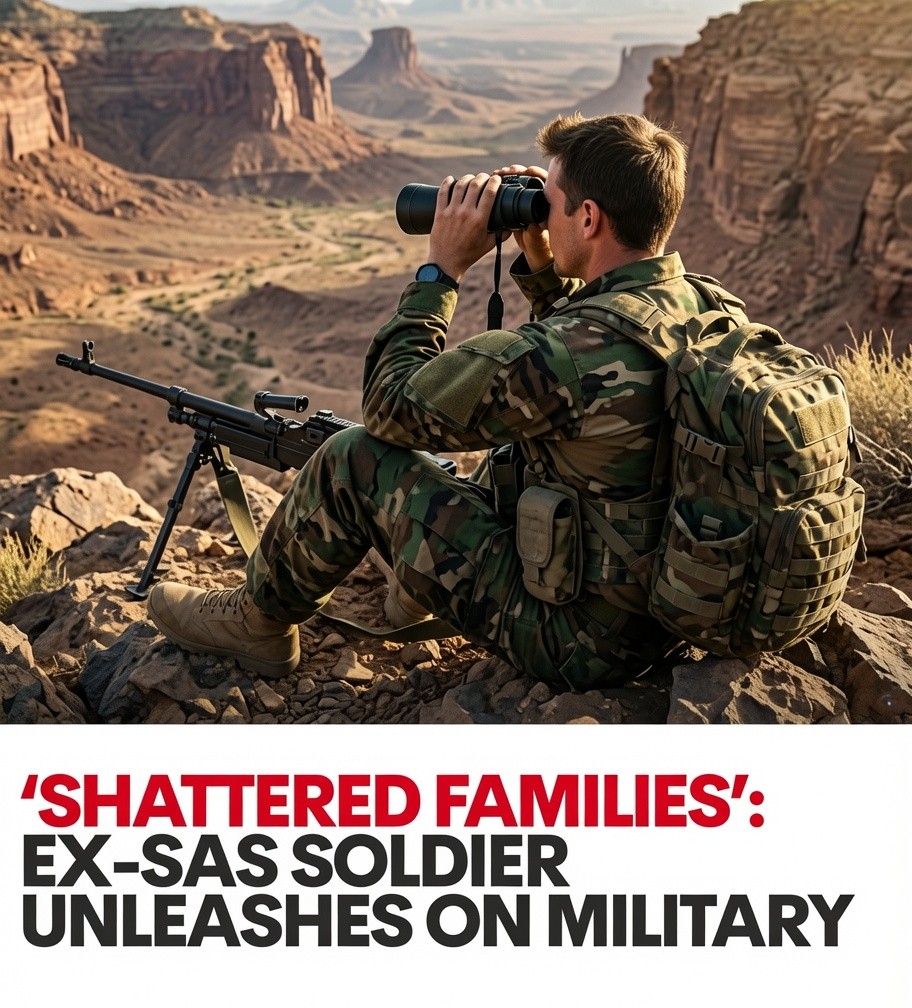
Andy White, who served for 14 years in the SASR and completed multiple deployments to Afghanistan, outlines his criticisms in a new memoir in which he argues the Australian Defence Force’s response to allegations of unlawful killings permanently damaged the regiment, divided serving soldiers and veterans, and undermined public confidence in Australia’s special forces.
At the centre of White’s criticism is former Defence Force chief General Angus Campbell, himself a former SAS officer, who oversaw the military during the latter stages of the landmark Afghanistan war crimes inquiry and the implementation of its recommendations.
White contends that the inquiry relied too heavily on rumours and internal accusations that emerged within the regiment, leading to conclusions that continue to reverberate through the Australian military and legal system.
“Rumours” within the regiment, he argues, ultimately became the foundation for investigations that reshaped the future of Australia’s elite special forces.
The memoir revisits one of the most contentious chapters in modern Australian military history.
In 2016, then-Chief of Army Angus Campbell authorised an independent inquiry led by New South Wales Supreme Court Justice and Army Reserve Major General Paul Brereton after allegations emerged concerning the conduct of Australian special forces personnel during operations in Afghanistan.
After a four-year investigation involving hundreds of witnesses and tens of thousands of documents, the Brereton Report was released in late 2020. The inquiry found credible information suggesting that 25 current or former Australian Defence Force personnel were involved in the unlawful killing of 39 Afghan civilians and prisoners between 2005 and 2016, together with the cruel treatment of two other individuals. The report recommended that a number of soldiers be referred for criminal investigation while emphasising that responsibility rested with a relatively small group rather than the broader Australian military.
General Campbell publicly accepted the report’s findings at the time, apologising on behalf of the Australian Defence Force for any wrongdoing committed by Australian soldiers and announcing sweeping reforms to restore confidence in the Special Operations Command.
Among the most symbolic measures was the decision to remove the SASR’s 2 Squadron from the Army’s order of battle. The squadron had been at the centre of many allegations examined during the inquiry and was formally disbanded pending the creation of a new unit.
White argues those decisions inflicted lasting damage on soldiers who had served honourably throughout Australia’s longest war.
According to the former SAS sergeant, the inquiry and its aftermath created deep divisions inside the regiment, with former comrades turning against one another and long-standing trust within the elite unit breaking down.
The memoir also revisits White’s own operational experience in Afghanistan, including witnessing the death of a fellow SAS soldier during combat with Taliban forces. He contends that the realities of battlefield decision-making have been poorly understood by many Australians who have judged the conduct of soldiers from outside the operational environment.
The debate surrounding the Brereton Report has remained highly polarised since its publication.
Supporters of the inquiry argue it represented a necessary process of accountability after years of allegations concerning unlawful killings by Australian special forces. They point to the extensive evidence gathered over four years and the inquiry’s careful distinction between the overwhelming majority of personnel who served professionally and a relatively small number accused of criminal conduct.
Critics, including White, argue the investigation relied excessively on contested testimony, internal rivalries and incomplete evidence while causing profound reputational harm before criminal courts had an opportunity to determine individual guilt.
The legal consequences of the inquiry continue to unfold.
Former SAS corporal Oliver Schulz became the first Australian soldier to be charged with an alleged war crime arising from the Afghanistan conflict after prosecutors accused him of unlawfully killing Afghan man Dad Mohammad during a 2012 operation. Schulz has pleaded not guilty, and the criminal proceedings remain before the courts. As the matter is ongoing, no findings of guilt have been made.
The Brereton findings also formed part of the broader backdrop to proceedings involving Victoria Cross recipient Ben Roberts-Smith.
In 2023, Justice Anthony Besanko dismissed Roberts-Smith’s defamation action against several newspapers after finding, on the civil standard of the balance of probabilities, that multiple allegations concerning unlawful killings in Afghanistan were substantially true. Those civil findings were distinct from any criminal process and applied a lower legal standard than is required for a criminal conviction.
More recently, Roberts-Smith has also become the subject of criminal proceedings arising from alleged conduct in Afghanistan. Those proceedings remain before the courts, and he is presumed innocent unless proven guilty according to law.
The investigations have transformed Australia’s approach to military accountability.
Following the release of the Brereton Report, the Commonwealth established the Office of the Special Investigator to examine potential criminal offences identified during the inquiry. The office works alongside the Australian Federal Police and the Commonwealth Director of Public Prosecutions to determine whether sufficient evidence exists to pursue criminal prosecutions.
Beyond the courtroom, the Afghanistan investigations have prompted significant institutional reform within the Defence Force.
Changes have included leadership reforms within Special Operations Command, renewed emphasis on ethical decision-making, strengthened oversight mechanisms and a comprehensive review of command culture. Defence leaders have consistently stated that these reforms are intended both to restore public confidence and to ensure future operations meet Australia’s legal and moral obligations.
General Campbell has previously defended the inquiry as an essential process despite acknowledging its painful consequences.
When the Brereton Report was released in 2020, he described its findings as “deeply disturbing” and accepted that confronting alleged misconduct was necessary to preserve the integrity of the Australian Defence Force. He also acknowledged the possibility that investigators may not have uncovered every unlawful incident committed during the conflict, encouraging anyone with relevant information to come forward.
White’s memoir presents a markedly different perspective.
Rather than viewing the inquiry as a necessary reckoning, he argues it became a process that unfairly damaged soldiers, fractured the regiment and weakened Australia’s special forces capability.
His criticisms add another voice to an increasingly public debate among former SAS personnel, many of whom have expressed sharply contrasting views about how Australia’s military should respond to allegations of misconduct during wartime.
For some veterans, public accountability remains essential to maintaining confidence in the armed forces and honouring the overwhelming majority of personnel who served lawfully. Others believe the investigations have overlooked the extraordinary complexity of combat operations and imposed lasting personal and professional costs on soldiers whose conduct has never resulted in criminal convictions.
Those competing perspectives continue to shape discussion of Australia’s two-decade involvement in Afghanistan.
Although the Brereton Report established credible information supporting allegations of unlawful killings, many related criminal matters are still working their way through Australia’s legal system. Courts—not public debate, political commentary or personal memoirs—will ultimately determine criminal responsibility in the remaining cases.
White’s memoir ensures, however, that the internal divisions exposed by the Afghanistan war crimes investigations remain part of Australia’s broader conversation about military leadership, accountability and the enduring human cost of the nation’s longest overseas conflict.






