Former federal Labor MP Michael Danby has delivered a scathing assessment of Victorian Premier Jacinta Allan, accusing her of putting personal ambition ahead of the party as pressure mounted for a leadership change just months before the state election.
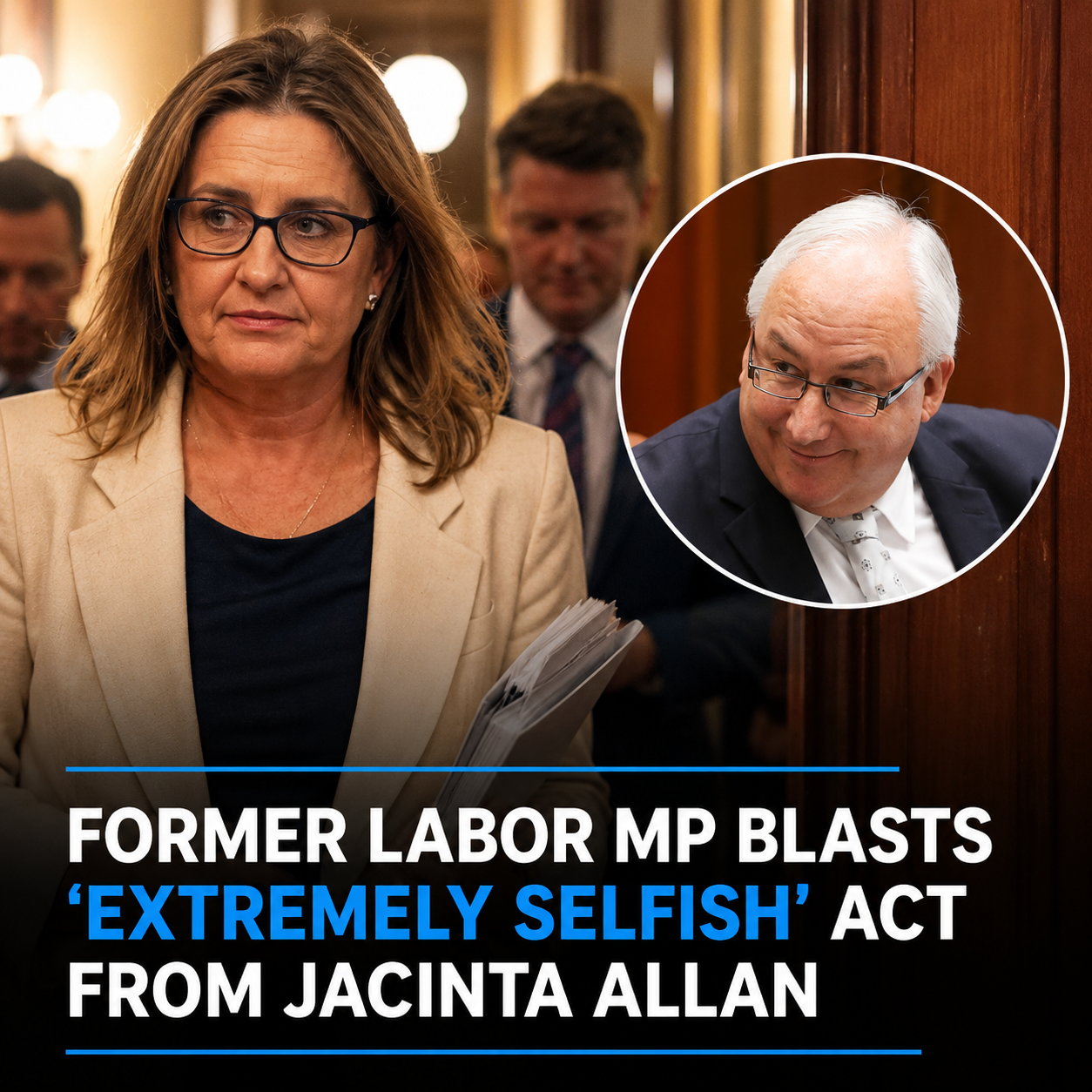
Speaking on Melbourne radio station 3AW, Mr Danby said Premier Allan should have recognised that her position had become untenable after Deputy Premier Ben Carroll declared he was prepared to challenge for the Labor leadership.
According to Mr Danby, the Victorian Labor caucus had already reached its conclusion.
“Jacinta’s brand is absolutely toxic,” he told 3AW Drive, arguing that remaining in office despite losing majority support would only damage Labor’s electoral prospects further.
Mr Danby went even further, describing any attempt by the Premier to cling to power as “extremely selfish”, saying the priority should be giving the government its best chance of retaining office at the upcoming Victorian election.
His comments came during one of the most turbulent periods for Victorian Labor since the resignation of former Premier Daniel Andrews in 2023.
Only months before Victorians head to the polls, internal dissatisfaction over the government’s electoral standing, declining polling numbers and a series of political controversies has fuelled an unprecedented leadership challenge from within Labor’s own ranks.
Deputy Premier Ben Carroll formally announced that he was prepared to seek the leadership after concluding Premier Allan no longer enjoyed the confidence of a majority of Labor caucus members.
His declaration effectively transformed weeks of speculation into an open leadership contest and intensified pressure on the Premier to step aside voluntarily rather than force colleagues into a divisive internal battle.
Under Victorian Labor rules, if a majority of caucus members support a leadership spill, the parliamentary party can vote to replace the leader. A contested ballot involving the wider party membership may also follow under certain circumstances, although senior Labor figures had reportedly hoped to avoid a prolonged contest ahead of the election.
Mr Danby argued that prolonging the process would only hand political ammunition to the Liberal opposition while distracting the government from addressing issues voters considered more important, including the cost of living, public finances, crime and infrastructure.
Although no longer an elected politician, Mr Danby remains a prominent Labor identity after representing the federal seat of Melbourne Ports between 1998 and 2019.
Throughout his parliamentary career he was regarded as an influential voice within the party’s Right faction, making his criticism of a sitting Labor Premier particularly notable.
His intervention also reflected growing concern among Labor figures that Premier Allan’s personal standing with voters had become a significant electoral liability.
Polling over recent months has suggested Labor faces a much tighter contest than expected after more than a decade in government, while several high-profile controversies have eroded public confidence in the state administration.
Among the issues weighing on the government have been persistent criticism surrounding Victoria’s major infrastructure projects, concerns about state debt, integrity questions linked to the construction sector and ongoing pressure over crime and public safety.
Those challenges have increasingly overshadowed Labor’s achievements in health, education and transport, creating frustration among MPs worried about their own electoral prospects.
Supporters of Mr Carroll believe a leadership change offers Labor its best opportunity to reset the government’s image before voters go to the polls later this year.
The Deputy Premier has built a reputation as one of the government’s strongest communicators and has previously served in numerous ministerial portfolios, including education, roads, public transport and youth justice.
His supporters argue those credentials position him as the party’s strongest option to reconnect with voters and restore confidence in the government.
The leadership challenge also exposed the complex factional dynamics that continue to shape Victorian Labor.
While Premier Allan emerged from the party’s Left faction following Daniel Andrews’ resignation in 2023, Mr Carroll has long been associated with Labor’s Right.
Nevertheless, reports indicated his challenge attracted support from MPs across factional lines, suggesting dissatisfaction with the Premier extended well beyond traditional internal alliances.
Political observers noted that leadership spills are always risky so close to an election.
Replacing a premier can provide a fresh political narrative and renewed public attention, but it can also reinforce perceptions of instability if the transition becomes prolonged or acrimonious.
That reality appeared central to Mr Danby’s criticism, with the former MP arguing Labor needed a decisive outcome rather than weeks of internal conflict.
His remarks echoed broader concerns expressed within sections of the party that every additional day devoted to leadership speculation reduced Labor’s ability to campaign effectively against the opposition.
As events unfolded, pressure on Premier Allan intensified rapidly.
Facing the prospect of a divisive internal ballot and acknowledging she no longer commanded majority caucus support, she ultimately chose to step aside, paving the way for a swift transition to Ben Carroll as Victoria’s new Premier.
Following his unanimous endorsement by the Labor caucus, Premier Carroll pledged to take the government in a “new direction” while promising renewed attention to integrity, economic management and public confidence.
He also signalled a willingness to pursue a royal commission into Victoria’s construction sector, describing accountability and transparency as priorities for his administration.
The rapid leadership transition marked the end of Jacinta Allan’s tenure after less than three years as Premier.
She became Victoria’s second female premier when she succeeded Daniel Andrews in September 2023, inheriting one of Australia’s most politically dominant Labor governments.
However, she also inherited significant fiscal pressures, major infrastructure cost overruns and growing public scrutiny of the state’s finances.
While supporters credit her government with continuing major transport and health investments, critics argue her administration struggled to convince voters it had a clear plan to address escalating debt and restore confidence in public administration.
Mr Danby’s comments therefore resonated beyond personal criticism.
They reflected a broader strategic argument increasingly heard within Labor—that political survival sometimes requires leaders to recognise when remaining in office risks doing greater damage than stepping aside.
Whether Premier Carroll’s arrival will be enough to reverse Labor’s fortunes remains uncertain.
With the Victorian election approaching rapidly, the government now faces the difficult task of convincing voters that a change in leadership represents genuine renewal rather than simply a change of faces at the top.
For Labor, the coming months will determine whether the dramatic leadership change provides the political reset many MPs were hoping for—or whether internal turmoil has already inflicted lasting damage on the party’s electoral prospects.






