One Nation leader Pauline Hanson has lost her appeal against a landmark Federal Court decision that found she unlawfully racially discriminated against Greens Senator Mehreen Faruqi, with the Full Court unanimously upholding the original ruling.
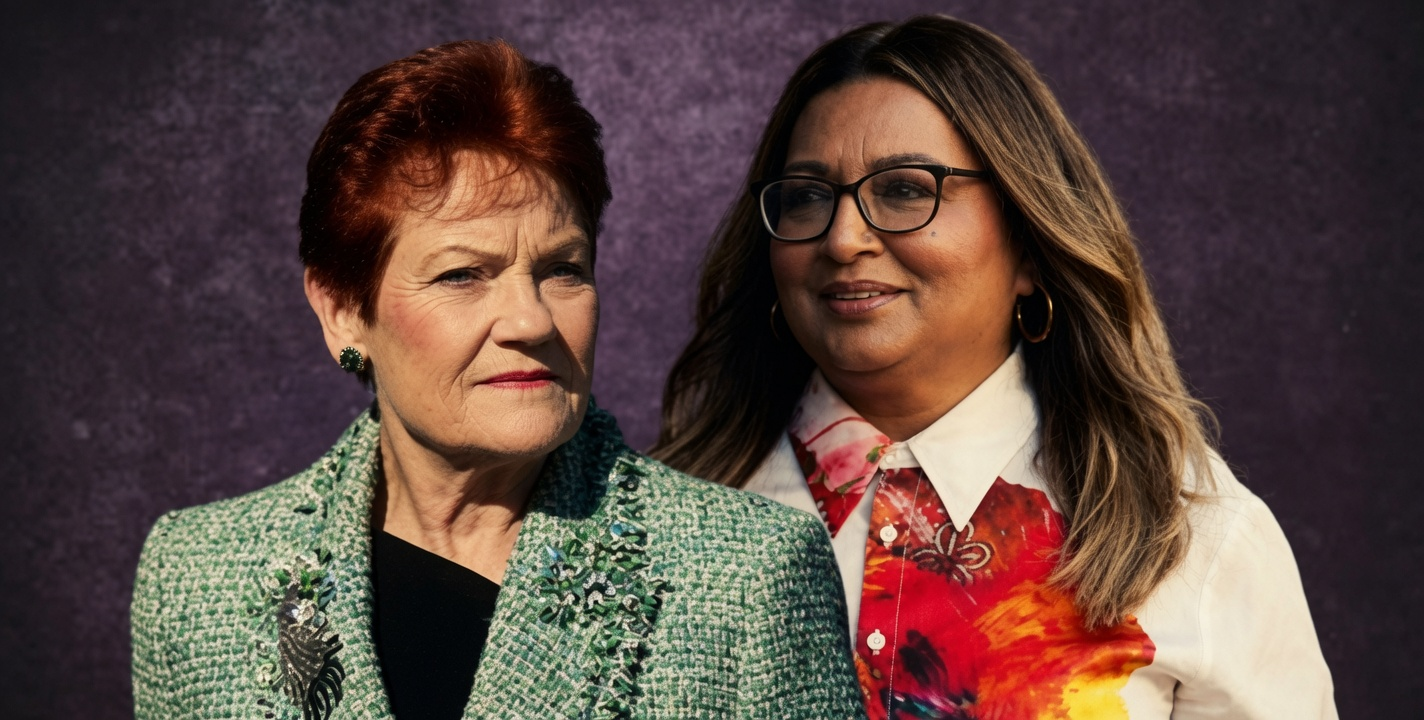
The judgment, delivered on Monday by the Full Court of the Federal Court, confirms that Hanson’s 2022 social media post telling Faruqi to “pack your bags and piss off back to Pakistan” breached Section 18C of Australia’s Racial Discrimination Act 1975.
The appeal challenged a 2024 decision by Justice Angus Stewart, who concluded that Hanson’s comments constituted unlawful racial discrimination. After hearing arguments late last year, the Full Court—comprising Justices Melissa Perry, Geoffrey Kennett and Elizabeth Bennett—dismissed the appeal and affirmed Stewart’s findings in full.
The dispute arose from an exchange on social media in September 2022 following the death of Queen Elizabeth II.
Senator Faruqi, who was born in Pakistan before migrating to Australia and becoming an Australian citizen, posted criticism of the British monarchy, describing it as a “racist empire”. Hanson responded on social media by telling Faruqi to “pack your bags and piss off back to Pakistan”, adding that if she was unhappy with Australia she should leave. Those remarks prompted Faruqi to commence legal proceedings under the Racial Discrimination Act.
Justice Stewart’s original judgment found the comments were far more than robust political disagreement.
He ruled that the statement relied on a longstanding racist trope suggesting Australians from non-European backgrounds are perpetual outsiders who do not truly belong in the country, regardless of their citizenship or public office. The judge concluded the comments were reasonably likely to offend, insult, humiliate or intimidate because of race or national or ethnic origin, thereby breaching Section 18C.
Hanson appealed that decision, arguing the judgment imposed an unjustified restriction on political speech and freedom of expression.
Her legal team contended that the comments should be viewed within the context of a heated political exchange and that the trial judge had incorrectly applied the law governing racial discrimination.
The Full Court rejected those arguments.
In dismissing the appeal, the judges held that Justice Stewart had correctly interpreted and applied the Racial Discrimination Act. The court concluded the remarks were directed at Faruqi because of her race or ethnic background rather than representing merely legitimate political criticism.
Speaking outside court, Mehreen Faruqi welcomed the unanimous decision, saying it represented “justice” not only for herself but also for Australians who had experienced similar abuse.
She said the ruling demonstrated that telling someone to “go back where you came from” remains unacceptable in Australian public life, regardless of whether it occurs online or in political debate. Faruqi further alleged Hanson had engaged in racist and Islamophobic conduct, remarks reflecting her own assessment of the case rather than additional findings made by the court.
Pauline Hanson was not present when the judgment was delivered.
Following the decision, she expressed disappointment with the outcome and indicated she would consider seeking special leave to appeal to the High Court of Australia. Hanson maintained that the decision raises broader concerns about freedom of speech and the ability of politicians to engage in robust political debate.
The case has become one of the most significant recent tests of Section 18C of the Racial Discrimination Act.
Section 18C makes it unlawful to publicly perform an act that is reasonably likely to offend, insult, humiliate or intimidate another person because of their race, colour or national or ethnic origin. The provision has generated political debate for many years, with supporters arguing it provides important protection against racial abuse, while critics contend it may unduly restrict free expression.
The appeal also attracted broader legal interest because it raised questions about how racial discrimination law applies where race and religion may overlap.
Ahead of the appeal hearing, Australia’s Race Discrimination Commissioner successfully sought leave to intervene, arguing the case would help clarify how the law should operate when discriminatory conduct targets multiple aspects of a person’s identity simultaneously.
The judgment arrives against the backdrop of ongoing national debate over racism, multiculturalism and political discourse in Australia.
Public discussion surrounding Section 18C has repeatedly resurfaced over the past decade, with successive governments considering but ultimately declining to substantially amend the provision. Supporters say the law plays an important role in protecting minority communities from racial abuse, while opponents continue to advocate stronger protections for political speech.
Legal experts note that the court’s ruling does not prevent vigorous criticism of political opponents. Instead, it reinforces the principle that criticism must not cross the line into unlawful racial discrimination by targeting a person’s race or ethnic origin. The Full Court’s unanimous decision therefore provides further guidance on where Australian courts currently draw that boundary under existing legislation.
For Hanson, the defeat represents another high-profile legal setback after years of defending the controversial social media post. For Faruqi, the outcome reinforces the original Federal Court finding that the remarks were unlawful.
Whether the litigation proceeds to the High Court will depend on whether Hanson seeks special leave to appeal and whether Australia’s highest court agrees to hear the matter. Until then, the Full Federal Court’s unanimous judgment remains the authoritative interpretation of how Section 18C applies to one of the country’s most closely watched political discrimination cases.






