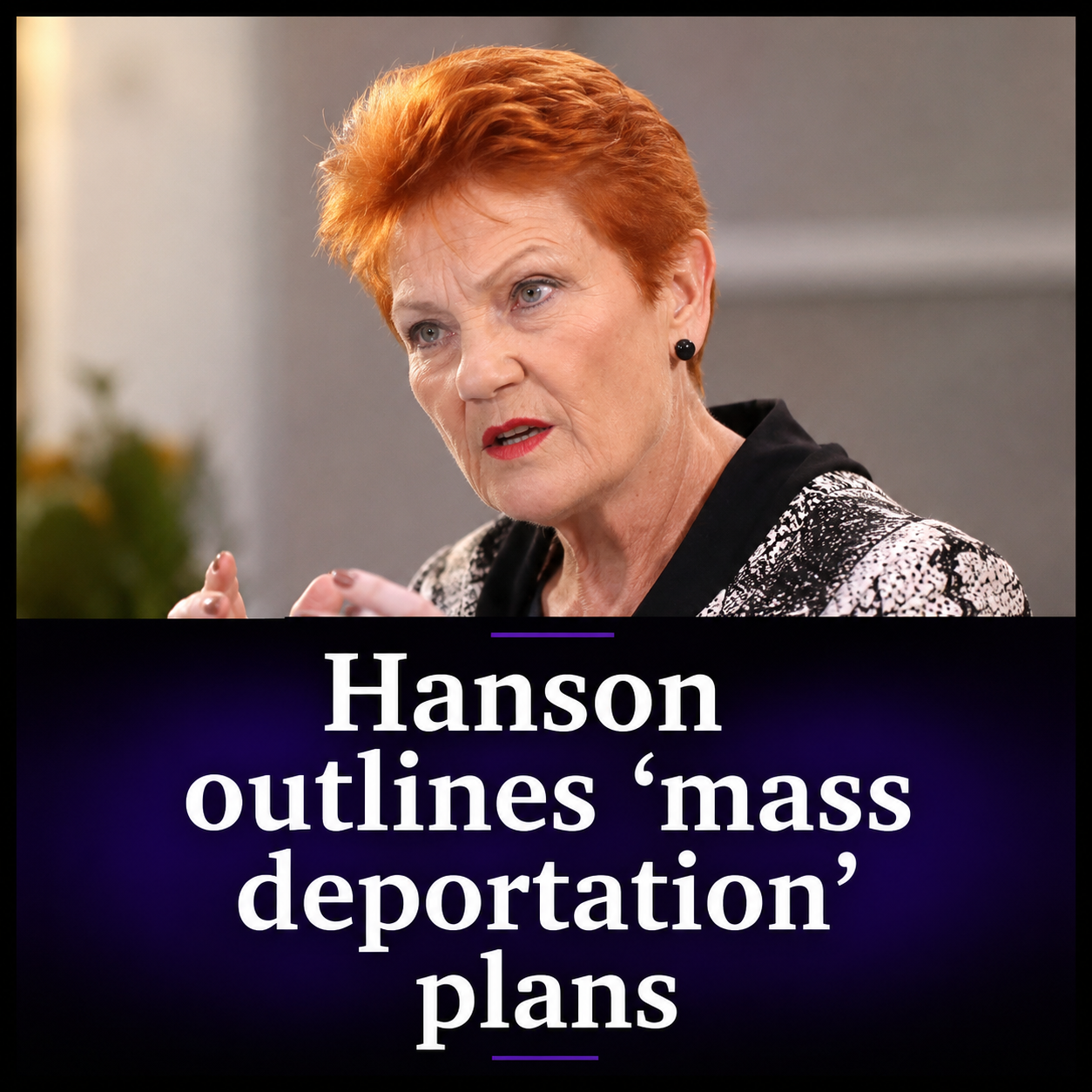
One Nation leader Pauline Hanson has reignited debate over immigration after using a visit to the United Kingdom to endorse tougher border policies and express support for large-scale deportations of people living illegally in the country.
The controversial tour, which formed part of Channel Seven’s Spotlight documentary, also placed Hanson alongside one of Britain’s most divisive political figures, Tommy Robinson, leading to renewed scrutiny of her international associations and Australia’s own migration debate.
During the program, Hanson toured the English town of Luton with Robinson, whose real name is Stephen Yaxley-Lennon. Robinson is a British far-right activist with a lengthy criminal record, including convictions relating to assault, fraud and contempt of court. He has long argued that Britain has failed to control immigration and has become one of the country’s most polarising political figures.
The documentary focused on the pair’s visit to neighbourhoods that Robinson claims have undergone dramatic demographic change because of immigration.
Speaking during the program, Hanson argued Australia should avoid repeating what she described as Britain’s mistakes.
She praised proposals advanced by British right-wing politician Rupert Lowe advocating the deportation of people who remain in the country unlawfully and indicated she would support similar measures in Australia.
When questioned about whether Australia should pursue mass deportations of illegal migrants, Hanson responded affirmatively and dismissed concerns about political backlash or logistical difficulties.
“I don’t give a s***,” she said when challenged over whether such proposals would attract criticism, insisting governments should prioritise enforcing immigration laws.
Hanson argued that people without legal permission to remain in Australia should be removed and maintained that stronger border enforcement is necessary to preserve public confidence in the migration system.
Australia already possesses legal mechanisms allowing authorities to detain and remove unlawful non-citizens under the Migration Act. Federal governments of both major parties have regularly deported people who overstay visas or lose their legal right to remain, although individual cases are subject to judicial review and Australia’s international legal obligations.
The documentary’s most heated exchange, however, did not involve Hanson herself.
Instead, attention quickly shifted to Robinson, who repeatedly clashed with veteran Australian journalist Liam Bartlett during an interview filmed in Luton.
Bartlett challenged Robinson over his criminal convictions, controversial political activism and accusations that his rhetoric fuels social division.
Robinson responded angrily, accusing mainstream media organisations of deliberately misrepresenting his views and attempting to silence public discussion about immigration and Islam.
The confrontation escalated into a tense back-and-forth, with Robinson repeatedly interrupting questions and defending his past actions while insisting critics ignored problems associated with illegal immigration and community integration.
Although Robinson acknowledged making mistakes earlier in his life, he argued his campaigning reflected concerns shared by ordinary Britons rather than extremist ideology.
His critics strongly reject that characterisation.
Robinson has spent years at the centre of political controversy in Britain. He co-founded the English Defence League and has been convicted of multiple criminal offences over two decades, including assault, mortgage fraud, using false travel documents and contempt of court. His public activities have frequently attracted criticism from anti-racism organisations, mainstream political leaders and sections of Britain’s Jewish community.
Hanson’s decision to meet Robinson has therefore generated significant criticism back in Australia.
Prime Minister Anthony Albanese accused the One Nation leader of associating with fringe figures while portraying Australia negatively overseas.
Home Affairs Minister Tony Burke similarly argued Hanson was promoting policies that already exist under Australian law, noting unlawful non-citizens can already be detained and removed through established legal processes.
Opposition figures also distanced themselves from Robinson personally while continuing to argue for tighter migration controls.
Coalition representatives have maintained that Australia’s immigration debate should remain focused on visa integrity, border security and sustainable migration levels rather than personalities associated with overseas political movements.
For Hanson, however, the UK visit formed part of a broader campaign highlighting migration as One Nation’s defining political issue.
Throughout the tour she argued that Australia should significantly reduce migration, strengthen deportation powers and place greater emphasis on preserving what she describes as Australia’s cultural identity.
She also repeated earlier criticisms of multiculturalism and suggested previous governments had allowed migration levels to rise too rapidly, comments that attracted widespread political condemnation.
The controversy intensified after Hanson appeared on Robinson’s podcast during the same trip.
In that interview she argued Australia’s migration challenges began after the abolition of the White Australia Policy and made a series of claims about immigration and welfare that were widely criticised by political opponents and community organisations.
The meetings formed part of a wider itinerary that included discussions with several prominent figures on the British political right.
Supporters argue Hanson was conducting a legitimate fact-finding mission examining how Britain has managed immigration and integration.
Critics contend the trip provided legitimacy to controversial figures whose views sit well outside Australia’s political mainstream.
The television program itself also became part of the controversy.
Following its broadcast, Hanson released correspondence from a Spotlight producer claiming the original concept centred on Australia’s migration challenges rather than her meetings with Robinson.
She accused Channel Seven of reframing the documentary into what she described as a political “stitch-up”.
Seven rejected those claims, saying the documentary accurately reflected developments that occurred during production and that editorial decisions evolved as new events unfolded during Hanson’s UK visit.
The episode has once again placed immigration at the centre of Australia’s political debate.
One Nation has consistently advocated lower migration, tighter border enforcement and stronger action against unlawful non-citizens, positions the party argues are necessary to ease pressure on housing, infrastructure and public services.
Labor maintains Australia’s migration system must remain orderly while continuing to meet economic and humanitarian obligations. The Coalition likewise supports stronger border protection but has generally avoided endorsing the kind of sweeping rhetoric used by Robinson and some overseas political movements.
Whether Hanson’s UK tour ultimately strengthens One Nation politically remains uncertain.
Supporters view her willingness to engage with controversial issues as evidence that she is prepared to challenge political orthodoxies ignored by the major parties.
Opponents argue her appearance alongside Robinson risks normalising associations with figures widely regarded as part of Britain’s far right and distracts from legitimate debate over Australia’s migration policy.
What is clear is that the tour has succeeded in generating attention far beyond Britain.
From heated television confrontations to renewed arguments over deportation policy, immigration and political alliances, Hanson’s latest overseas visit has once again ensured One Nation occupies the centre of one of Australia’s most contentious political conversations.






