One Nation leader Pauline Hanson has reignited debate over immigration, multiculturalism and transgender rights after delivering a controversial speech at the Conservative Political Action Conference (CPAC) in London, where she urged audiences not to “apologise for being white” and argued Australia should take a tougher approach to cultural integration.
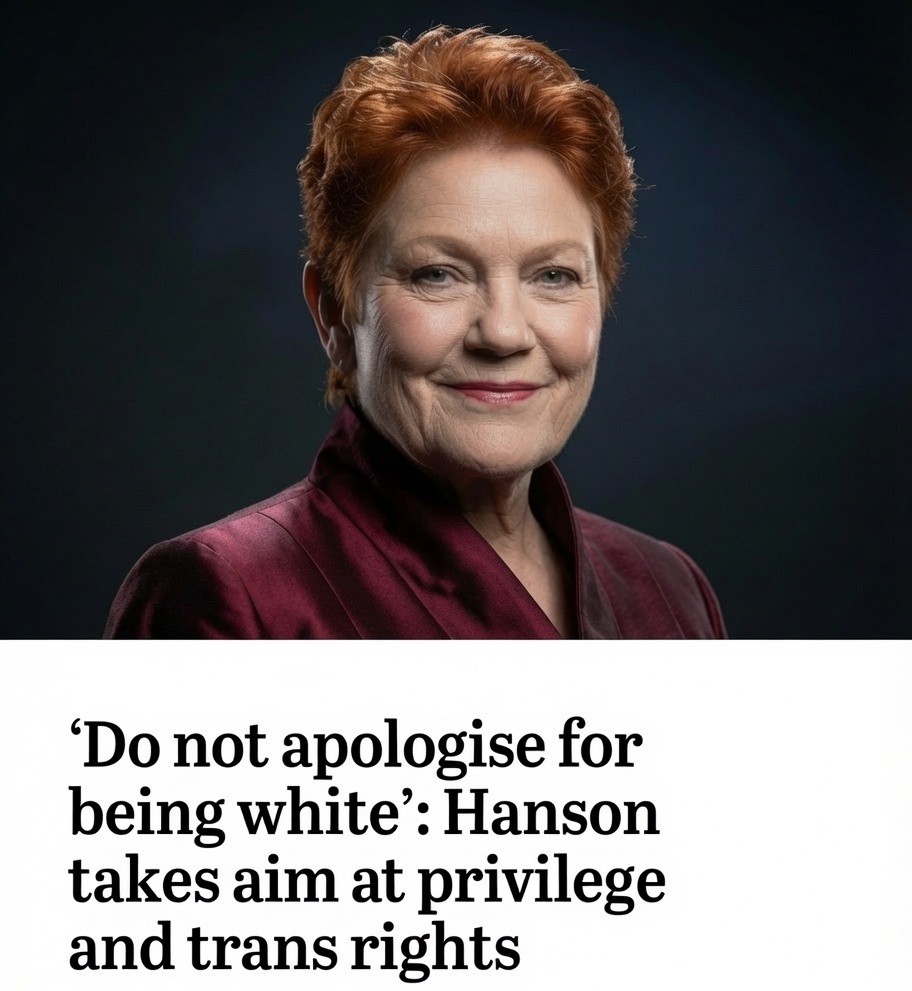
Addressing delegates at the conservative gathering, Hanson criticised what she described as the growth of “woke” politics in Australia, rejected the concept of white privilege and called for a significant reduction in migration, arguing the country was losing its national identity through sustained high levels of immigration.
Among her most controversial remarks was the assertion that Australians should “not apologise for being white”, with Hanson arguing that race should not determine whether individuals feel guilty or privileged.
She also criticised policies recognising transgender rights, describing Australian authorities as “stupid” for extending legal protections to transgender people and arguing Australia should follow recent developments in the United Kingdom that define a woman on the basis of biological sex rather than gender identity.
Hanson referred to legal and political debates occurring in Britain over the definition of sex, saying Australia should adopt a similar approach rather than what she characterised as expanding gender identity protections.
Her comments formed part of a broader speech focused on immigration, multiculturalism and what she described as the erosion of traditional Western values.
The One Nation leader argued that mass migration had placed growing pressure on housing, infrastructure and public services, claiming Australia was beginning to experience challenges similar to those she observed during visits to London.
According to Hanson, immigration levels should be substantially reduced and priority should be given to migrants with skills that address Australia’s workforce needs rather than maintaining historically high migration programs.
She also criticised multiculturalism, arguing it had weakened social cohesion and encouraged the development of separate communities rather than promoting integration into a shared Australian identity.
These themes have been central to One Nation’s political platform for many years, but Hanson’s latest remarks attracted particular attention because they were delivered before an international audience at a conference featuring conservative politicians and commentators from several countries.
CPAC London has become an increasingly prominent forum for conservative political movements, bringing together politicians and activists to discuss issues including immigration, national sovereignty, cultural identity, free speech and opposition to progressive social policies.
Hanson’s speech quickly generated political reaction in Australia.
Prime Minister Anthony Albanese criticised the One Nation leader for what he described as talking Australia down while overseas, arguing Australian parliamentarians should promote confidence in the country’s institutions and multicultural success rather than portraying Australia as a nation in decline.
Several parliamentarians from both major parties also rejected Hanson’s characterisation of Australian society, defending multiculturalism as one of the country’s defining strengths.
Some Coalition figures argued that while immigration levels and housing pressures deserve serious debate, discussions about migration should avoid language that divides Australians along racial or cultural lines.
The controversy reflects broader political tensions surrounding immigration policy.
Australia has experienced strong population growth over recent years, with migration becoming one of the country’s most significant political issues as governments attempt to balance labour shortages, economic growth and mounting pressure on housing affordability.
Successive governments have adjusted migration settings in response to changing economic conditions, while public debate has increasingly focused on whether infrastructure development has kept pace with population growth.
One Nation has consistently argued for much lower migration levels than either Labor or the Coalition, maintaining that reducing immigration would ease pressure on housing, healthcare, education and transport systems.
Labor and the Coalition both support managed migration but generally argue that skilled migrants remain important for economic growth, workforce participation and addressing shortages across sectors including healthcare, construction and aged care.
The debate over transgender rights has likewise become increasingly prominent in Australian politics.
While Australia has expanded legal protections against discrimination on the basis of gender identity over recent decades, disagreements remain over participation in women’s sport, access to single-sex spaces and the legal definition of sex in particular contexts.
Recent legal developments in the United Kingdom have intensified those discussions internationally, with several conservative politicians citing British court decisions as evidence that governments should place greater emphasis on biological sex in legislation.
Supporters of transgender rights argue existing legal protections are necessary to ensure equality before the law and protect transgender Australians from discrimination, while critics contend that certain policies require reconsideration where competing rights arise.
Those competing perspectives continue to generate political and legal debate across a number of Western democracies.
For Hanson, the London speech reinforced themes that have defined her political career for nearly three decades: tighter immigration controls, stronger emphasis on national identity and opposition to what she describes as identity politics.
Supporters view those positions as giving voice to concerns they believe the major parties have ignored.
Critics, however, argue that the rhetoric risks increasing social division and fails to recognise Australia’s long-standing multicultural success.
The strong reactions following Hanson’s appearance at CPAC illustrate how issues of race, immigration and gender continue to shape Australia’s political conversation.
With migration, housing affordability and cultural identity expected to remain central issues ahead of future elections, debates over how Australia defines itself—and how political leaders choose to frame those debates—are likely to continue attracting significant public attention.






