President Donald Trump’s health continues to attract widespread attention, with previously disclosed medical conditions, recent examinations and questions about his physical well-being keeping the issue in the public spotlight.
The president has repeatedly insisted that he remains in good condition despite his age, while White House physicians have described his overall health as excellent. Nevertheless, medical reports released over the past year have documented several issues, including chronic venous insufficiency, swelling in his lower legs, recurring bruising on his hands and an increase in body weight.
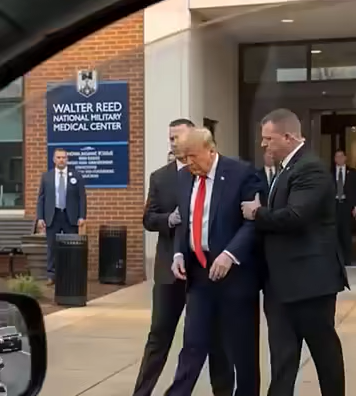
The most detailed medical findings currently available come from an examination conducted at Walter Reed National Military Medical Center on May 26, 2026. The results, released by the White House three days later, provided an updated picture of Trump’s cardiovascular health, neurological function and other aspects of his physical condition.
According to Navy Capt. Sean Barbabella, the president’s physician, Trump underwent a comprehensive evaluation involving consultations with 22 medical specialists. The assessment included laboratory testing, cardiovascular imaging, neurological screening and preventive examinations intended to identify potential medical concerns.
Barbabella concluded that the president was in excellent health and remained medically fit to perform his responsibilities as commander in chief. The findings were consistent with the administration’s repeated assurances about Trump’s condition, although the examination also documented several medical matters that require continued attention.
One of the most significant issues involves chronic venous insufficiency, a circulation disorder that the White House first acknowledged in July 2025 after photographs showing swelling around Trump’s ankles and lower legs generated questions about his health.
The condition occurs when the veins in the legs have difficulty returning blood efficiently toward the heart. Blood can accumulate in the lower extremities, producing swelling and, in some cases, discomfort or changes in the surrounding skin. It becomes more common with age and can range from relatively mild symptoms to more persistent circulation problems.
The diagnosis followed medical examinations ordered after the president experienced swelling in both legs. At the time, the White House said testing had not identified deep vein thrombosis or evidence of a more serious vascular emergency.
The administration also reported that cardiac testing had not revealed signs of heart failure. Those findings helped distinguish the diagnosed venous condition from other cardiovascular disorders that can cause similar symptoms.
During Trump’s May 2026 examination, his physician again documented slight swelling in the lower legs. The report said the swelling had improved compared with the previous year, suggesting a favorable change in the observable symptoms of the previously diagnosed condition.
Although chronic venous insufficiency is not necessarily life-threatening, it can require ongoing management, particularly in older patients. Medical treatment may involve attention to circulation, physical activity and other measures depending on the severity of symptoms.
The White House has not publicly disclosed every detail of Trump’s treatment for the condition. The latest physician’s assessment did not suggest that the circulation problem was preventing him from carrying out his duties.
The president’s hands have also become a recurring subject of attention. Photographs from meetings, public appearances and official events have occasionally shown dark bruises on the backs of his hands, sometimes partially concealed by makeup.
The White House has attributed the discoloration to frequent handshaking combined with aspirin use. Aspirin affects the blood’s ability to clot and can make bruising more noticeable, particularly in older adults whose skin and blood vessels may be more susceptible to minor injuries.
Barbabella addressed the marks in the May medical report, describing them as minor soft-tissue irritation associated with repeated handshaking while the president was taking aspirin for cardiovascular prevention.
The physician considered the bruising benign and recommended continued preventive care, including the use of low-dose aspirin.
The recurring appearance of the marks has nevertheless raised questions about the extent of the information available to the public. Although the White House has provided an explanation, the underlying medical records have not been released in full for independent review.
Trump’s cardiovascular health has received particular attention because of his age and the previously disclosed circulatory diagnosis.
During the May examination, physicians evaluated his heart using diagnostic imaging and other tests. The medical report said coronary CT angiography showed no arterial obstruction or structural abnormalities involving the heart and major blood vessels.
Additional testing, including an echocardiogram, was reported to show normal cardiac chambers, valves and pumping function.
The findings were presented by the White House as evidence that the president’s overall cardiovascular condition remained favorable. His resting heart rate was recorded at 73 beats per minute, while his blood pressure measured 105 over 71.
The examination also recorded an oxygen saturation level of 98 percent while breathing room air, with no significant pulmonary abnormalities identified in the released findings.
The results followed earlier medical imaging that had become a subject of public discussion during Trump’s second term.
In October 2025, Trump underwent additional testing at Walter Reed, including imaging that the administration later described as preventive. Questions about those procedures continued after the White House initially provided limited details about their purpose.
The administration subsequently maintained that the examinations had produced reassuring results. Medical information released in May 2026 also described the president’s cardiac function as normal.
Another development in the latest examination involved Trump’s weight.
The president weighed 238 pounds, approximately 108 kilograms, representing a 14-pound increase from his April 2025 examination. His reported height remained 6 feet 3 inches.
Those measurements gave him a body mass index of approximately 29.7, placing him near the clinical threshold commonly used to classify obesity.
The increase attracted attention because the president’s doctors had previously reported weight loss compared with earlier examinations. The May findings therefore represented a reversal of that trend.
His physician recommended dietary adjustments, increased physical activity and continued efforts to reduce weight.
Trump has long spoken about his preference for certain foods, including fast food, and has acknowledged that he does not follow a conventional exercise routine. Golf remains one of his most frequently discussed recreational activities.
Although excess weight can contribute to cardiovascular and metabolic risks, the president’s published medical results did not establish that the recent increase had caused a new serious illness.
His cholesterol measurements provided a different picture.
The May report recorded total cholesterol of 143 milligrams per deciliter, compared with 223 in 2018. His low-density lipoprotein cholesterol, commonly referred to as LDL or bad cholesterol, was measured at 53.
The improvement has been associated with medication. Trump’s disclosed prescriptions include rosuvastatin and ezetimibe, both used to manage cholesterol levels.
Rosuvastatin belongs to a group of medications known as statins, which reduce cholesterol production in the liver. Ezetimibe works differently, limiting the absorption of cholesterol from the digestive system.
The combination can help lower LDL cholesterol, an important factor in assessing cardiovascular risk.
The physician’s report also listed fasting blood glucose and other metabolic indicators within normal ranges. It did not identify diabetes or a new metabolic disorder.
The findings formed part of the White House’s broader assessment that the president’s cardiovascular and metabolic health remained satisfactory despite his age and weight gain.
Beyond his physical condition, Trump’s cognitive health has become another prominent subject of public debate.
He celebrated his 80th birthday on June 14, 2026, and is the oldest person ever inaugurated as president of the United States.
His age has inevitably drawn comparisons with his predecessor, Joe Biden, whose physical and cognitive health became a major political issue during the final years of his presidency.
Biden was 82 when he left office in January 2025, while Trump began his second term at 78.
The discussion surrounding presidential age has placed greater attention on medical assessments, particularly those intended to evaluate memory, attention and neurological functioning.
During his May examination, Trump completed the Montreal Cognitive Assessment, a standardized screening test that examines several aspects of cognitive performance.
According to the White House medical report, he received a score of 30 out of 30, matching previously disclosed results.
The assessment covers several abilities, including short-term memory, concentration, language, spatial awareness and executive functions.
Barbabella also reported that the president’s broader neurological examination showed normal mental status, strength, sensation, reflexes, walking and balance.
Screenings for depression and anxiety were included in the evaluation, with no abnormalities reported.
Trump has frequently highlighted his cognitive test scores during public appearances, using them to support his statements about his health.
Although such results provide useful clinical information, cognitive screening tests are not designed to measure every aspect of a person’s mental functioning. They are generally used alongside medical history, physical examination and other clinical assessments.
The physician’s findings nevertheless offered a documented assessment of Trump’s neurological condition at the time of the examination.
The president’s medical history also includes the injuries he sustained during the assassination attempt at a campaign rally in Butler, Pennsylvania, in July 2024.
A gunman opened fire during the event, wounding Trump in his right ear and killing a rally attendee. Two other spectators were seriously injured.
Trump was treated following the shooting and subsequently returned to public campaigning.
The May 2026 medical examination noted scarring on his right ear consistent with the earlier gunshot injury. No related neurological impairment was identified in the published report.
The event remains one of the most significant documented medical incidents involving Trump in recent years.
His earlier medical history includes his hospitalization with COVID-19 in October 2020, during his first term as president.
Trump was admitted to Walter Reed after testing positive for the virus and received treatment before returning to the White House several days later.
That hospitalization occurred during a period when the pandemic was causing widespread illness and death across the United States. The treatment attracted international attention because of the president’s office and the seriousness of the disease.
The COVID-19 episode and the 2024 shooting remain distinct from the routine examinations and chronic medical findings disclosed during his second administration.
Throughout 2026, Trump has continued to describe himself as healthy and energetic. His doctors have supported that account in their official assessments, emphasizing his ability to maintain a demanding schedule.
The president has continued participating in meetings, public events and political appearances while preparing for the November 3 midterm elections.
In mid-October, he traveled through western states for campaign events, including appearances in Arizona and Montana, where he addressed supporters and promoted Republican candidates.
The campaign schedule followed months of official engagements involving domestic policy, international diplomacy and meetings with foreign leaders.
Trump has frequently pointed to the intensity of his daily work as evidence of his stamina. His medical team has also referenced his public responsibilities and activity when describing his general condition.
However, public appearances provide only limited information about an individual’s medical health. They cannot replace examinations or independently establish whether a particular medical condition has improved or deteriorated.
The administration’s health disclosures have also prompted questions about the amount of information released to the public.
The May 2026 memorandum offered more detailed laboratory results and diagnostic findings than some previous presidential medical statements. Nevertheless, it remained a summary prepared by the president’s physician rather than a complete release of medical records.
The involvement of 22 specialists received particular attention. The Washington Post reported in June that the number appeared unusually high compared with specialist consultations disclosed for several previous presidential examinations.
The White House did not publicly identify every specialist involved or provide a detailed explanation for the number of consultations.
That lack of additional information has contributed to broader discussion about transparency in presidential healthcare, although the number of physicians involved does not itself establish that a serious medical problem exists.
The United States has no general law requiring presidents to disclose their complete medical histories. Administrations have traditionally released selected information through physician statements, examination summaries and occasional briefings.
The level of detail has varied from one presidency to another.
As a result, the public often receives information about a president’s health through documents approved for release by the administration rather than through independent access to medical records.
Trump’s most recent detailed report provides several measurable indicators of his condition, but it does not offer a continuous picture of his health between examinations.
The timing of public statements has also occasionally generated confusion.
In July, Trump referred to medical testing at Walter Reed in a social media post that prompted questions about whether he had undergone another examination.
The White House subsequently clarified that he was referring to his May visit, rather than announcing a new hospital appointment.
That explanation placed the president’s remarks within the context of the previously disclosed medical results.
As of October 16, the May 29 memorandum remains the latest comprehensive presidential health report identified in the official materials and major news coverage reviewed for this article.
It records a combination of favorable test results and several existing medical concerns.
The most significant documented ongoing condition is chronic venous insufficiency, with minor lower-leg swelling that physicians said had improved. Hand bruising has been attributed to aspirin therapy and repeated handshaking, while the increase in body weight has prompted recommendations for lifestyle adjustments.
The report also documented favorable cholesterol levels, normal reported cardiac function and a maximum score on the cognitive screening assessment.
Those findings form the basis of the White House physician’s conclusion that Trump was medically capable of carrying out his duties at the time of the examination.
The president’s age and the demands of his position mean his health is likely to remain under close public attention. Any future medical assessments could provide updated information about his circulation, weight, cardiovascular condition and overall health.
For now, the available medical documentation does not establish a newly diagnosed serious illness or an acute deterioration in the president’s condition.
It does, however, confirm that Trump continues to manage several health issues while serving in one of the world’s most demanding public offices.
As he moves through the remaining months of 2026, the question of presidential health will continue to depend on the findings of medical professionals, the information the White House chooses to release and any independently verified developments concerning his condition.






