Climate Change and Energy Minister Chris Bowen says the Albanese Government’s renewable energy agenda is delivering tangible benefits for Australian households and businesses, arguing that the nation’s transition away from fossil fuels is not only reducing emissions but also helping to lower electricity prices and strengthen the economy.
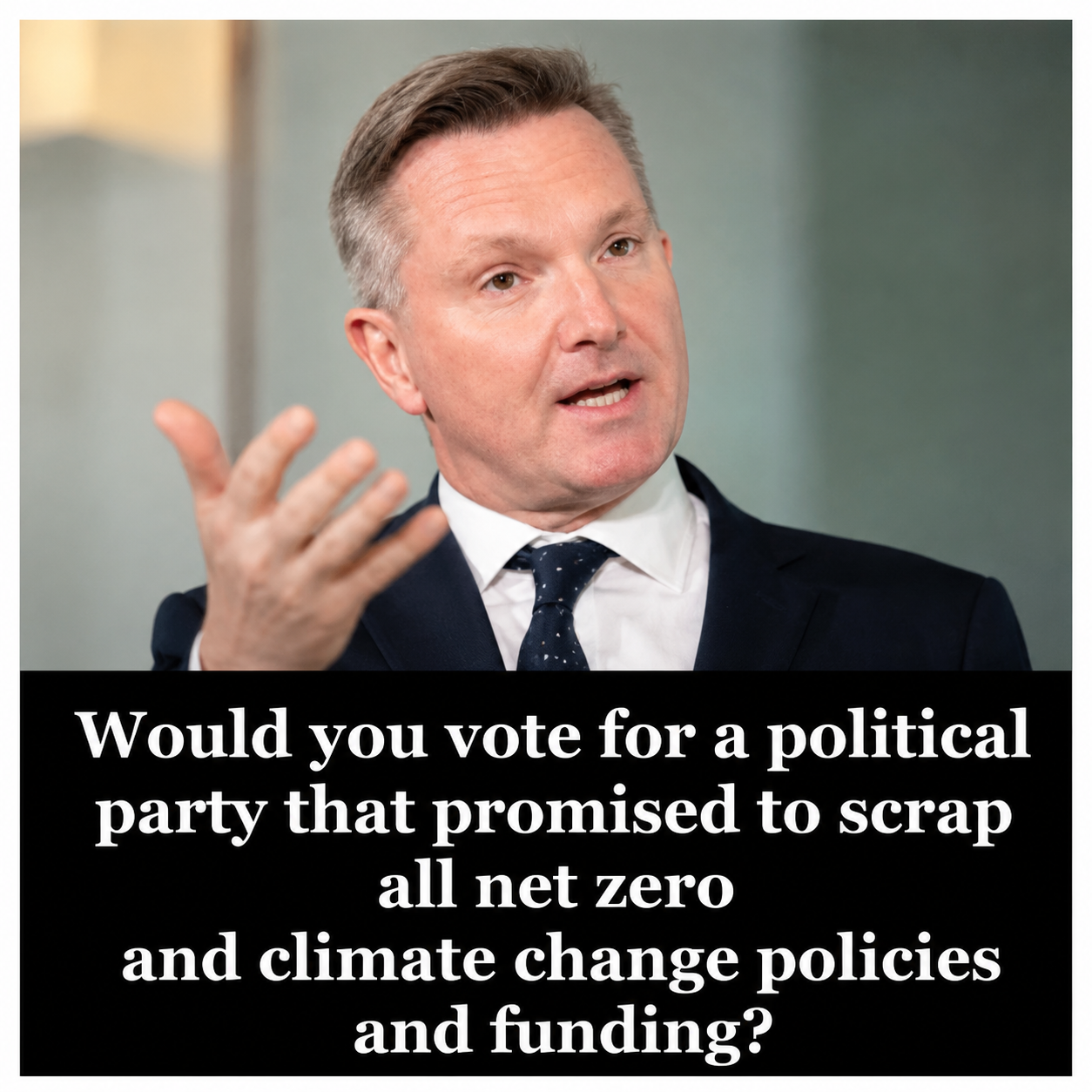
In a statement outlining the government’s energy priorities, Mr Bowen said Labor remained committed to accelerating Australia’s transition to renewable electricity while ensuring workers, industry and regional communities benefited from the transformation.
“The transition to renewable energy isn’t just good for the planet; it’s also the key to a prosperous and successful future for all Australians,” Mr Bowen said.
He argued Australians were embracing rooftop solar, household batteries, consumer energy resources and electric vehicles at unprecedented rates, demonstrating growing public confidence in cleaner forms of energy generation.
The minister also pointed to recent wholesale electricity market data, saying Australia’s abundant solar and wind resources were beginning to translate into lower electricity costs.
According to Mr Bowen, wholesale electricity prices during the most recent quarter ranked among the lowest recorded in the developed world, with increased renewable generation and rapidly expanding battery storage reducing reliance on more expensive gas-fired generation.
A report released by the Australian Energy Market Operator (AEMO) showed average wholesale electricity prices across the National Electricity Market fell sharply during the June quarter.
Victoria recorded the largest decline, with prices dropping around 60 per cent compared with the same period a year earlier, while New South Wales, Queensland and South Australia also experienced substantial reductions.
The falls were attributed largely to record wind generation, growing battery participation and stronger renewable output that displaced higher-cost gas generation from setting electricity prices as frequently as in previous years.
Mr Bowen described the latest figures as evidence that Labor’s clean energy policies were working.
He said Australia’s combination of abundant sunshine, favourable wind resources and expanding battery capacity provided the country with a natural competitive advantage capable of delivering cleaner and cheaper electricity over the long term.
“There’s a lot more work to do, but we’ll keep on with the job of the energy transition,” he said.
The comments align closely with the Albanese Government’s target of sourcing 82 per cent of electricity from renewable generation by 2030 while progressively reducing Australia’s dependence on ageing coal-fired power stations.
Government policy has centred on accelerating investment in transmission infrastructure, renewable generation and large-scale storage through initiatives such as the Capacity Investment Scheme and the Rewiring the Nation program.
Labor argues those investments will improve reliability while lowering long-term electricity costs as renewable technologies continue becoming cheaper to operate.
Australia already has one of the world’s highest rates of rooftop solar adoption.
More than four million Australian homes now generate electricity from rooftop solar systems, while household battery installations have accelerated as equipment costs gradually decline.
At the same time, utility-scale batteries are increasingly replacing gas-fired peaking plants by supplying electricity during periods of high demand after sunset.
AEMO data shows batteries are now setting wholesale electricity prices during a significantly larger share of market dispatch intervals than in previous years, helping reduce price volatility across the electricity market.
The International Energy Agency has similarly highlighted Australia’s renewable resource advantages, noting that countries with abundant low-cost renewable generation are increasingly able to reduce wholesale electricity prices while strengthening energy security through greater domestic generation.
For Australia, where solar irradiance and wind resources rank among the strongest globally, expanding renewable generation has become central to Labor’s economic strategy as well as its climate policy.
The government argues cheaper electricity will improve the competitiveness of Australian manufacturing, support emerging industries such as green hydrogen and critical minerals processing, and encourage further private investment across regional Australia.
Mr Bowen has repeatedly described affordable clean electricity as one of Australia’s greatest long-term economic advantages in an increasingly decarbonising global economy.
However, lower wholesale prices do not necessarily produce immediate reductions in household electricity bills.
Energy analysts note that wholesale electricity typically accounts for only around one-third of a residential power bill.
The remainder reflects transmission and distribution costs, retail operating expenses, environmental schemes and other regulated charges.
Retailers also purchase electricity through long-term contracts to shield customers from wholesale market volatility, meaning movements in wholesale prices often take considerable time to flow through to residential consumers.
As a result, households may not experience immediate reductions even when wholesale markets record significant declines.
The energy transition nevertheless remains politically contested.
The Coalition continues arguing Labor’s renewable rollout faces major implementation challenges, including delays to transmission infrastructure, planning approvals and grid connections.
Critics also contend that more dispatchable generation will remain necessary to maintain reliability during periods of low renewable output.
Some industry observers have questioned whether investment in new renewable projects is keeping pace with the retirement of ageing coal-fired generators, warning that financing conditions have become more difficult for developers despite government support mechanisms.
The Albanese Government rejects those criticisms.
Mr Bowen argues that Australia’s growing battery fleet, increasing renewable capacity and ongoing investment in transmission projects demonstrate the transition is progressing despite inevitable engineering and planning challenges.
He maintains that delaying investment would expose households to even greater price volatility because gas-fired generation continues to exert a disproportionate influence on electricity prices whenever renewable output declines.
Recent market analysis supports the view that gas often remains the marginal fuel setting wholesale prices despite accounting for only a relatively small share of total electricity generation.
Reducing dependence on gas through expanded renewable generation and storage therefore has the potential to lower wholesale prices over time, although experts caution that international gas markets continue influencing Australian electricity costs.
The transition is also reshaping Australia’s broader economy.
Large-scale renewable projects are attracting billions of dollars in private investment across regional communities, while new industries involving battery manufacturing, critical minerals, renewable hydrogen and low-emissions manufacturing are expected to become increasingly important sources of employment.
Labor argues these industries will help diversify Australia’s economy while maintaining export competitiveness as major trading partners introduce stronger emissions reduction policies.
Mr Bowen has consistently framed clean energy not simply as an environmental objective but as a national economic opportunity capable of creating long-term prosperity.
He says Australia’s combination of abundant renewable resources, technical expertise and stable institutions positions the country to become a global clean energy superpower if investment continues at the required pace.
That vision remains central to the Albanese Government’s economic strategy heading into the second half of its term.
While political debate over the pace and structure of the energy transition is likely to continue, recent wholesale electricity market results have provided Labor with fresh evidence to support its argument that increasing renewable generation and battery storage can contribute to lower electricity prices while strengthening energy security.
The challenge now will be ensuring those wholesale savings progressively reach households and businesses as Australia’s electricity system continues evolving over the coming years.






