Victoria’s newly appointed Premier Ben Carroll has moved quickly to draw a clear line between his administration and those of his predecessors, declaring that he intends to govern under a different philosophy as he attempts to reset Labor’s fortunes ahead of November’s state election.
Only hours after being unanimously elected leader of the Victorian Labor Party following Jacinta Allan’s resignation, Carroll used his first official press conference to deliver a message aimed squarely at voters questioning whether Labor is capable of genuine renewal after more than twelve years in government.
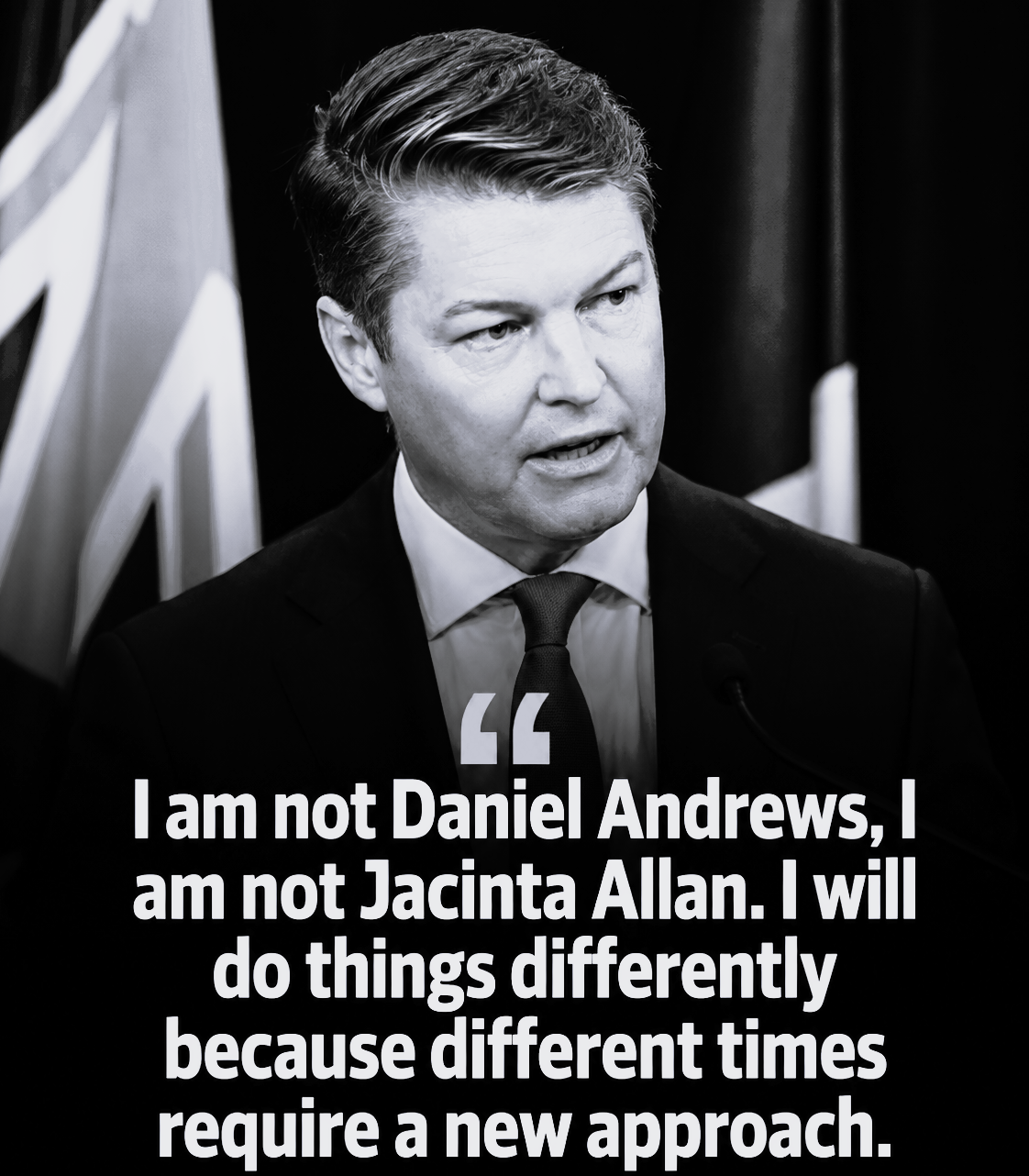
“I am not Daniel Andrews. I am not Jacinta Allan,” Carroll said.
“Different times require a different approach, and my government will take a new direction for Victoria.”
The statement represented one of the strongest attempts yet by a newly installed Labor premier to distinguish himself from the governments he previously served.
Carroll was Deputy Premier under Jacinta Allan and held numerous senior ministerial portfolios during both the Andrews and Allan administrations, including education, public transport, industry, employment and medical research.
Because of that record, political opponents have argued he shares responsibility for many of the decisions now being criticised by voters.
Carroll, however, insists leadership is about how a government responds to changing circumstances rather than remaining tied to previous approaches.
The new premier’s rise followed one of the most dramatic leadership changes in Victorian politics in recent years.
Jacinta Allan resigned on Tuesday morning after weeks of growing pressure from within the Labor caucus, despite maintaining she believed she could still have won the November election.
Her resignation came only minutes before she was expected to face a formal leadership challenge after senior Labor MPs concluded she no longer commanded majority support inside the parliamentary party.
What initially appeared likely to be a straightforward transition briefly descended into chaos when Attorney-General Sonya Kilkenny unexpectedly entered the leadership race before later withdrawing, allowing Carroll to be elected unanimously as Labor leader and Victoria’s 50th premier.
Carroll’s first policy announcement reinforced his determination to demonstrate that his premiership would differ from those that came before.
He confirmed that his government’s first major initiative would be establishing a Royal Commission into alleged corruption within Victoria’s construction sector, a proposal that previous Labor governments had consistently resisted.
The inquiry will examine allegations of organised crime infiltration, governance failures and integrity concerns associated with parts of the state’s construction industry.
Alongside the royal commission, Carroll announced plans for a specialist prosecutor and stronger powers for Victoria’s anti-corruption agencies, arguing that restoring public confidence in government must become an immediate priority.
Speaking after his election, Carroll said Victorians wanted practical action rather than political slogans.
He identified integrity, cost-of-living relief, public safety and stronger economic management as the central priorities of his administration, while acknowledging that Labor faces significant challenges before the election.
Victoria continues to grapple with high state debt, ongoing debate surrounding major infrastructure projects, housing affordability pressures and public concerns over crime.
Those issues have contributed to declining support for Labor after more than a decade in office and were widely viewed as major factors behind the leadership change.
Carroll also sought to reassure the business community that his government would pursue a more collaborative relationship with industry.
Business organisations have repeatedly called for greater certainty around infrastructure delivery, regulatory stability and long-term fiscal management.
The Victorian Chamber of Commerce welcomed Carroll’s emphasis on rebuilding confidence and improving accountability, while also urging the new premier to address Victoria’s financial position and restore investor confidence.
Despite Carroll’s efforts to present himself as a fresh leader, opposition parties remain unconvinced.
Liberal Leader Jess Wilson has argued that replacing the premier does not erase Labor’s record, noting that Carroll sat around the cabinet table during many of the Andrews and Allan governments’ most significant decisions.
The Coalition contends that Victorians should judge Labor on its twelve-year record rather than on a change of leadership only months before an election.
Wilson has also questioned Carroll’s credibility after he previously expressed public support for Allan before eventually becoming her successor.
Political analysts say Carroll now faces a difficult balancing act.
He must convince voters that his government represents genuine renewal while at the same time defending many of Labor’s achievements over the past decade.
Attempting to distance himself too aggressively from previous administrations risks undermining Labor’s own record, while embracing that record too closely may weaken his argument that Victoria needs a fresh start under new leadership.
Observers also note that leadership transitions so close to an election leave little time to reshape public opinion.
Unlike premiers who take office early in a parliamentary term, Carroll has only a few months to establish his own political identity before Victorians vote.
That compressed timeframe means early decisions—particularly the royal commission into the construction sector—are likely to define public perceptions of his leadership.
Supporters believe those announcements demonstrate a willingness to confront issues that had become politically difficult for the previous administration.
Critics argue they amount to an attempt to distance Labor from problems that developed while Carroll himself served in senior cabinet roles.
Carroll has acknowledged that many Victorians are frustrated with politics and sceptical about promises of change.
He says the only way to rebuild trust is through actions rather than rhetoric, promising that his government will be judged by its performance over the coming months rather than comparisons with previous premiers.
Whether that message succeeds may determine Labor’s chances of securing a fourth consecutive term in government.
With the election fast approaching, every policy announcement, parliamentary appearance and public statement by the new premier will be scrutinised for evidence of whether Victoria is witnessing a genuine change in direction—or simply a change of leader.






