Victoria has entered a new political chapter after Jacinta Allan resigned as premier, ending months of speculation over her leadership and paving the way for Ben Carroll to become the state’s 50th premier in one of the most dramatic leadership transitions in recent Victorian politics.
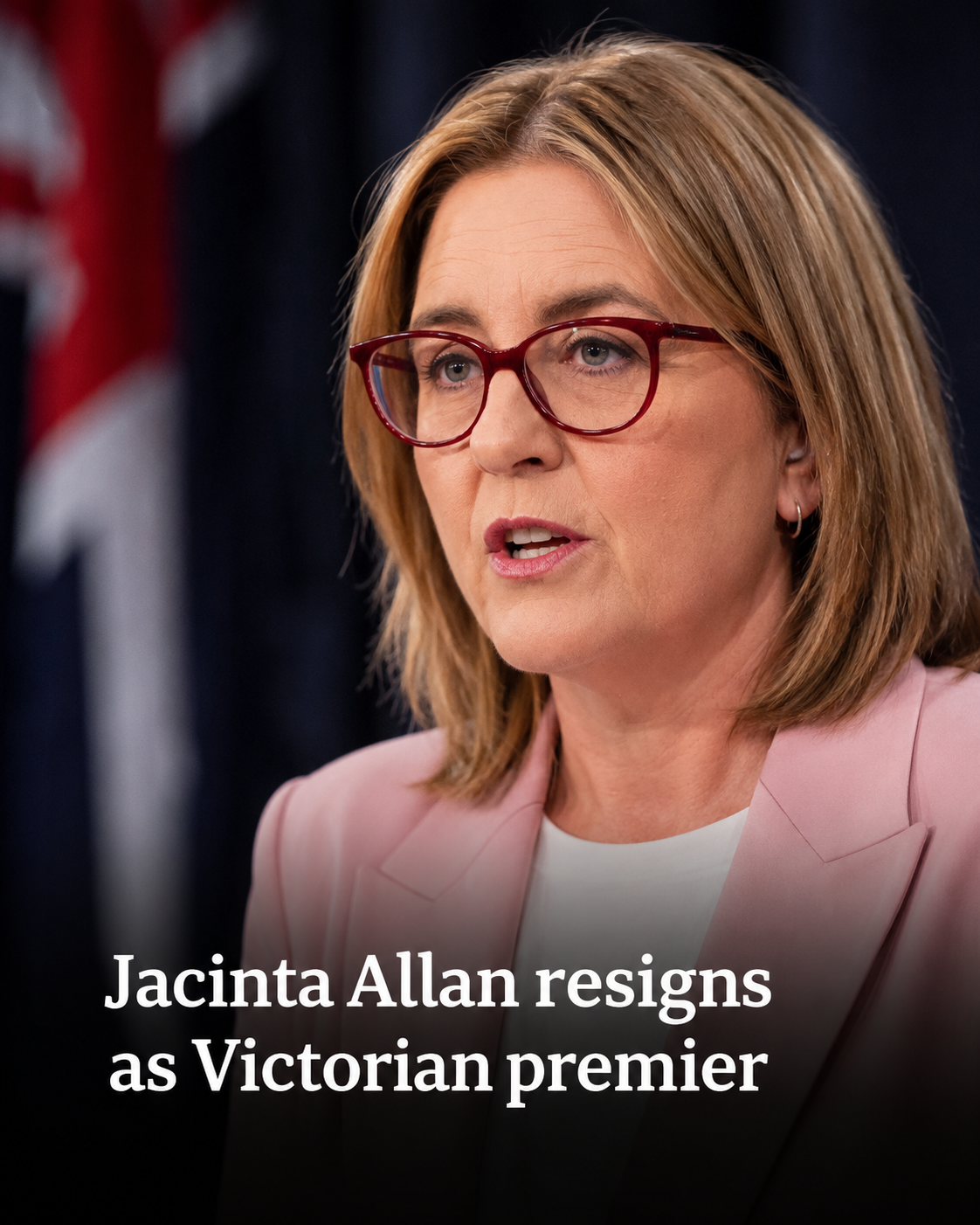
Allan announced her resignation on Tuesday morning only minutes before Victorian Labor MPs were due to meet for an expected leadership ballot.
Although she had previously indicated she would contest any challenge, the outgoing premier instead chose to step aside, arguing that a prolonged internal contest would distract the government just months before the November state election.
“I have made the difficult decision to step aside,” Allan told reporters, while giving her “unqualified support” to Ben Carroll should he seek the leadership.
The decision immediately cleared the path for Carroll, who was elected leader of the Victorian Labor Party before being sworn in as premier later that day.
His elevation followed a turbulent 48 hours during which senior Labor ministers and MPs concluded Allan no longer held majority support inside the parliamentary caucus.
The rapid change marked the end of Allan’s premiership, which began in September 2023 following Daniel Andrews’ resignation.
In his first address as premier, Carroll made it clear that he intended to lead the government differently.
Declaring that integrity would become a defining priority of his administration, he immediately unveiled a package of sweeping anti-corruption measures.
“In my government, integrity will not be optional,” Carroll said.
“Whether in business, politics or the union movement, there will be zero tolerance for those that misuse their positions.”
The centrepiece of Carroll’s announcement was a Royal Commission into Victoria’s construction sector.
The inquiry is expected to examine allegations of corruption, criminal infiltration and misconduct that have generated sustained political controversy over recent years.
Alongside the royal commission, Carroll confirmed his government would appoint a special prosecutor to work in parallel with the inquiry and introduce legislation expanding the investigative powers of Victoria’s Independent Broad-based Anti-corruption Commission (IBAC).
The announcements represented an immediate break from Allan’s approach.
During her premiership, the opposition repeatedly called for a royal commission into the construction industry, particularly following allegations involving organised crime influence within parts of the sector.
Allan consistently resisted those calls, arguing that existing law enforcement and regulatory agencies already possessed the necessary powers to investigate wrongdoing.
Carroll’s decision therefore signalled one of the clearest policy departures of the new administration within hours of taking office.
The leadership spill itself followed months of mounting political pressure.
Labor’s declining opinion poll results, growing voter dissatisfaction over the cost of living, concerns about Victoria’s record debt levels and ongoing controversy surrounding major infrastructure projects all contributed to increasing unrest inside the governing party.
Several Labor MPs privately concluded a leadership change offered the party its best opportunity to reset before voters head to the polls later this year.
Despite stepping aside, Allan insisted her decision was motivated by party unity rather than political defeat.
She said she believed she could have contested the leadership ballot successfully but ultimately concluded that avoiding a divisive internal fight was in Labor’s best interests.
She urged colleagues to unite behind Carroll as the government prepares for one of its toughest election campaigns in more than a decade.
Prime Minister Anthony Albanese later paid tribute to Allan, describing her as “a very decent human being” and thanking her for decades of public service to Victoria.
He praised her work across education, transport and health portfolios before expressing confidence in the state’s new leadership.
Carroll now faces significant political challenges beyond restoring party unity.
Victoria continues to confront rising public debt, infrastructure cost overruns, housing affordability pressures and persistent concerns about the cost of living.
The government must also negotiate ongoing industrial issues while attempting to rebuild confidence among businesses and investors ahead of the election.
Political analysts say Carroll has only a limited window to convince voters that Labor’s leadership change represents genuine policy renewal rather than simply a change of personalities.
The transition also marks an important shift inside Victorian Labor.
Carroll’s elevation returns the party’s Right faction to the premiership for the first time since the Bracks–Brumby era, ending more than a decade of leadership from Labor’s Left under Daniel Andrews and Jacinta Allan.
Observers believe the change is likely to influence cabinet appointments, economic priorities and Labor’s election strategy over the coming months.
Attention has also focused on Carroll’s repeated efforts to distinguish himself from previous administrations.
Earlier on the day he became premier, he declared, “I’m not Dan Andrews. I’m not Jacinta Allan,” promising a government with stronger fiscal discipline, greater engagement with business and renewed emphasis on public sector integrity.
Those comments were widely interpreted as an attempt to reassure voters that Labor had listened to growing public dissatisfaction while maintaining continuity in government.
Opposition parties, however, argue that changing the premier does not erase Labor’s record after more than a decade in office.
Coalition MPs maintain voters will judge the government primarily on economic management, infrastructure delivery, crime and the cost of living rather than on a change in leadership alone.
Labor hopes Carroll’s arrival can provide a fresh start while preserving the experience of an established government.
Leadership changes close to elections have produced mixed results throughout Australian political history.
While a new premier can generate renewed public attention and temporary political momentum, analysts generally agree that electoral outcomes are ultimately shaped by broader policy performance and voter confidence.
That means Carroll’s immediate announcements on integrity and construction sector reform may become an early test of whether his promise to govern differently resonates with Victorians.
With Parliament expected to consider legislation establishing the royal commission in coming weeks, the new premier has moved quickly to define his government before the election campaign formally begins.
For Jacinta Allan, the resignation closes a chapter that began when she succeeded Daniel Andrews in 2023.
For Ben Carroll, it marks the beginning of an administration facing both significant expectations and considerable political pressure as Victoria heads toward a closely watched state election later this year.






