Victoria’s new Premier Ben Carroll has outlined an ambitious agenda designed to reset the state’s Labor government ahead of November’s election, promising to confront Victoria’s mounting debt, strengthen ties with business, review major infrastructure spending and restore confidence in government after a turbulent leadership transition.
Only days after replacing Jacinta Allan as Premier, Carroll has begun distancing himself from both Allan and former premier Daniel Andrews, arguing Victoria faces “different times” that require a new approach to governing.
The agenda represents one of the most significant shifts in Labor’s priorities since the party first won office in 2014, with a renewed emphasis on fiscal discipline, economic growth and infrastructure value for money. 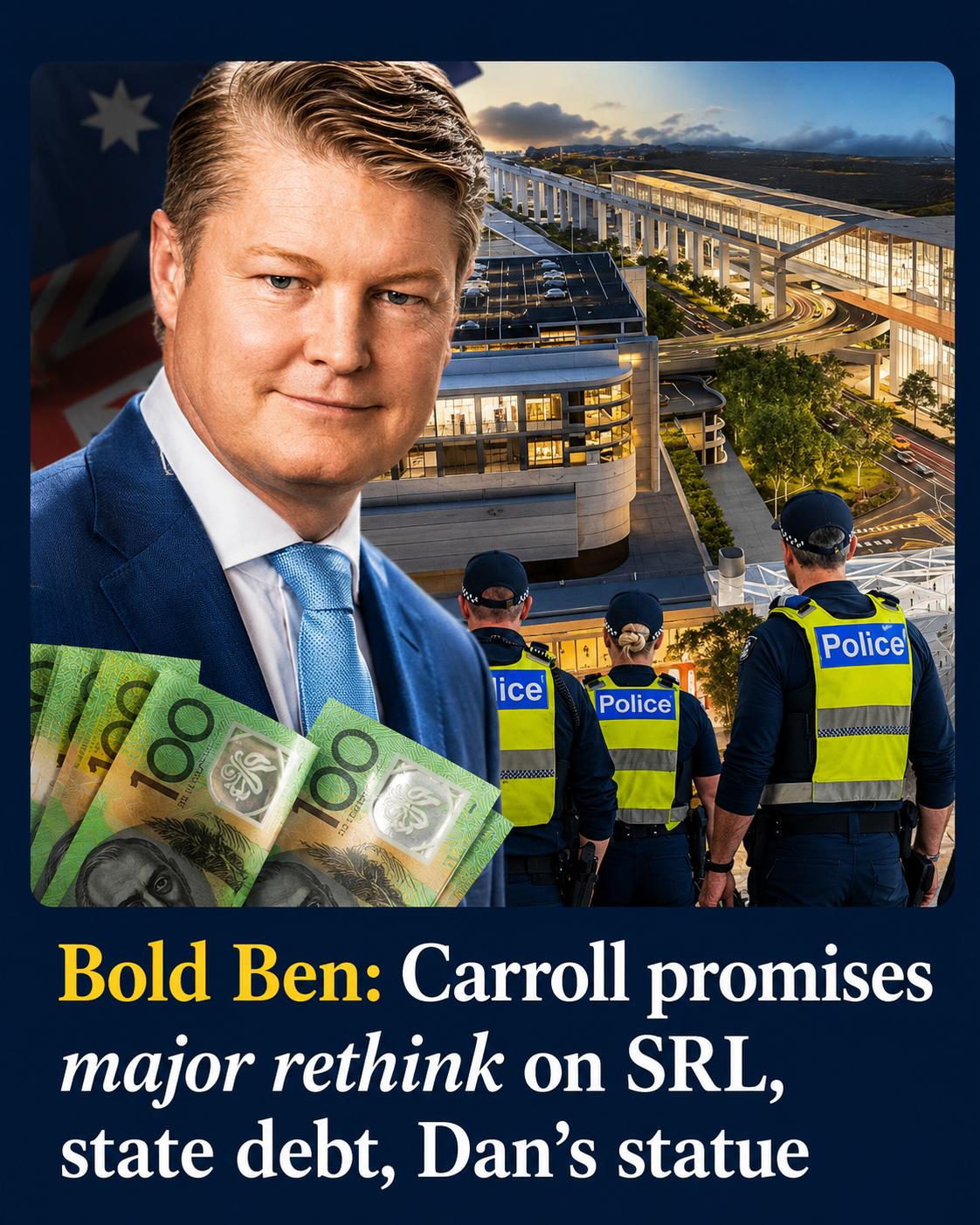
A new focus on Victoria’s debt
Central to Carroll’s agenda is Victoria’s rapidly growing debt burden.
The state’s net debt is forecast to approach A$200 billion over coming years, making it one of the largest financial challenges confronting the new government.
Carroll has acknowledged widespread public concern about government spending and says restoring confidence in Victoria’s finances will be one of his highest priorities.
Drawing on his own background, he has spoken about learning “the value of a dollar” during his years working at Kmart while studying law, arguing every taxpayer dollar should be spent carefully and transparently.
Unlike previous budgets that focused primarily on continued infrastructure investment, Carroll has indicated his government will place greater emphasis on long-term fiscal sustainability, debt management and responsible budgeting.
Business tax relief on the agenda
Carroll has also pledged to rebuild Labor’s relationship with Victoria’s business community.
Senior government figures have indicated the new Premier is considering targeted tax incentives designed to encourage investment, stimulate employment and improve business confidence following years of concern over rising taxes and regulatory costs.
Business organisations have welcomed Carroll’s early commitment to engage more closely with employers, although many are waiting to see the detail of any future reforms before assessing their likely impact.
Among the issues expected to feature in discussions are payroll taxation, land tax settings, planning reform and measures designed to encourage private sector investment across Victoria.
Reviewing the Suburban Rail Loop
Perhaps the most closely watched policy shift concerns the Suburban Rail Loop (SRL).
The first stage of the project—currently estimated at around A$34.5 billion—has become one of the Andrews and Allan governments’ defining infrastructure commitments.
Carroll has confirmed existing contracts will be reviewed as part of a broader examination of whether the project should proceed according to its current timetable or be re-sequenced to better reflect Victoria’s financial position.
Government sources have indicated the review will examine construction schedules, funding arrangements and opportunities to redirect resources toward projects considered more immediately beneficial to commuters.
Airport Rail back on the table
One project potentially benefiting from that review is the long-delayed Melbourne Airport Rail Link.
Supporters within government reportedly believe the airport connection enjoys stronger public support and could deliver more immediate economic and transport benefits than parts of the Suburban Rail Loop.
While no final decision has been announced, Carroll is understood to be considering whether elements of Airport Rail could be prioritised if the SRL timetable changes.
Such a decision would represent one of Victoria’s most significant transport policy shifts in recent years and could reshape future infrastructure spending across Melbourne.
A broader Labor reset
The infrastructure review forms part of a much wider effort by Carroll to reposition the Victorian Labor government before voters head to the polls.
Within hours of taking office, Carroll announced a Royal Commission into alleged corruption within the construction sector, expanded powers for the Independent Broad-based Anti-corruption Commission (IBAC) and the appointment of a special prosecutor.
He has also spoken of rebuilding relationships with police, strengthening law and order policies and ensuring Cabinet plays a greater role in major government decisions rather than relying on leadership “captain’s picks.”
These measures are widely viewed as an attempt to demonstrate that his administration will operate differently from those led by Andrews and Allan.
Moving beyond the Andrews era
Carroll made headlines during his first press conference by declaring:
“I am not Daniel Andrews. I am not Jacinta Allan.”
The statement was interpreted as a deliberate effort to signal a new leadership style after almost twelve years of Labor government under Andrews and his successor.
Political observers note that one of Carroll’s greatest challenges will be convincing voters that he represents meaningful change while leading the same party that has governed Victoria since 2014.
Analysts suggest his early focus on fiscal responsibility and business engagement reflects that broader political objective.
Questions over Daniel Andrews’ statue
Another symbolic issue attracting attention concerns plans to erect a bronze statue honouring former premier Daniel Andrews.
The project, reportedly costing around A$134,000, was commissioned under the previous government and has attracted criticism during a period of significant cost-of-living pressures.
Carroll has declined to confirm whether the project will proceed unchanged, describing it as a lower priority while refusing to rule out reconsidering the proposal altogether.
Although comparatively small in budgetary terms, the statue has become a symbolic test of how far Carroll intends to distance his leadership from the Andrews era.
Political and economic pressures
Carroll assumes office at a particularly difficult time for the Victorian Government.
Alongside growing debt, the government continues facing pressure over housing affordability, youth crime, infrastructure costs and business confidence.
Recent controversy surrounding construction industry governance and allegations involving major public projects have also intensified demands for greater accountability.
With the state election only months away, Carroll has limited time to convince voters that Labor has both recognised public concerns and developed credible solutions.
Supporters see a pragmatic shift
Supporters of the new Premier argue his agenda reflects a pragmatic evolution rather than a wholesale rejection of Labor’s previous achievements.
They point to his background under former premiers Steve Bracks and John Brumby, suggesting Carroll combines socially progressive policies with a stronger emphasis on fiscal management and Cabinet decision-making.
Some Labor figures believe this approach may help reconnect the party with suburban and business voters who became increasingly frustrated during recent years.
Critics remain unconvinced
Opposition parties have responded cautiously, arguing that changing the Premier does not automatically resolve the challenges accumulated over more than a decade of Labor government.
They contend that meaningful reform will require concrete policy decisions rather than changes in rhetoric, particularly regarding debt reduction, infrastructure priorities and economic management.
Business groups have similarly welcomed Carroll’s tone while indicating they will judge the government by the reforms ultimately implemented.
A defining few months ahead
With only a short period before Victorians return to the ballot box, Carroll’s ability to deliver visible change will be closely scrutinised.
His promises to tackle debt, support business, reassess major infrastructure spending and strengthen integrity measures collectively represent the most comprehensive policy reset attempted by Victorian Labor since it first entered government in 2014.
Whether those initiatives prove sufficient to rebuild public confidence remains uncertain. However, Carroll’s early decisions have already made clear that he intends to present himself as a Premier focused on fiscal responsibility, economic confidence and practical government rather than simply continuing the policy direction of his predecessors. As Victoria prepares for a closely watched election campaign, the success—or failure—of that strategy may determine not only Carroll’s political future but also Labor’s ability to retain power after more than a decade in office.






