Victoria’s political landscape shifted dramatically after Deputy Premier Ben Carroll confirmed he would contest the leadership of the Victorian Labor Party, declaring Premier Jacinta Allan had lost the confidence of a majority of the parliamentary caucus.
The announcement triggered one of the most significant leadership crises in Victorian Labor’s modern history and ultimately paved the way for a change of premier only months before the state’s election on 28 November.
Mr Carroll confirmed his decision in a statement published on X after meeting personally with Ms Allan.
“It is clear that the Premier has lost the majority of our Caucus,” he wrote.
“As such, I have visited the Premier to inform her that I will be nominating for the leadership of the Labor Party.”
He added that a group of Labor colleagues had approached him and urged him to stand, saying they believed new leadership was necessary if the party was to remain competitive at the coming election.
The declaration came only hours after a delegation of senior ministers and Labor MPs met with Ms Allan and informed her they believed she no longer commanded majority support within the parliamentary party.
According to multiple reports, the delegation represented members from both the Left and Right factions, highlighting that dissatisfaction with the Premier had spread well beyond traditional factional divisions.
Those MPs urged Ms Allan to resign voluntarily to avoid a damaging leadership contest in the final months before Victorians head to the polls.
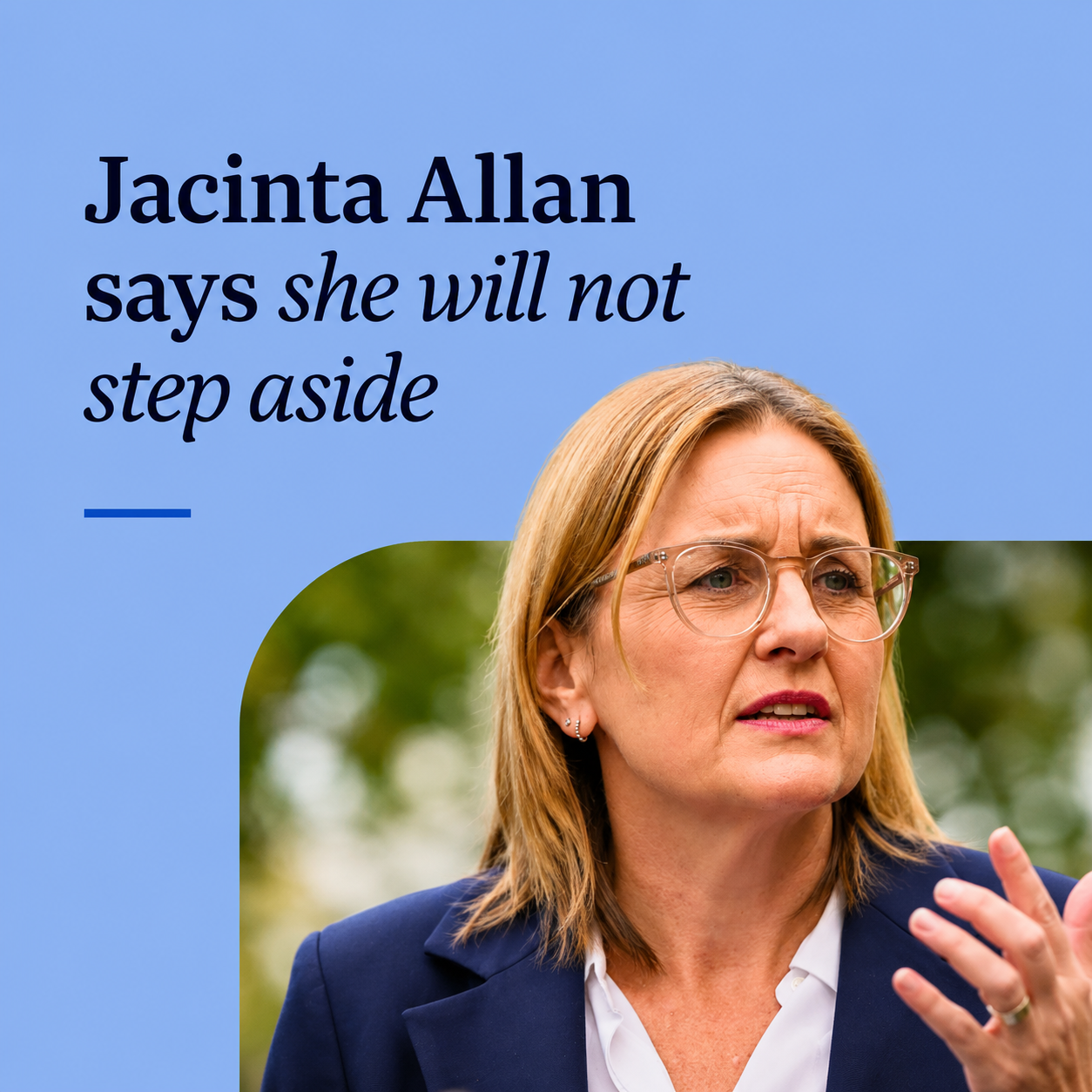
Despite the mounting pressure, Ms Allan initially refused to stand aside.
Speaking after the meeting, she insisted she remained determined to continue as Premier and vowed to contest any leadership ballot called by the parliamentary party.
She argued she had been elected to lead the government and intended to defend that mandate rather than resign under pressure.
Her position set the stage for what appeared likely to become an extraordinary internal showdown between the state’s two most senior Labor figures.
Mr Carroll’s decision surprised many observers.
Only weeks earlier, he had publicly dismissed suggestions he was preparing to challenge Ms Allan and had repeatedly expressed loyalty to the Premier.
However, deteriorating polling, growing concern among MPs and fears of a heavy election defeat dramatically altered the political landscape.
By the time he confirmed his candidacy, Mr Carroll argued that the circumstances had fundamentally changed and that Labor needed fresh leadership if it hoped to retain government after more than a decade in office.
The leadership challenge was driven by a combination of political and electoral pressures.
Recent opinion polls had shown Labor trailing the Liberal-National Coalition by a substantial margin, while the government also faced declining approval ratings, controversy surrounding Victoria’s Big Build infrastructure program, rising state debt and persistent cost-of-living concerns.
Internal polling reportedly convinced many Labor MPs that the party’s electoral position had become increasingly difficult under Ms Allan’s leadership.
Some also feared the rapid rise of Pauline Hanson’s One Nation could further complicate preference flows in marginal electorates, increasing the risk of a historic election defeat.
For Ms Allan, the challenge marked the culmination of nearly three years as Premier.
She assumed the state’s highest office in September 2023 following Daniel Andrews’ surprise resignation after almost a decade in power.
Although she inherited a government with a substantial parliamentary majority, she also inherited significant political challenges, including escalating infrastructure costs, record state debt and increasing public concern over integrity issues linked to the construction sector.
Throughout 2025 and 2026, those issues increasingly overshadowed Labor’s achievements in transport, health and education, placing growing pressure on the Premier’s leadership.
Mr Carroll entered the leadership contest with extensive ministerial experience.
First elected to Parliament in 2012 as the member for Niddrie, he has held portfolios including Public Transport, Roads, Education, WorkSafe and Medical Research.
After Daniel Andrews retired, Mr Carroll became Deputy Premier and Deputy Leader of Victorian Labor, positioning himself as one of the government’s most senior and recognisable figures.
His supporters argued he possessed the communication skills and political profile needed to reconnect Labor with voters before the election.
The prospect of a contested leadership ballot nevertheless carried considerable risks.
Political strategists warned that an extended internal conflict could reinforce public perceptions of instability and distract attention from Labor’s policy agenda during a crucial stage of the election campaign.
Those concerns ultimately influenced Ms Allan’s final decision.
Although she continued to maintain she believed she could prevail in a caucus ballot, she later concluded that forcing colleagues into a divisive leadership contest would inflict greater damage on the party than stepping aside voluntarily.
Her resignation cleared the way for a rapid transition.
Within hours, the Victorian Labor caucus unanimously endorsed Mr Carroll as the party’s new leader, allowing him to be sworn in as Victoria’s 50th Premier without a contested ballot.
The speed of the transition reflected the parliamentary party’s determination to end uncertainty quickly and begin rebuilding support ahead of November’s election.
Upon taking office, Premier Carroll immediately sought to distinguish his administration from that of his predecessor.
He declared that his government would focus on restoring integrity, strengthening community safety and improving economic management.
Among his first major commitments was a pledge to establish a royal commission into Victoria’s construction industry, a proposal that represented a significant departure from the Allan Government’s approach to allegations involving the sector.
The leadership upheaval also highlighted broader questions about how political parties respond to deteriorating electoral fortunes.
Modern Australian politics has seen several governments replace leaders shortly before elections in an effort to reset public perceptions and improve electoral prospects.
Whether such changes ultimately succeed often depends on whether voters view the new leadership as representing genuine policy renewal rather than simply a change of personalities.
For Victorian Labor, that challenge is particularly acute after more than 12 consecutive years in government.
Public concern about housing affordability, cost-of-living pressures, infrastructure spending, public debt and integrity issues has steadily eroded Labor’s once commanding electoral position.
Mr Carroll’s leadership therefore begins under considerable pressure to convince voters that meaningful change is possible within the existing government.
The leadership contest itself may ultimately be remembered less for the vote that never occurred than for the speed with which internal political realities shifted.
Within little more than twenty-four hours, discussions that initially centred on whether Jacinta Allan would face a challenge evolved into a complete transfer of power.
Mr Carroll’s declaration that the Premier had lost caucus support proved to be the decisive moment that transformed private dissatisfaction into an unavoidable leadership crisis.
By the following day, Victoria had a new Premier, a new political direction and a Labor government hoping the rapid transition would provide enough momentum to improve its electoral prospects before voters head to the polls in November.






