Victoria has entered a new political era after Ben Carroll was elected leader of the Victorian Labor Party and became the state’s 50th premier, replacing Jacinta Allan following one of the most dramatic leadership upheavals in recent state political history.
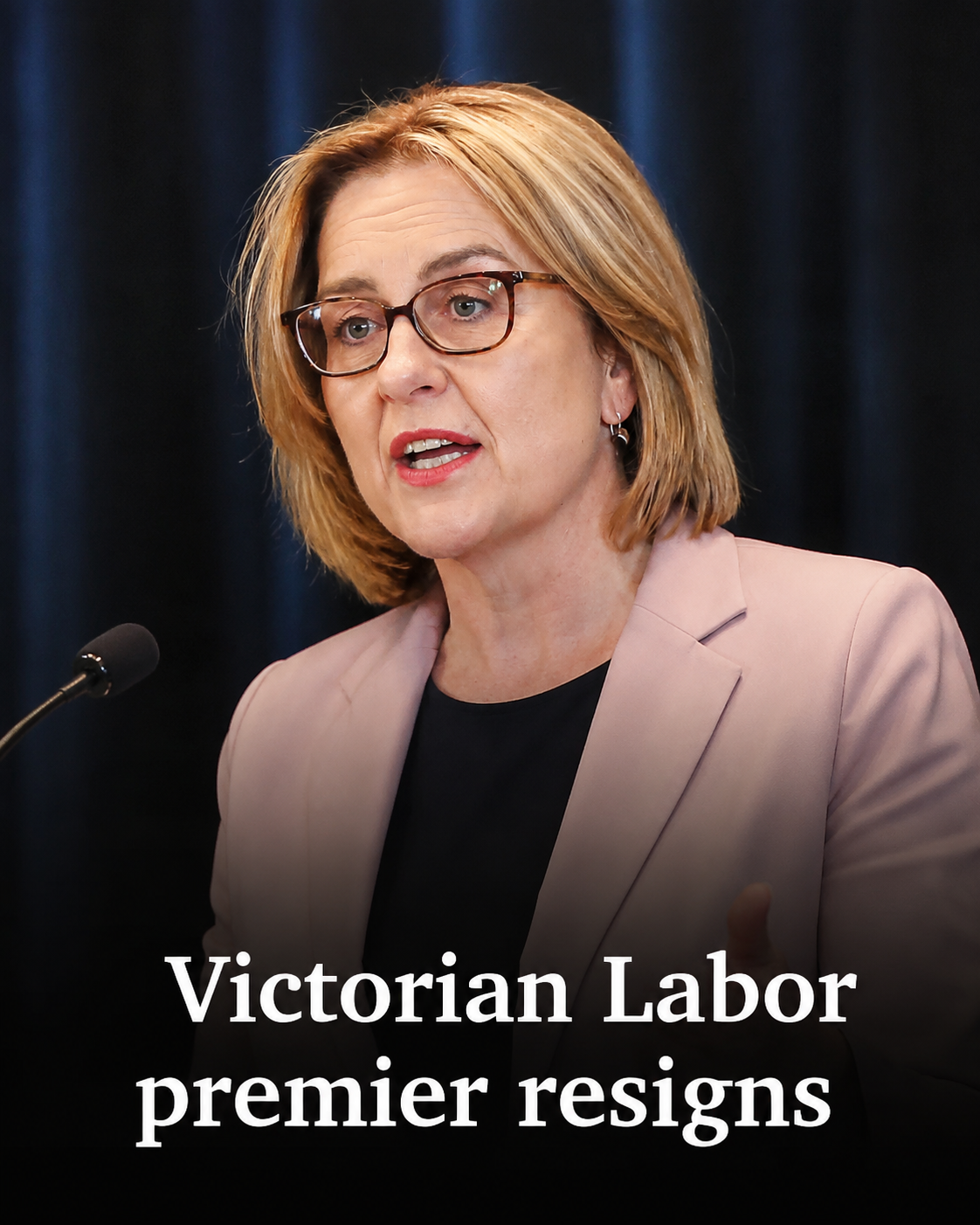
The leadership transition unfolded just hours after Jacinta Allan announced she would resign as premier rather than contest a bruising internal leadership ballot. Her decision ended two days of intense speculation, factional negotiations and mounting pressure from Labor MPs who had concluded the government required a fresh start only months before Victorians return to the polls.
Carroll was subsequently elected Labor leader, becoming premier without a prolonged leadership contest after Allan publicly gave him her full support and urged colleagues to unite behind the party’s new leadership.
In his first address as premier, Carroll sought to immediately distinguish himself from both of his predecessors.
“I’m not Dan Andrews. I’m not Jacinta Allan,” he declared.
The statement formed the centrepiece of his first appeal to Victorian voters, signalling that while Labor would remain in government, its leadership style and priorities would change under his administration.
Carroll acknowledged the contributions of both Andrews and Allan but argued that Victoria now required a different approach to meet changing economic and political challenges.
He said his government would focus on restoring confidence in public institutions, rebuilding relationships with the business community and demonstrating stronger economic management ahead of the November state election.
The leadership change came after months of growing pressure on Allan’s government.
Declining opinion polls, weakening personal approval ratings and increasing concern over Labor’s electoral prospects prompted senior ministers and factional leaders to reconsider the party’s leadership only four months before the election.
Although Allan initially indicated she would fight to retain the premiership, she ultimately concluded that a divisive internal contest would consume valuable political capital and distract from the government’s election campaign.
Announcing her resignation, Allan said she believed she could have won a leadership ballot but chose to stand aside for the good of the party.
She thanked colleagues for their support throughout her career and urged Labor MPs to unite behind Carroll as the party prepared for one of its most challenging election campaigns in more than a decade.
Prime Minister Anthony Albanese paid tribute to Allan following her resignation, describing her as “a very decent human being” who had devoted decades of public service to Victoria.
He praised her work across education, health and transport portfolios and wished her well for the future while expressing confidence in Carroll’s ability to lead the state government.
Carroll now faces the difficult task of convincing voters that Labor has genuinely turned a page.
Political analysts note that changing leaders only months before an election can provide governments with an opportunity to reset, but rarely removes public concerns over issues that developed under previous administrations.
Those concerns include cost-of-living pressures, Victoria’s record public debt, major infrastructure spending and continuing controversy surrounding the state’s construction sector.
Recognising those challenges, Carroll moved quickly to outline a different governing agenda.
Within hours of taking office, he announced plans for a royal commission into Victoria’s construction industry, describing the inquiry as an important step toward rebuilding integrity and public trust.
The proposed commission is expected to examine allegations of corruption and organised crime links within parts of the construction sector, issues that generated sustained political pressure during Allan’s premiership.
Carroll also announced plans for a special prosecutor and expanded powers for Victoria’s anti-corruption watchdog, the Independent Broad-based Anti-corruption Commission (IBAC), as part of a broader package of integrity reforms.
Beyond integrity measures, the new premier has indicated his government will place greater emphasis on economic management.
He has pledged stronger engagement with business leaders, closer scrutiny of major infrastructure projects and renewed efforts to resolve ongoing industrial disputes, including negotiations involving public school teachers.
Supporters describe Carroll as a pragmatic economic moderate who combines Labor’s traditional social agenda with a stronger focus on fiscal discipline and investment confidence.
Carroll’s elevation also marks an important shift within Victorian Labor itself.
For the first time since the Bracks–Brumby era, the party’s Right faction has regained the premiership, replacing the Left faction leadership associated with Daniel Andrews and Jacinta Allan.
Observers believe that change could influence both cabinet appointments and policy priorities over coming years, particularly in areas involving economic development, infrastructure and relationships with the private sector.
The leadership contest itself was far from straightforward.
During the hectic caucus meeting, Attorney-General Sonya Kilkenny briefly emerged as an alternative leadership contender before withdrawing, clearing the path for Carroll’s unanimous election.
The rapid sequence of negotiations highlighted the intensity of Labor’s internal divisions as the party sought to avoid a prolonged factional battle in full public view.
Several ministers aligned with Allan have since announced plans to leave Parliament or cabinet, reinforcing the sense that Labor is entering a period of significant generational and factional change.
Political commentators believe Carroll now has only a limited window to demonstrate that his government represents more than simply a change of personalities before voters cast their ballots.
The opposition has argued that replacing the premier does not erase broader concerns about Labor’s record in office.
Coalition MPs contend voters will judge the government on issues including debt, taxation, crime, infrastructure management and the cost of living rather than leadership changes alone.
Labor, by contrast, hopes Carroll’s arrival will allow the party to present a refreshed agenda while retaining the experience of more than a decade in government.
Political analysts caution that history offers mixed evidence about whether late leadership changes improve electoral prospects.
While new leaders can generate temporary momentum and renewed media attention, voters often remain focused on broader questions of policy performance and economic management.
For Carroll, the challenge will be demonstrating that his promise of a “new direction” translates into measurable action before the state election.
His declaration that he is “not Dan Andrews” and “not Jacinta Allan” has already become one of the defining political messages of Victoria’s election campaign.
Whether that message persuades voters that Labor has genuinely changed course will be one of the central questions shaping the state’s political future over the coming months.






