A political stunt designed to expose Victoria’s controversial preference system may be on the verge of achieving its central objective before a single vote is cast.
The Allan government is reportedly preparing legislation to abolish group voting tickets before Victoria’s November 28 state election, potentially ending the last remaining state upper house system in Australia where political parties can automatically direct the preferences of voters who cast a single above-the-line vote.
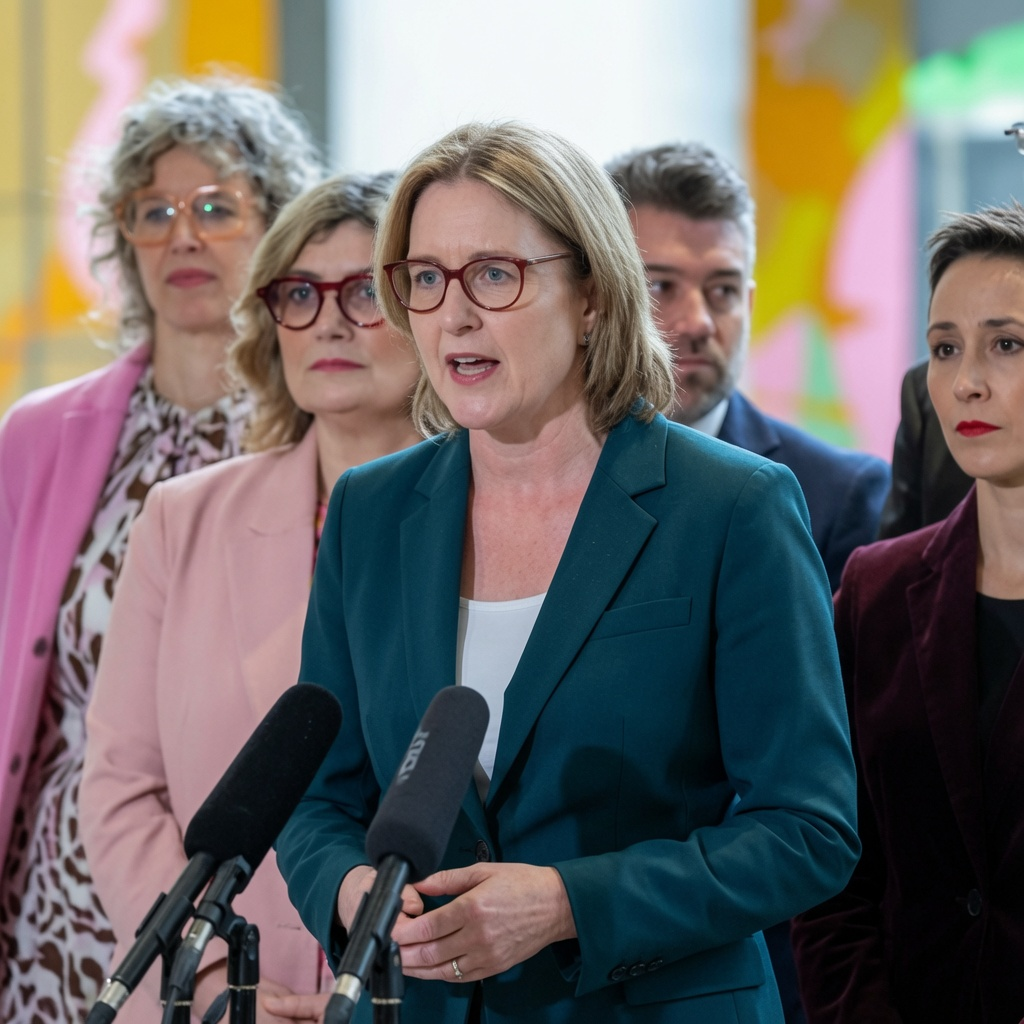
The proposed reform follows years of criticism, parliamentary inquiries and repeated warnings that Victoria’s upper house voting rules are vulnerable to preference harvesting and manipulation by political operators.
But the timing has attracted particular attention.
Just months before reports emerged that Premier Jacinta Allan’s government was moving to scrap the system, Rebel News commentator Avi Yemini publicly announced an extraordinary plan to create a party called the Free Palestine Party.
Yemini made no secret of what he was trying to do.
The party was designed to demonstrate how a politically attractive name could potentially draw votes from people who knew little about the candidates behind it and then, under Victoria’s group voting ticket system, direct those preferences towards parties the voter may never have intended to support.
Yemini said the preferences would flow to parties that wanted to “free Palestine from Hamas”.
His stated intention was to direct support towards conservative parties, including One Nation.
The plan triggered immediate accusations of deception.
It also demonstrated, in unusually public fashion, the precise weakness electoral reform advocates had been warning about for years.
If the Allan government now abolishes group voting tickets before November, the Free Palestine Party may never need to elect a candidate to have a political impact.
Its existence has already helped drag Victoria’s preference system into the national spotlight.
Victoria is the last state still using group voting tickets
Group voting tickets determine how above-the-line preferences are distributed in elections for Victoria’s Legislative Council.
Under the current system, a voter can place the number “1” above the line for a party or group.
That voter does not personally number every subsequent preference.
Instead, the party’s registered group voting ticket determines where the vote travels as candidates are excluded and preferences are distributed.
The party lodges its preference order with the Victorian Electoral Commission before the election.
For many voters, the process is almost invisible.
They select the party they support.
Political operators have already determined where their later preferences may go.
This creates an opportunity for complex preference negotiations between parties.
Minor parties can agree to direct votes towards one another.
Strategists can calculate pathways through the count.
A candidate with a very small primary vote can accumulate preferences from numerous parties and reach the quota required to win a seat.
The system does not require voters themselves to understand or personally approve every preference transfer.
They handed that power to the party when they voted above the line.
Victoria is now the only Australian state still using group voting tickets for its upper house.
The Commonwealth abolished the system for Senate elections in 2016.
Western Australia removed group voting tickets after its 2021 state election.
Other jurisdictions have also moved away from the model.
Victoria remained the holdout.
The Free Palestine Party was designed to expose the system
Yemini announced his plan in April.
The name was deliberately provocative.
He said he intended to create a Free Palestine Party and use Victoria’s preference system to funnel votes towards conservative candidates.
“We are going to register the Free Palestine Party,” Yemini said when announcing the plan.
“And we are going to flow our preferences on to parties that want to free Palestine from Hamas.”
The strategy relied on a simple political calculation.
Some voters make decisions based heavily on party names.
A person who sees “Free Palestine” on a large Legislative Council ballot paper may assume the party represents a conventional pro-Palestinian political position.
Under the current group voting ticket system, an above-the-line vote could then be distributed according to the preference order lodged by the party.
That preference order could favour conservative candidates.
Yemini openly discussed One Nation as a potential beneficiary.
The project was condemned by opponents as misleading and deceitful.
Electoral experts warned voters to examine parties carefully rather than relying solely on names.
But the controversy also reinforced Yemini’s argument.
If a party could legally be created with a politically suggestive name and then direct above-the-line preferences in a dramatically different ideological direction, the vulnerability was built into the electoral system.
The stunt did not invent group voting tickets.
It simply attempted to use them.
The registration application became official in June
The Free Palestine concept moved beyond a social media announcement.
On June 2, the Victorian Electoral Commission published notices of applications to register political parties in the Victoria Government Gazette.
One application sought registration of a party named “Free Palestine”.
The proposed registered officer was Avraham Yemini.
A separate application was also lodged for a “Free Palestine Party”, with Ibrahim Hadi named as its proposed registered officer.
The rival applications created an unusual problem for the electoral commission because two groups were seeking politically similar names.
Yemini’s application meant his plan had entered the formal electoral registration process.
It was no longer merely an online joke or hypothetical discussion about gaming the system.
He was attempting to place the party within Victoria’s electoral machinery.
That intensified scrutiny of group voting tickets.
The November election was approaching.
The Victorian Electoral Commission needed certainty about the voting system it would be required to administer.
And political parties were preparing for an upper house contest in which preference negotiations could again determine seats.
Labor was warned about group voting tickets long before Avi Yemini
There is an important fact that cannot be ignored in assessing the timing of the government’s reported reform.
The problem did not begin with the Free Palestine Party.
Victoria’s group voting ticket system had been criticised for years.
The Victorian Parliament’s Electoral Matters Committee examined the upper house electoral system and formally recommended that group voting tickets be eliminated before the 2026 election.
Its final report said Victoria should move to a system similar to the Commonwealth Senate.
Under that model, voters can indicate preferences for multiple parties or groups above the line.
The committee was explicit.
“The Committee believes that group voting tickets should be eliminated before the 2026 election,” its report said.
The recommendation was published in December 2025.
Even that was not the first warning.
In July 2024, the Electoral Matters Committee had already recommended adopting a new method for electing the upper house that would eliminate group voting tickets.
The Victorian Greens publicly called for the system to be abolished before the 2026 election as far back as 2023.
Electoral analyst Antony Green warned in June this year that time was running out for the government to make the change before November.
“Unless the law is changed, as recommended by committee and as already changed elsewhere, the ‘preference whisperers’ will be back in business,” Green wrote.
For that reason, it would be inaccurate to claim the Allan government only discovered the problem after Yemini created the Free Palestine Party.
The government had years of warnings.
Parliament had conducted an inquiry.
A formal recommendation was sitting on the table.
Reform advocates had repeatedly demanded action.
The more politically damaging question for Labor is different.
Why did Victoria reach the middle of 2026 with the old system still in place?
Labor had years to act
The Allan government is not confronting a newly discovered loophole.
Group voting tickets have been controversial across Australia for more than a decade.
The federal Senate reforms of 2016 demonstrated that an alternative system could be introduced.
Western Australia’s experience added further pressure.
Victoria’s own parliamentary processes then produced recommendations for reform.
Yet as the 2026 election approached, the system remained law.
In February, Greens MP Aiv Puglielli introduced the Electoral Amendment (Group Voting and Vote Counting) Bill 2026 into the Victorian Parliament.
The bill sought to eliminate group voting tickets.
Opposition MPs had also publicly supported abolition.
During parliamentary debate, Liberal MP Kim Wells accused the government of repeatedly delaying reform.
He argued Victorians had heard promises that change was being considered only for governments to approach elections without acting.
That history makes the current timing politically awkward for Labor.
The government can legitimately say reform was already under parliamentary consideration before Yemini’s stunt.
Its critics can equally ask why action became urgent only when the election deadline was rapidly approaching and political activists began openly demonstrating how the existing rules could be exploited.
Both points can be true.
Yemini did not discover the flaw.
But he made the flaw much harder to discuss as an abstract technical problem.
A ghost party can turn a name into electoral currency
The controversy surrounding the Free Palestine Party illustrates why party names matter.
Upper house ballot papers can contain long lists of groups and candidates.
Many voters do not research every minor party before entering a polling booth.
A recognisable issue can therefore become a political asset.
Environment.
Freedom.
Families.
Workers.
Refugees.
Palestine.
A party name can communicate an immediate message before a voter reads a policy document or identifies a candidate.
Under a system of voter-controlled preferences, a person who selects a party above the line can then decide which other parties receive subsequent preferences.
Under Victoria’s group voting ticket system, a single above-the-line vote hands that later preference sequence to the party.
That creates an incentive to establish parties capable of attracting a small but useful number of primary votes.
Those votes can then become part of a negotiated preference network.
The objective does not always need to be winning a seat directly.
A party can influence which other candidate survives an exclusion count.
Its preferences can help build a quota elsewhere.
Multiple small parties can exchange preferences in complex arrangements.
This practice has created the role of the so-called “preference whisperer”.
Political strategists analyse the mathematics of the count and negotiate deals designed to maximise the chance that participating micro-parties elect candidates.
Critics say the result can distort the relationship between primary support and parliamentary representation.
Defenders of minor parties argue major parties are already advantaged by name recognition, money and established political structures and that reform could make the upper house less diverse.
That dispute is now central to the Allan government’s proposed changes.
Crossbenchers warn abolition could help One Nation
Not everyone celebrating the end of group voting tickets agrees on what should replace them.
Animal Justice Party MP Georgie Purcell has warned that simply abolishing the system without broader reform could deliver a major advantage to larger parties with strong statewide primary votes.
One Nation is among the parties expected to benefit.
Purcell has argued the change could become a “death knell” for smaller parties while strengthening One Nation and the Greens.
Libertarian MP David Limbrick has also raised concerns about the consequences for micro-parties.
The issue is mathematical.
Under group voting tickets, a candidate with a small primary vote can accumulate preferences from other parties through negotiated tickets.
Remove that mechanism and parties become more dependent on voters deliberately giving them preferences.
A party with substantial genuine primary support across Victoria is in a stronger position.
Recent polling has shown One Nation attracting levels of support far beyond its historical Victorian performance.
If that support is reflected in the state election, a voter-controlled preference system may make it easier for the party to convert primary votes into upper house seats.
That is the irony surrounding Yemini’s stunt.
He created the Free Palestine Party partly to direct preferences towards One Nation and other conservatives.
If the government abolishes group voting tickets, that particular strategy may become ineffective.
But One Nation could still emerge as a beneficiary of the reform because its own voters would no longer need a network of micro-party preference deals to help the party reach quotas.
Genuine primary support would matter more.
Victorians would regain control of their preferences
The strongest argument for abolishing group voting tickets is democratic simplicity.
A voter’s preferences should belong to the voter.
If a Victorian supports Labor first and the Greens second, the ballot should allow that person to express the choice.
If another voter supports One Nation first, the Liberals second and the Libertarians third, that voter should control the sequence.
If someone supports a minor party but does not want their vote reaching a major party, the system should make that preference clear.
Under the current above-the-line system, voters can easily know their first choice while remaining unaware of the complete registered ticket determining where the vote may later travel.
The information is publicly available before an election.
But expecting millions of voters to locate and study every group voting ticket before casting a ballot is unrealistic.
A Senate-style system places the preference decision directly on the ballot paper.
The voter numbers multiple parties or groups above the line.
The sequence is visible.
The sequence is intentional.
The sequence belongs to the elector.
Political parties can still publish how-to-vote cards and recommend preferences.
They can still campaign for ideological allies.
They can still ask supporters to number parties in a particular order.
But the voter must physically make the choice.
That is a significant difference.
The legislation has not yet passed
Despite reports that the Allan government is preparing to abolish group voting tickets, the reform should not be treated as completed.
The government is reportedly drafting legislation expected to be introduced later in July.
The final wording of the bill will matter.
So will the position of the Coalition and the crossbench.
Changing the voting method can be achieved through legislation, but the bill must pass Parliament.
Broader structural changes to the Legislative Council could require a statewide referendum.
The Electoral Matters Committee examined several larger reform options, including changing the number and size of electoral regions and statewide proportional models.
Those structural questions cannot realistically be resolved before the November election under the same timetable as a straightforward abolition of group voting tickets.
This is why some crossbench MPs are demanding a broader reform package.
They argue that removing group voting tickets while retaining the current eight regions, each electing five members, could raise the effective barriers faced by small parties.
Supporters of immediate abolition respond that Victoria should not preserve a discredited preference system simply because the perfect replacement structure cannot be agreed before November.
The election clock is now running.
The Victorian Electoral Commission needs time to prepare ballot instructions, counting procedures, voter education and election systems.
Antony Green warned in June that the practical deadline was approaching quickly.
The government can no longer spend years discussing reform.
It must legislate or conduct another election under group voting tickets.
Did Avi Yemini force Labor’s hand?
There is no evidence establishing that Jacinta Allan decided to abolish group voting tickets because of Avi Yemini.
The parliamentary history shows reform was under active consideration before the Free Palestine Party was announced.
The Electoral Matters Committee had already recommended abolition.
The Greens had already campaigned on the issue.
Electoral experts had already criticised the system.
The Coalition had expressed support for ending group voting tickets.
But politics is not only about who first identified a problem.
It is also about what turns a technical problem into an urgent political liability.
Yemini’s stunt did exactly that.
He took a complicated electoral mechanism and explained it through a deliberately confronting hypothetical.
A party could call itself Free Palestine.
It could attract voters who believed the name represented their political views.
It could then lodge a preference ticket favouring One Nation and conservative candidates.
And under Victoria’s existing electoral law, that preference strategy could be entirely relevant to the distribution of above-the-line votes.
The controversy generated national headlines.
Experts warned voters about misleading party names.
The Victorian Electoral Commission received formal registration applications.
The abstract debate over “preference harvesting” suddenly had a party name, a political target and an election deadline.
Labor may have been considering reform already.
Yemini made delay more difficult to defend.
The Free Palestine Party may achieve its objective without contesting the election
If Victoria abolishes group voting tickets before November 28, the central mechanism Yemini intended to exploit will disappear.
An above-the-line vote would no longer automatically follow a complete preference ticket designed by the party.
Voters would control their own preferences under the replacement model.
The Free Palestine Party could still campaign.
It could still recommend preferences.
It could still publish how-to-vote material directing supporters towards One Nation or other conservative parties.
But it could not rely on a single above-the-line “1” to automatically send every later preference through a party-controlled ticket.
In practical terms, that would defeat the stunt.
In political terms, it could validate it.
Yemini said he wanted to expose how easily Victoria’s system could be gamed.
The reaction to his plan demonstrated the concern.
If Parliament now removes the mechanism before election day, he will be able to argue that the campaign helped force public attention onto a system politicians had debated for years without abolishing.
That does not make Yemini the originator of electoral reform.
It does not erase the years of work by parliamentary committees, electoral analysts, the Greens, opposition MPs and other reform advocates.
But it would be difficult to deny that the Free Palestine Party accelerated the political pressure.
Victoria had years to abolish group voting tickets.
The state remained the last holdout in Australia.
Then an activist openly announced he would create a politically misleading party name and use the system to direct preferences towards conservative candidates.
Months later, the government is reportedly preparing legislation to scrap the system before the election.
The legislation has not yet passed.
The final replacement model has not yet been settled publicly.
And crossbenchers are warning that rushed reform could produce unintended consequences.
But one principle is increasingly difficult to argue against.
Victorian voters should know where their preferences are going.
Better still, they should decide for themselves.
If group voting tickets are abolished before November 28, the Free Palestine Party may never need to win a seat.
The loophole it set out to expose will have been closed before election day.






