The Australian Federal Police (AFP) has formally closed its investigation into controversial comments made by One Nation leader Pauline Hanson about Muslims earlier this year, concluding that the remarks did not meet the legal threshold for any criminal offence under Australia’s federal hate speech laws.
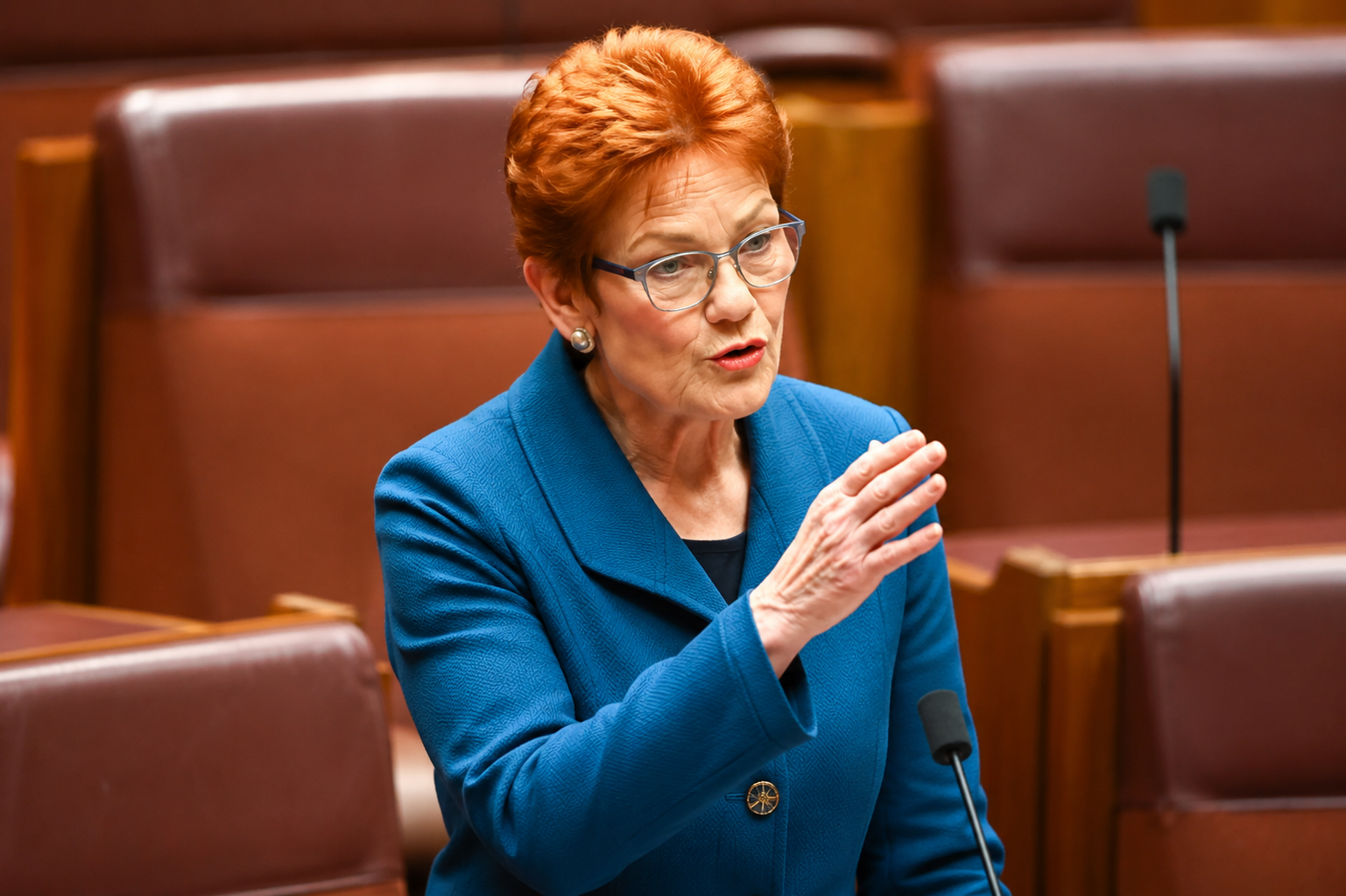
The decision brings to an end months of legal uncertainty following widespread public complaints lodged after Senator Hanson made the remarks during a televised interview in February 2026.
An AFP spokeswoman confirmed the investigation had now been finalised.
“In February 2026, the AFP received several complaints about public comments made by a Federal Parliamentarian,” the spokeswoman said.
“The AFP has determined the comments do not meet the threshold for relevant offences, including within the Combatting Antisemitism, Hate and Extremism (Criminal and Migration Laws) Act 2026.
“The AFP has finalised this matter.”
The announcement effectively confirms that, while the comments generated significant political controversy and public criticism, investigators did not identify sufficient evidence to support criminal prosecution under federal legislation.
The controversy began after Senator Hanson appeared on Sky News while discussing Australian women and children linked to Islamic State who were attempting to return from Syria. During the interview she criticised radical Islam before questioning whether there were “good Muslims”, comments that immediately attracted widespread condemnation from political opponents, Muslim organisations and community leaders.
Within days, the AFP acknowledged receiving multiple complaints alleging the remarks may have breached Australia’s recently strengthened hate speech laws. At the time, police confirmed they had received reports relating to the comments but stopped short of saying a criminal investigation had commenced.
The legislation referenced by the AFP was the Combatting Antisemitism, Hate and Extremism (Criminal and Migration Laws) Act 2026, which introduced tougher criminal penalties for advocating violence, threatening protected groups and supporting prohibited hate organisations. The reforms were designed to strengthen Australia’s response to serious hate crimes while establishing higher penalties for offences motivated by hatred or extremism.
Although the law expanded police powers in some areas, investigators ultimately determined Senator Hanson’s statements did not satisfy the criminal thresholds established by the legislation.
The AFP’s decision addresses only the criminal law question. It does not represent an endorsement of the comments themselves, nor does it prevent continued political criticism or public debate about the language used.
The issue became one of the most divisive political controversies of the year.
Prime Minister Anthony Albanese criticised the remarks shortly after they were made, while numerous federal MPs from across Parliament condemned the statements as inflammatory and harmful to Australia’s multicultural community. Muslim organisations argued the comments risked increasing prejudice and social division at a time when community tensions were already elevated.
Several days after the interview, Senator Hanson issued what many described as a qualified apology. She maintained her criticism of radical Islam but said she had not intended to suggest every Muslim shared extremist beliefs, adding that she apologised to Muslims who rejected extremism and supported Australian values if they had been offended by her comments.
Despite that clarification, criticism continued throughout the following months.
In March, the Senate voted to censure Senator Hanson over the remarks, with support coming from Labor, the Greens, members of the crossbench and two Liberal senators. Hanson rejected the motion, describing it as a political stunt and insisting she had raised legitimate concerns about extremism rather than targeting Muslims generally.
Throughout the investigation, Hanson repeatedly argued that the complaints represented an attempt to use Australia’s strengthened hate speech laws against political opponents. She maintained that Australians should be free to debate immigration, national security and religious extremism without fear of criminal prosecution.
The AFP’s conclusion is likely to be interpreted differently across Australia’s political spectrum.
Supporters of Senator Hanson are expected to view the outcome as confirmation that her comments, while controversial, fell within the boundaries of lawful political expression.
Critics, however, are likely to argue that speech can still be offensive, divisive or damaging even when it does not amount to a criminal offence under federal law.
The distinction reflects one of the central principles of Australia’s legal framework governing freedom of political communication. Criminal liability generally requires conduct to meet specific statutory elements, meaning not every offensive or controversial statement will breach federal criminal law.
Legal experts have consistently noted that Australia’s hate speech laws focus on conduct involving threats, advocacy of violence or other prohibited behaviour rather than simply offensive political opinion. Whether particular comments cross that threshold depends on the wording used, the surrounding circumstances and the precise legal tests contained within the legislation.
The AFP has provided no indication that any further action will be taken, and its statement confirms the investigation has been completed.
For Senator Hanson, the decision removes the possibility of criminal proceedings arising from the February interview, although the political consequences of the controversy are likely to remain part of broader debates surrounding One Nation, immigration policy, multiculturalism and freedom of speech in Australia.
The case also serves as one of the earliest high-profile tests of Australia’s strengthened federal hate speech framework following the introduction of the 2026 legislation. While the laws expanded the Commonwealth’s ability to prosecute serious hate-related offending, the AFP’s findings demonstrate that investigators continue to apply the statutory thresholds before pursuing criminal charges.
As Australia’s political debate over immigration, religion and national security continues, the outcome is likely to be cited by both supporters and critics of stronger hate speech laws, highlighting the ongoing challenge of balancing robust political debate with protections against unlawful hate-based conduct.






