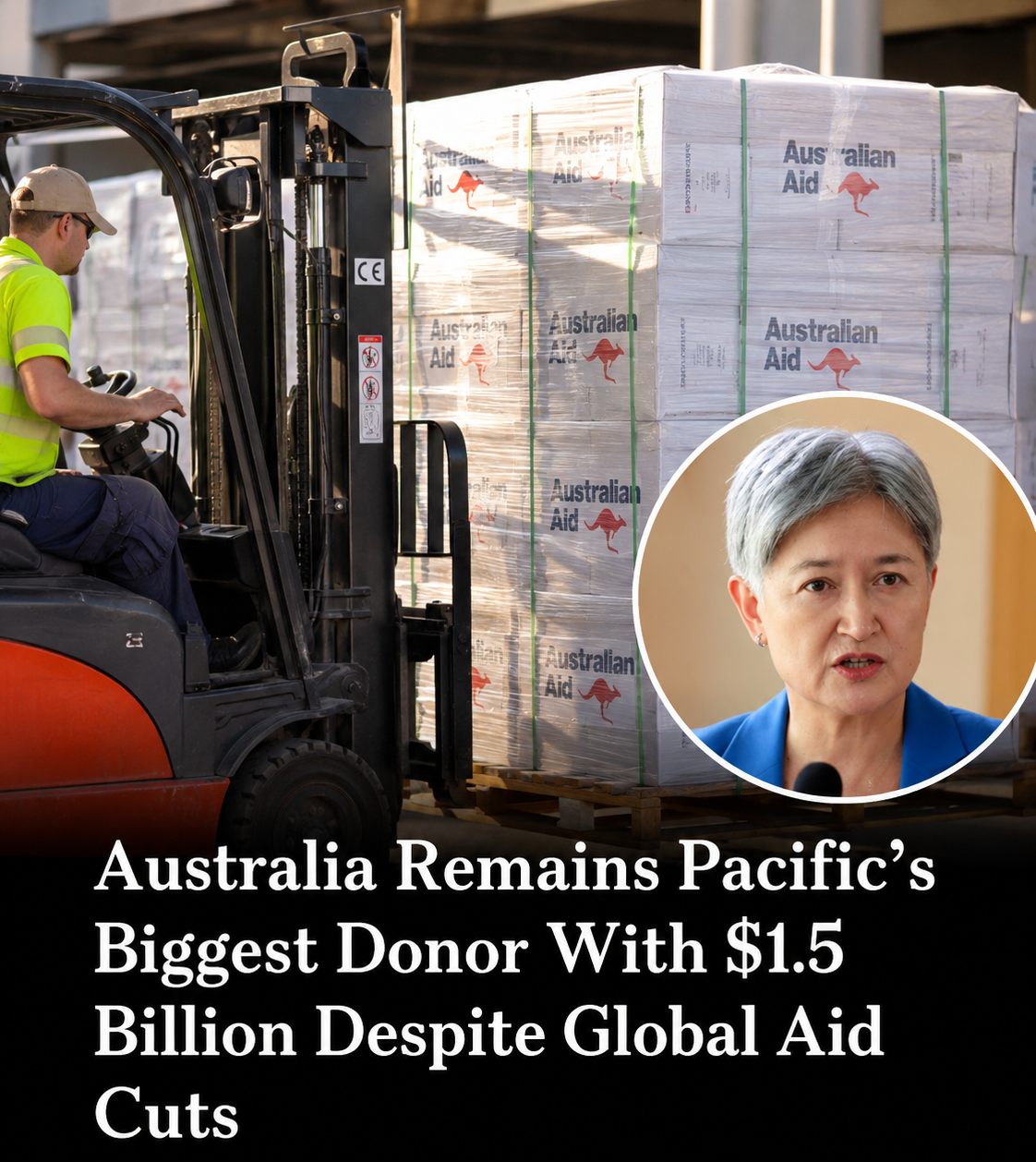
Australia has reinforced its position as the Pacific Islands’ leading development partner, with a new report finding that international funding for the region has remained comparatively resilient despite significant reductions in United States foreign aid programs.
The findings come from the Lowy Institute’s ninth annual Pacific Aid Map, which examines development finance flowing to Pacific Island countries at a time of heightened strategic competition among Australia, China, the United States and other international partners.
According to the report, Australia was by far the largest provider of grants and development loans to the Pacific in 2024, maintaining a position it has held for many years despite an increasingly crowded geopolitical landscape.
The report concludes that although the United States has sharply reduced many overseas assistance programs, the overall impact on Pacific development financing has been less severe than many observers initially feared.
That resilience reflects the continued commitment of Australia and several multilateral institutions, together with funding arrangements that have insulated some Pacific countries from the most significant American cuts. Compact funding for nations such as Palau, the Federated States of Micronesia and the Marshall Islands, for example, has largely continued because it is provided through separate long-term agreements rather than the programs most affected by USAID reductions.
Australia’s dominant role has become even more significant as several traditional donors have scaled back development assistance.
The 2025 Pacific Aid Map indicates Australia now provides around 43 per cent of all official development finance flowing to Pacific Island countries, contributing more than four times as much as the next-largest bilateral donor. While overall aid across the region is projected to remain relatively flat over coming years, Australia’s sustained investment is expected to offset much of the decline from other Western partners.
The latest findings arrive against a backdrop of intense strategic competition across the Pacific.
In recent years the region has become a major focus of international diplomacy, with Australia, China, the United States, Japan, New Zealand and the European Union all seeking stronger political, economic and security relationships with Pacific Island governments.
Development assistance has increasingly become one of the principal tools through which countries seek to deepen those relationships.
Although geopolitical rivalry often dominates headlines, the Lowy Institute argues that practical development outcomes remain the primary concern for Pacific governments, many of which continue to face significant challenges from climate change, infrastructure deficits, limited healthcare capacity and economic vulnerability.
Australia’s assistance spans a wide range of sectors.
Canberra funds health programs, education initiatives, policing partnerships, governance reforms, disaster preparedness, climate resilience projects and major infrastructure investments throughout the Pacific.
In recent years Australia has also expanded lending through the Australian Infrastructure Financing Facility for the Pacific (AIFFP), supporting projects including ports, telecommunications, renewable energy, transport and water infrastructure.
The report notes that this growing emphasis on infrastructure reflects both development needs and increasing strategic competition with China.
China remains an important player in the region despite changes to its development strategy.
Earlier editions of the Pacific Aid Map found Beijing had shifted away from large-scale lending toward more targeted grants, budget support and community-level projects aimed at strengthening political relationships in key Pacific nations.
Although China’s direct lending has slowed compared with its peak years, Chinese state-owned enterprises continue to play a major role in delivering infrastructure projects financed by multilateral development banks, illustrating that Beijing’s regional influence extends beyond its own bilateral aid programs.
The report also highlights broader trends affecting development finance.
While official development finance to the Pacific fell sharply after pandemic-related assistance wound down, overall support remains above pre-COVID levels.
However, the composition of aid has changed significantly.
Grants have declined while greater reliance is being placed on both concessional and commercial loans, raising concerns about debt sustainability in several small island economies.
Infrastructure projects now account for a growing proportion of total development finance, whereas funding for health and education has not expanded at the same pace.
Debt sustainability remains one of the report’s central concerns.
Approximately 60 per cent of infrastructure financing in the Pacific is now delivered through loans rather than grants, increasing financial pressure on countries already facing elevated debt risks.
Several Pacific nations are simultaneously confronting the economic consequences of climate change, natural disasters and limited fiscal capacity, making careful management of development borrowing increasingly important.
The United States’ reduced aid footprint has nevertheless altered the strategic environment.
The scaling back of USAID programs has affected projects covering health, climate resilience, disaster preparedness and community development across parts of the Pacific.
Even so, analysts note that much of America’s largest financial support to the North Pacific continues through Compact of Free Association arrangements, limiting the overall regional impact of broader USAID reductions. >
Australia has responded by directing an even larger proportion of its foreign aid budget toward the Indo-Pacific.
The federal government has increased funding for priority regional programs, including health initiatives in Papua New Guinea and Fiji, while reaffirming that stability and prosperity in neighbouring Pacific countries remain central pillars of Australian foreign policy.
Foreign Minister Penny Wong and International Development Minister Pat Conroy have repeatedly argued that Australia’s engagement in the Pacific predates the current period of strategic competition and is based on long-standing partnerships rather than short-term geopolitical calculations.
They have also emphasised locally led development, greater transparency and closer collaboration with Pacific governments in designing future assistance programs.
Pacific leaders themselves continue to stress that development assistance should respond primarily to local priorities rather than external strategic rivalries.
Issues including climate adaptation, healthcare, education, fisheries management, renewable energy and disaster resilience consistently rank among the region’s highest priorities.
Many governments have welcomed increased international interest while cautioning against being viewed solely through the lens of great-power competition.
The Lowy Institute’s findings suggest that, despite frequent predictions of a major aid vacuum following US funding reductions, Pacific development financing has proven more resilient than expected.
Australia’s sustained commitment, combined with continuing support from multilateral institutions and other international partners, has helped preserve overall funding levels even as the composition of that support continues to evolve.
Nevertheless, the report warns that challenges remain.
Slower global economic growth, constrained aid budgets across many donor countries and rising debt levels could place additional pressure on Pacific development over the coming decade.
Maintaining long-term investment in health, education and climate resilience—alongside major infrastructure projects—will be essential if Pacific Island nations are to meet growing economic and environmental challenges.
For Australia, the report reinforces its role not only as the Pacific’s largest donor but also as one of the region’s most influential strategic partners.
As international competition for influence continues, Canberra’s ability to combine sustained development assistance with long-term diplomatic engagement is likely to remain a defining feature of Pacific regional policy in the years ahead.