Prime Minister Anthony Albanese has ruled out, for now, another extension of Australia’s temporary fuel excise discount, saying the government is not planning additional relief despite renewed conflict in the Middle East continuing to create uncertainty in global energy markets.
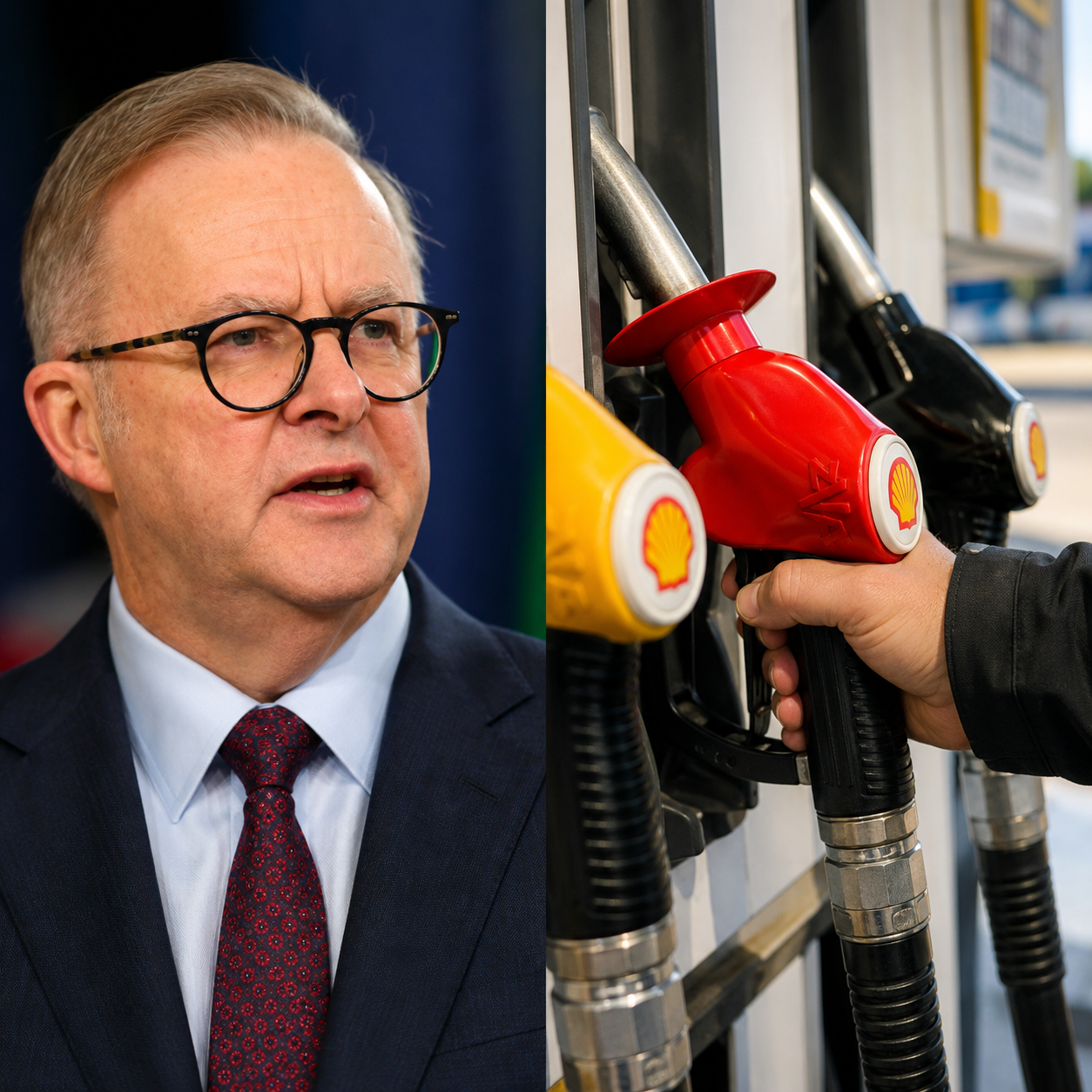
Speaking during an appearance on the ABC’s Insiders, Albanese was asked whether the government would consider extending the temporary reduction in fuel excise as geopolitical tensions threaten international oil supplies.
“That’s not in our planning at this point in time,” the Prime Minister said, while adding that his government would continue to respond to cost-of-living pressures “when they arise”.
The comments signal that motorists should not expect another automatic extension of the fuel tax relief currently scheduled to finish in early August.
The Albanese Government originally introduced a 50 per cent reduction in fuel excise earlier this year in response to surging global oil prices and concerns about inflation. The measure reduced the effective fuel excise by around 32 cents per litre before being partially extended, with the discount halved to 16 cents per litre from 1 July until 2 August.
Unless further action is announced, the temporary relief will expire after 2 August, returning fuel excise to its normal level in addition to the routine indexation that applies under Australian law. Analysts expect that change alone to increase retail petrol prices, although the final impact will depend on wholesale oil prices, the Australian dollar and competition between fuel retailers.
The timing of the decision coincides with renewed instability in the Middle East, where ongoing conflict has renewed concerns about global energy supplies.
Although crude oil prices initially rose sharply following the escalation, markets have since stabilised as fears of prolonged disruption eased. Nevertheless, governments and energy analysts continue monitoring shipping routes, particularly the Strait of Hormuz, through which a substantial proportion of the world’s oil exports pass. Any significant disruption could quickly push international fuel prices higher.
Australia imports much of its refined fuel, making domestic petrol prices particularly sensitive to international market movements.
Retail fuel prices are influenced by several factors, including global crude oil prices, refining costs, exchange rates, freight expenses and taxation. Even if fuel excise remains unchanged, motorists can still experience significant price fluctuations depending on developments in international energy markets.
The government’s temporary excise reduction was introduced as part of a broader package of cost-of-living measures aimed at easing pressure on households facing higher inflation and energy costs.
When announcing the partial extension in June, ministers argued that gradually winding back the discount would provide continued assistance while allowing the budget to absorb less of the cost than maintaining the full subsidy indefinitely. The extension also included transitional arrangements for heavy vehicle road user charges.
Albanese has stopped short of completely ruling out future intervention should global conditions deteriorate significantly.
Earlier this year he acknowledged Australia operates in a volatile international environment and said the government would always respond to major external shocks if circumstances required. However, his latest comments indicate no such decision is currently under consideration.
Opposition parties have continued to argue that Australian households remain under significant financial pressure, pointing to fuel, grocery, housing and electricity costs as evidence that additional relief may still be necessary.
The government, meanwhile, maintains that inflation has eased from its earlier peak and says its broader economic strategy is designed to provide targeted assistance while avoiding measures that could place additional pressure on the federal budget or inflation.
Energy security has also become a larger policy issue following recent international disruptions.
The federal government has invested in expanding Australia’s strategic fuel reserves and increasing domestic fuel stockpiles, arguing the country is now better prepared for temporary international supply disruptions than it was several years ago. Officials have also continued working with international partners through the International Energy Agency to monitor supply risks and emergency response arrangements.
Industry groups say motorists should expect fuel prices to continue fluctuating over coming months regardless of government policy.
Wholesale oil markets remain highly sensitive to geopolitical developments, refinery outages and currency movements. As a result, even relatively stable domestic tax settings cannot eliminate volatility at service stations.
For Australian drivers, the government’s current position means the remaining 16-cent-per-litre discount is expected to conclude as scheduled unless there is a major change in economic or geopolitical conditions. While Albanese has emphasised that helping households manage cost-of-living pressures remains a priority, he has made clear that another extension of fuel excise relief is not currently part of the government’s plans.






