Communications Minister Anika Wells has again refused to support calls for the Australian Broadcasting Corporation (ABC) to apologise over its controversial Race Around the World segment depicting graphic violence against mining billionaire Gina Rinehart, maintaining that the national broadcaster’s editorial independence must be respected despite mounting political and public pressure.
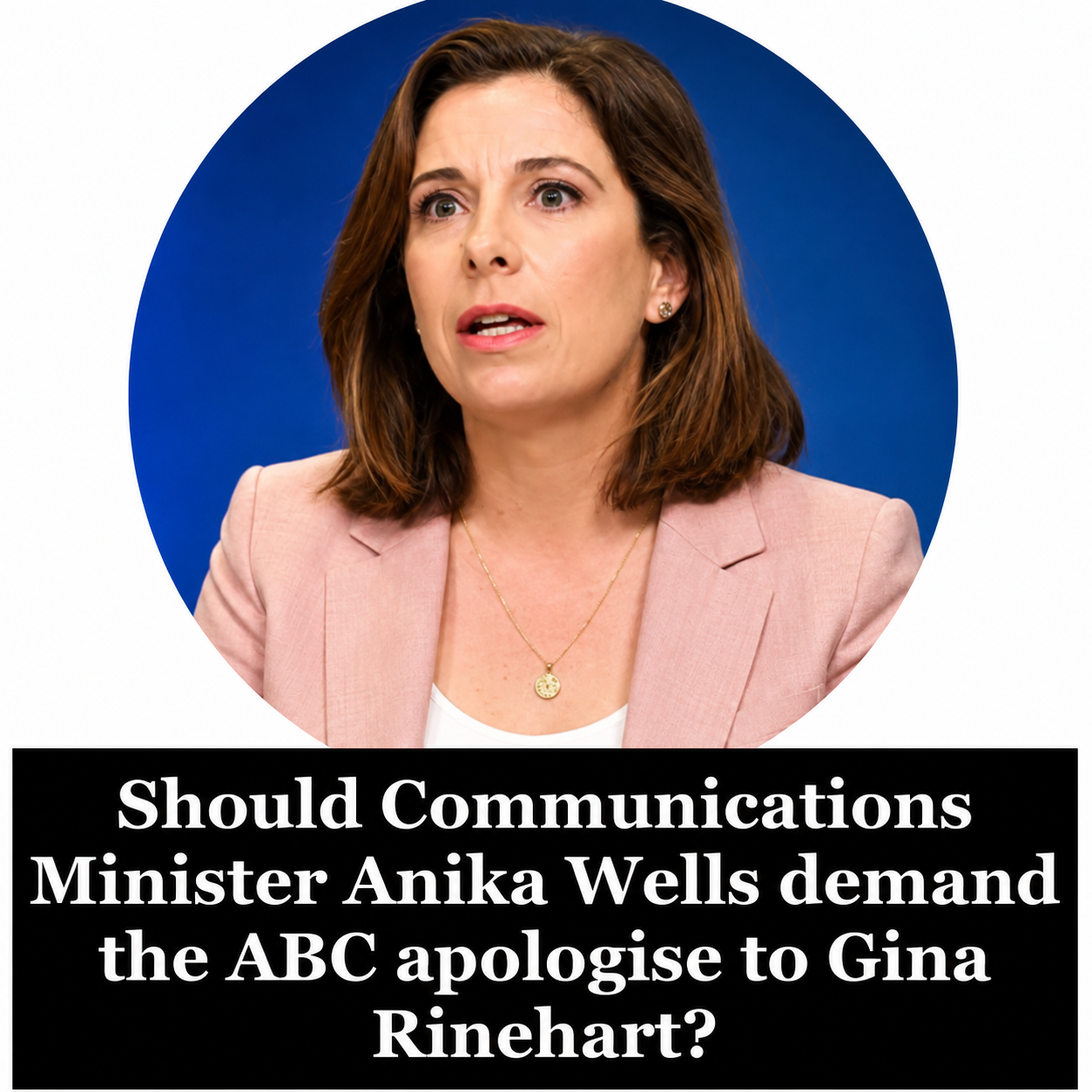
Speaking on Monday, Ms Wells reiterated that her position had not changed since first commenting on the controversy last week, despite Hancock Prospecting escalating the dispute by launching legal action against the taxpayer-funded broadcaster.
“News24 asked me a number of questions about this at a press conference last week, and my view has not changed,” Ms Wells said.
“As I said at the time, I think it’s a good and righteous thing that the ABC has referred the matter to the Ombudsman.
“As the Minister for Communications, I take the ABC’s editorial independence very seriously, and I respect its processes. The matter is now with the Ombudsman.”
When questioned about how long the Ombudsman’s investigation might take, Ms Wells said she did not know and would not expect the ABC to provide her with updates while the independent review remained underway.
Her latest comments reinforce the Albanese Government’s position that, while ministers may express personal views about controversial content, they should avoid directing editorial decisions at Australia’s national broadcaster.
The controversy stems from a four-minute satirical film broadcast during the ABC’s Race Around the World series. The segment, created by contestant Kate McGuinness, concluded with graphic and violent language directed at Hancock Prospecting executive chair Gina Rinehart, prompting widespread criticism across political, business and sporting circles.
After the broadcast attracted significant public backlash, Hancock Prospecting demanded the ABC immediately remove the segment from its platforms, issue a public apology and conduct a comprehensive investigation into how the material passed editorial review.
The company argues the broadcaster’s handling of the program has fallen well below acceptable editorial standards for a publicly funded institution.
When those requests were not met, Hancock Prospecting escalated the matter by issuing legal notices to senior ABC executives, alleging breaches of Australian civil and criminal law arising from both the publication of the material and its continued availability on ABC platforms.
The ABC has confirmed it has received correspondence from lawyers acting for Ms Rinehart and says it will respond through the appropriate legal channels.
The broadcaster has declined to make further public comment while complaints are being independently assessed by the ABC Ombudsman.
The Ombudsman reports directly to the ABC Board and reviews complaints about editorial standards independently of day-to-day newsroom management. Under Australia’s broadcasting framework, this internal process generally occurs before the Australian Communications and Media Authority (ACMA) considers whether any regulatory action is necessary.
Although Ms Wells has refused to tell the ABC whether it should apologise, she has previously made clear that she personally considered the segment unacceptable.
Last week she said that, like many Australians, she occasionally sees television content she does not agree with, but stressed that respecting the editorial independence of the national broadcaster remains an important constitutional principle.
That distinction has become central to the government’s handling of the controversy.
Rather than intervening directly in editorial matters, ministers have emphasised confidence in the ABC’s established complaints process while allowing the Ombudsman to complete its review independently.
Not all members of the government have adopted exactly the same tone.
Health Minister Mark Butler has publicly criticised the broadcast, describing the segment as “revolting” and questioning why Australians should see such material on television regardless of whether it appears on the ABC or a commercial network.
However, even Butler supported allowing the Ombudsman’s investigation to proceed before any further institutional response.
The controversy has also generated criticism from outside Parliament.
Olympic swimming legend Dawn Fraser recently condemned Prime Minister Anthony Albanese for not publicly denouncing the broadcast, accusing him of failing to defend Gina Rinehart despite what Fraser described as offensive treatment by a taxpayer-funded broadcaster.
Western Australian Premier Roger Cook likewise described the ABC segment as “unacceptable” and acknowledged that the language used was deeply confronting, adding to bipartisan concern over the program even as political leaders stopped short of directing the broadcaster’s editorial decisions.
The creator of the controversial film, Kate McGuinness, has since apologised to viewers who were offended.
In a statement published by the ABC, she said her work was intended to be cartoonish and satirical rather than a literal endorsement of violence, adding that it had never been her intention to encourage violent behaviour.
Nevertheless, her apology has done little to quieten criticism from those who argue the material should never have been approved for broadcast in the first place.
Questions are now being asked about the editorial review process inside the ABC.
Critics have argued that multiple layers of editorial oversight should have identified the potentially offensive content before it reached broadcast, particularly given the broadcaster’s obligations as a publicly funded institution operating under its Editorial Policies.
Supporters of the ABC, however, contend that satire has long played an important role in challenging powerful public figures and caution against political interference in editorial decision-making.
The dispute therefore extends beyond the specific remarks about Gina Rinehart and into broader questions about freedom of expression, acceptable satire and the responsibilities that accompany public funding.
Australia’s national broadcasting framework is designed to strike a balance between accountability and editorial independence.
Successive governments have generally avoided directing the ABC’s editorial judgments, arguing that independence from political influence is fundamental to public confidence in the broadcaster.
Instead, complaints about programming are first assessed internally before external regulatory mechanisms become available if complainants remain dissatisfied.
That process is now unfolding in one of the ABC’s most closely scrutinised editorial controversies in recent years.
The outcome of the Ombudsman’s investigation could influence future editorial guidance for satirical programming and clarify how complaints involving graphic depictions of violence are assessed under the broadcaster’s standards.
At the same time, the legal proceedings initiated by Hancock Prospecting are likely to continue independently of the complaints process.
Depending on how those matters progress, the dispute could have broader implications for media organisations balancing creative expression, satire and legal responsibilities when portraying identifiable individuals.
For now, Ms Wells has made clear that her government will not instruct the ABC on whether it should apologise.
Instead, she continues to argue that the broadcaster’s independent processes should be allowed to run their course, even as political pressure, public scrutiny and legal challenges surrounding the Gina Rinehart controversy continue to intensify.






