Communications Minister Anika Wells has broken her silence over the ABC’s controversial broadcast depicting graphic violence against mining billionaire Gina Rinehart, describing the content as “unacceptable” while declining to demand an apology or take direct action against the national broadcaster.
Wells’ comments have become the latest development in a dispute that has sparked intense debate about the ABC’s editorial standards, the limits of satire and the responsibilities of publicly funded media organisations.
While expressing personal disapproval of the program, the minister stressed that the ABC operates independently of government editorial control and pointed to the broadcaster’s decision to refer complaints about the program to its internal Ombudsman for review. 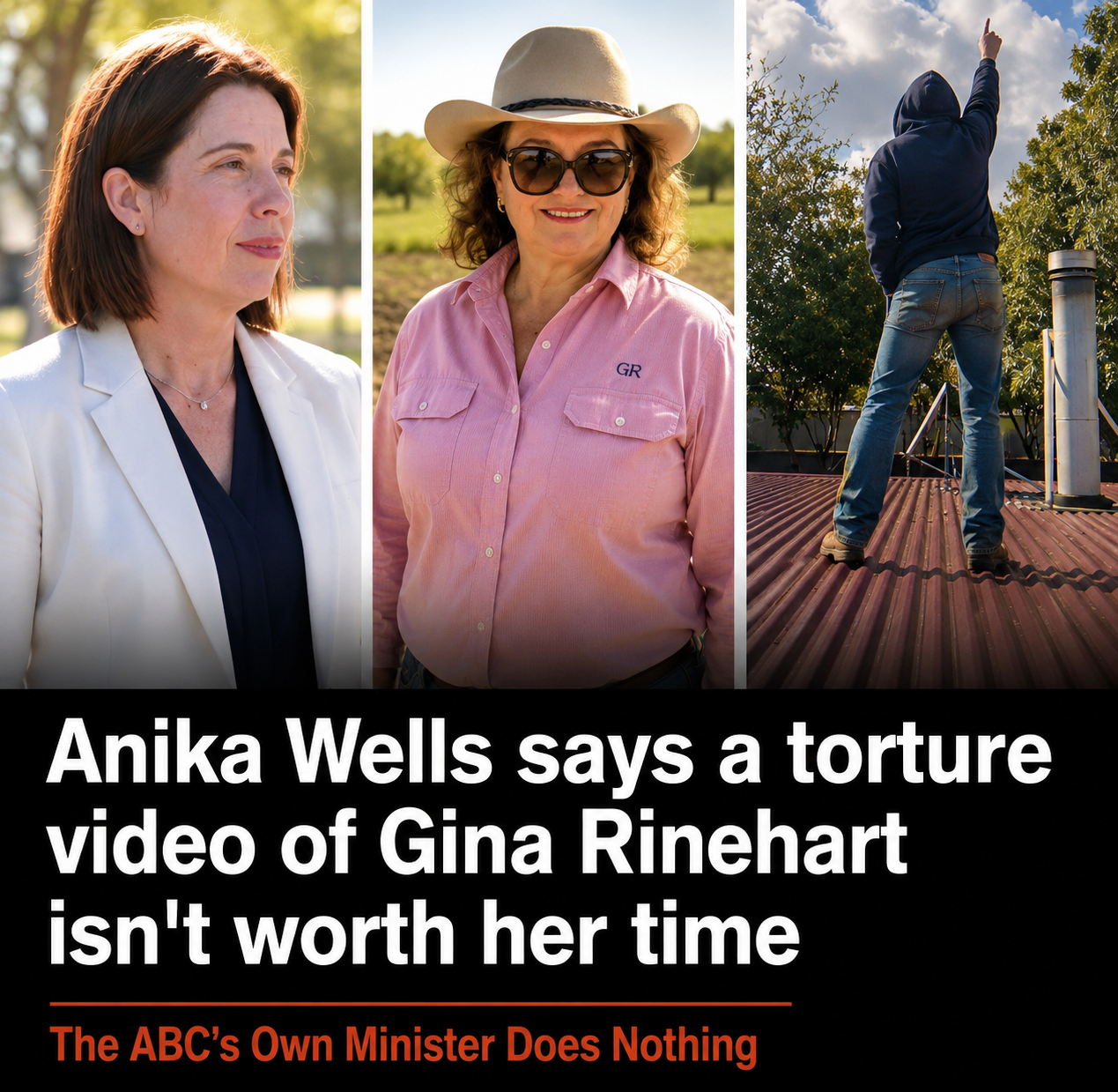
Wells’ response
After several days of public criticism and repeated questions from journalists, Wells finally addressed the controversy during a media appearance.
She said:
“My personal view is it’s unacceptable.”
However, she immediately distinguished her personal opinion from her ministerial responsibilities.
“As the Minister for Communications, I respect the editorial independence of the ABC, but I understand they have now referred it to the Ombudsman. I think that was the right thing to do.”
Wells did not call on the ABC to apologise to Rinehart, nor did she indicate that the government intended to intervene in the broadcaster’s handling of the matter.
The segment that sparked the controversy
The dispute centres on an episode of the ABC program Race Around the World, which included a satirical short film created by contestant Kate McGuinness.
The video concluded with graphic and violent language directed at Gina Rinehart.
After the episode aired, Hancock Prospecting condemned the content, describing it as encouraging violence against Australia’s richest woman and demanding that the ABC remove the segment and issue a public apology.
The broadcaster initially defended the program, describing it as satirical in tone and “editorially justifiable” within the context of the series.
ABC changes course
Although the ABC initially defended the segment, mounting public criticism prompted the broadcaster to refer audience complaints to its independent Ombudsman’s Office.
The Ombudsman reports directly to the ABC Board and is responsible for assessing complaints about compliance with the broadcaster’s editorial policies.
The ABC has confirmed it will not comment further while that review remains underway.
Importantly, referring the matter to the Ombudsman does not necessarily indicate that editorial standards were breached. Instead, it begins a formal internal complaints process that may ultimately uphold, partially uphold or dismiss complaints received from members of the public.
Why editorial independence matters
One of the central issues raised by the controversy is the principle of editorial independence.
Under Australia’s broadcasting framework, the ABC is publicly funded but operates independently of the federal government in making editorial decisions.
Communications ministers are therefore generally expected not to direct the broadcaster regarding individual programs or editorial content.
Wells relied heavily on that principle when explaining why she would not intervene beyond expressing her personal opinion.
Supporters of this approach argue political interference would undermine the ABC’s independence and potentially weaken public confidence in the broadcaster’s journalism and programming.
Critics say stronger leadership was needed
Critics of Wells’ response argue that acknowledging the content was unacceptable should have been accompanied by stronger public leadership.
Some commentators have suggested the minister should have explicitly called for an apology or urged the ABC to reconsider its editorial processes.
Others questioned whether a publicly funded broadcaster should air material depicting graphic violence against any individual, regardless of political views or public profile.
The criticism has come from a range of political figures, media commentators and industry representatives who argue the issue extends beyond ordinary satire into broader questions of editorial judgment.
Supporters defend the ABC’s independence
Others have defended the ABC’s decision to manage the matter through its established complaints process.
They argue that allowing the Ombudsman to independently assess complaints is consistent with the broadcaster’s governance arrangements and avoids political interference in editorial matters.
Supporters also note that controversial artistic or satirical content often provokes strong disagreement without necessarily breaching editorial standards.
Whether the Ombudsman ultimately agrees remains to be seen.
Rinehart’s role in Australian sport
The controversy has attracted additional attention because Wells also serves as Minister for Sport.
Gina Rinehart, through Hancock Prospecting, has become one of Australia’s largest private supporters of elite sport, providing substantial financial backing to swimming, rowing, volleyball and several Olympic programs.
Her long-standing support for Australian athletes has led some commentators to argue that criticism directed towards her carries broader public significance given her prominent role in funding high-performance sport.
Others maintain that philanthropic activity should not shield any public figure from satire or criticism.
Political comparisons
The debate has also prompted broader discussion about how governments respond to controversial political speech.
Some critics have compared the response to previous controversies involving offensive comments directed at politicians, arguing there should be consistency regardless of a person’s political views.
Others caution against drawing direct comparisons, noting that every incident involves different legal, editorial and factual circumstances.
No regulator has yet found that the ABC breached broadcasting rules in relation to the segment.
What happens next?
The immediate focus now shifts to the ABC Ombudsman’s review.
The office will examine audience complaints alongside the broadcaster’s editorial policies before determining whether any standards were breached.
Possible outcomes range from finding no breach to recommending editorial improvements or other corrective action.
Separately, public debate over the appropriate limits of satire, the responsibilities of publicly funded broadcasters and the protection of editorial independence is likely to continue regardless of the Ombudsman’s eventual findings.
A controversy extending beyond one program
The dispute has become about more than a single television segment.
It now encompasses broader questions concerning freedom of expression, editorial responsibility, political accountability and the role of public broadcasters in Australian democracy.
For Wells, the challenge has been balancing her personal condemnation of the content with her responsibility to respect the ABC’s statutory independence.
For the ABC, the Ombudsman’s review represents an opportunity to determine whether the broadcaster’s own editorial standards were appropriately applied.
As that process unfolds, the controversy surrounding the Gina Rinehart segment is likely to remain one of the most closely watched media and political debates in Australia, with its outcome potentially influencing future discussions about satire, public broadcasting and the boundaries of editorial judgment.






