Opposition Leader Angus Taylor has pledged to dismantle what he describes as “wasteful bureaucracy” across key Commonwealth programs if the Coalition wins the next federal election, setting the stage for a fresh political battle over the size and role of Australia’s public service.
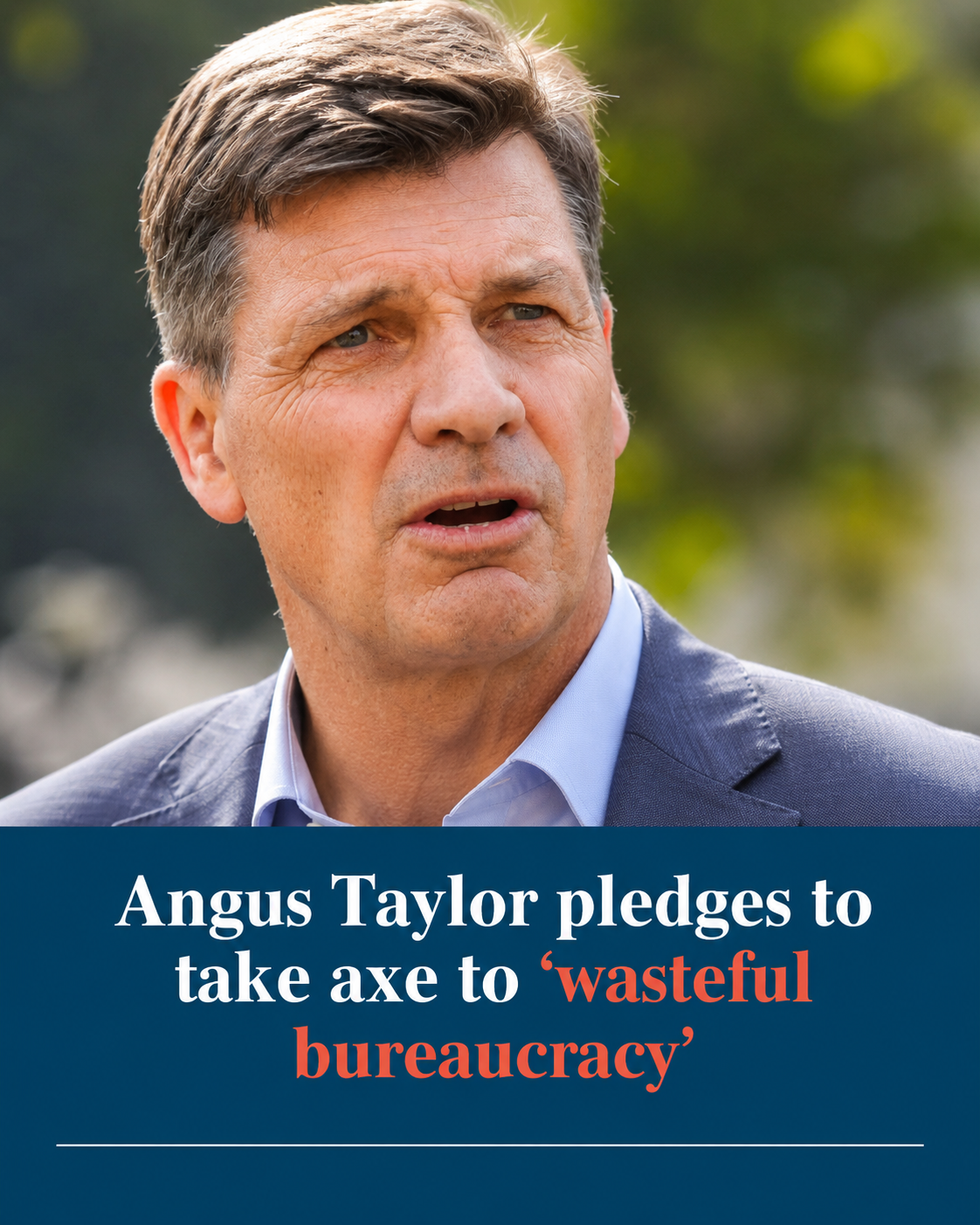
Speaking at a small business forum in Brisbane, Taylor argued that some areas of the federal bureaucracy had expanded beyond their intended purpose and were no longer effectively serving Australians. He identified the Commonwealth’s climate-related administration and housing bureaucracy as immediate targets for reform under a future Coalition government.
“Wasteful bureaucracy has to go,” Taylor told attendees, saying he had spent much of his career opposing unnecessary government administration and believed excessive regulation was slowing economic growth and increasing costs for households and businesses. He said the Coalition would move quickly to abolish what he termed the “net-zero bureaucracy” and the “housing bureaucracy” if elected.
The comments represent Taylor’s strongest public attack on the Commonwealth public service since becoming Opposition Leader earlier this year and form part of a broader Coalition strategy focused on reducing government spending, streamlining regulation and reshaping Labor’s policy agenda.
Taylor also claimed that some government agencies had become more focused on preserving their own structures than delivering outcomes for taxpayers.
“They serve themselves,” he said, arguing that a future Coalition government would conduct a comprehensive review of departments and agencies to identify functions that could be abolished, merged or significantly reduced. While he did not specify every organisation that would be affected, he indicated programs associated with Labor’s housing initiatives and decarbonisation agenda would be among the first examined.
The announcement builds on policy commitments Taylor outlined in his Budget Reply speech earlier this year.
Those proposals included abolishing several flagship Labor housing initiatives, replacing them with a $5 billion Housing Infrastructure Fund, linking annual net overseas migration to the pace of home construction, reducing planning and building regulation, and repealing elements of Labor’s climate policy that the Coalition argues increase costs for businesses and consumers.
Under the Coalition’s housing proposal, annual net overseas migration would be capped according to the number of new homes completed in Australia during the previous year. Taylor argues that housing supply must keep pace with population growth if affordability is to improve, describing the policy as a “common-sense” approach to easing pressure on the housing market.
On climate policy, the Coalition has pledged to repeal Labor’s Safeguard Mechanism, which it describes as an indirect carbon tax on industry. Taylor contends the policy increases the cost of producing essential building materials such as steel, cement and glass, ultimately raising the cost of constructing new homes.
Labor responded swiftly to Taylor’s latest remarks.
Public Service Minister Katy Gallagher accused the Opposition Leader of attempting to undermine the independence of Australia’s professional public service and revive proposals that had been widely criticised before the last federal election. She argued the Coalition continued to portray public servants as political targets rather than recognising their role in delivering government services and evidence-based policy advice.
Gallagher also rejected suggestions that the public service had become bloated for its own benefit, saying Commonwealth agencies perform essential functions ranging from national security and border protection to health, taxation, social services and disaster response. She warned that broad reductions in staffing could affect the government’s capacity to deliver services efficiently.
The size of the Australian Public Service has been a recurring point of political debate for many years.
According to the latest available figures, the Commonwealth public service employed approximately 215,900 people at the end of June 2026. Staffing numbers increased during Labor’s first term as the government reduced reliance on external consultants and contractors while bringing more work back into permanent departments.
Coalition governments have traditionally argued for a smaller public sector and greater efficiency in government administration, while Labor has generally maintained that adequate staffing is necessary to deliver quality public services and reduce dependence on expensive external consulting firms.
Despite the political disagreement, both major parties have acknowledged ongoing fiscal pressures.
Budget documents released by the Albanese government indicate that overall public service employment is expected to stabilise over coming years, with some departments already undertaking voluntary redundancy programs as part of broader expenditure management. Recent staffing reductions have affected agencies including the Department of the Prime Minister and Cabinet, Home Affairs and the Department of Climate Change, Energy, the Environment and Water.
Business groups have long argued that regulatory complexity can increase compliance costs, delay investment decisions and slow the delivery of major infrastructure and housing projects. Many industry organisations support simplifying approval processes while maintaining appropriate environmental and safety standards.
However, unions representing public servants argue that reducing departmental resources can create delays in service delivery, increase workloads for remaining staff and ultimately cost taxpayers more if governments become increasingly dependent on private consultants. They also note that many regulatory functions exist because they are required under legislation passed by Parliament rather than by departmental choice.
Taylor’s remarks also generated attention after he suggested that migrants could access the Commonwealth’s five per cent first home buyer deposit scheme immediately upon arriving in Australia. Independent reporting subsequently noted that while permanent residents may become eligible for the scheme, eligibility does not begin immediately upon entry to Australia, meaning his description overstated the policy’s current operation.
The exchange illustrates how housing, migration, climate policy and government spending are becoming increasingly interconnected issues in federal political debate ahead of the next election. The Coalition argues that reducing bureaucracy will improve productivity, accelerate housing construction and lower costs, while Labor contends that dismantling public institutions would undermine the delivery of important government programs.
For Taylor, the latest announcement reinforces his broader economic message that government should focus on creating conditions for private enterprise rather than expanding administrative structures. His proposal reflects the Coalition’s view that regulatory reform and smaller government are central to improving productivity and restoring living standards.
For Labor, the comments provide another opportunity to draw a contrast with the Opposition over the future of the public service. Ministers argue that a capable and independent bureaucracy is essential to implementing government policy regardless of which party is in office and caution against framing career public servants as political opponents.
With the next federal election expected to feature strong debate over the cost of living, housing affordability, energy policy and government spending, the size and structure of the Commonwealth public service is likely to remain a prominent issue. Whether voters ultimately support Taylor’s promise to reduce what he calls “wasteful bureaucracy” or Labor’s defence of existing public institutions may become one of the defining questions of the campaign.






