Victorian Premier Ben Carroll has begun reshaping Labor’s frontbench after two of the government’s most experienced ministers announced they would retire from politics, signalling the end of an era that stretched across the premierships of both Daniel Andrews and Jacinta Allan.
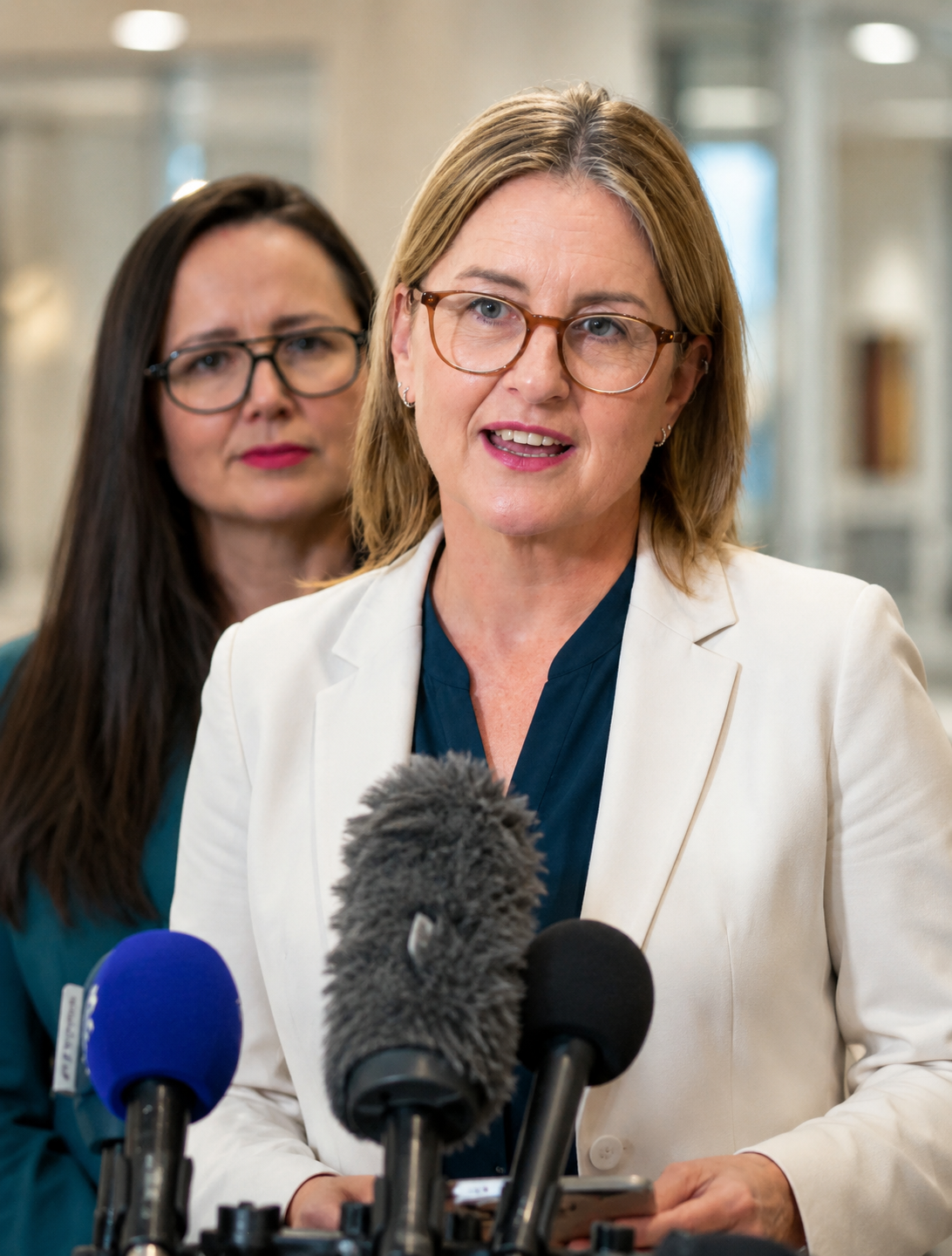
Health Minister Harriet Shing and Climate Action and Energy Minister Lily D’Ambrosio confirmed they would resign from cabinet immediately and would not contest Victoria’s state election in November.
The announcements came less than a week after Jacinta Allan resigned as premier following an internal Labor leadership revolt that elevated Ben Carroll to Victoria’s top job.
Both ministers were among Jacinta Allan’s most loyal political allies and belonged to Labor’s Socialist Left faction, which dominated Victorian Labor throughout the premierships of Daniel Andrews and Allan.
During the leadership crisis, both publicly backed Allan to remain premier and reportedly lobbied colleagues against replacing her with Carroll.
Their departures are therefore widely viewed as more than routine retirements.
They represent another major step in Ben Carroll’s effort to distance his government from the political legacy of the Andrews–Allan era as Labor prepares for one of its toughest election campaigns in more than a decade.
Premier Carroll responded by paying tribute to both ministers rather than revisiting the divisions created by the leadership spill.
“Over many years of dedicated service, they have brought compassion, determination and a strong sense of purpose to their roles, delivering outcomes that have improved the lives of Victorians and strengthened the communities they represent,” Carroll said in an official statement.
Harriet Shing entered Parliament in 2014 representing Eastern Victoria in the Legislative Council.
Over the following decade she accumulated one of the broadest ministerial portfolios in government, serving in roles including Regional Development, Water, Equality, Housing, Building and, most recently, Health.
She became one of the most recognisable progressive voices within Victorian Labor and was the state’s first openly lesbian cabinet minister.
In announcing her retirement, Shing said serving Victorians had been “the privilege of a lifetime”.
She also urged Labor colleagues to unite behind Carroll, saying the new premier deserved “the full support, solidarity and respect” of caucus as the government prepares to contest the November election.
Lily D’Ambrosio’s political career has been even longer.
First elected in 2002, she became one of Victoria’s longest-serving ministers and, according to her own statement, Australia’s longest-serving Energy and Climate Minister.
Throughout successive Labor governments she oversaw major renewable energy reforms, the expansion of Victoria’s renewable electricity generation and establishment of the revived State Electricity Commission.
D’Ambrosio said one of her proudest achievements was helping transform Victoria’s electricity mix.
She noted renewable generation had increased dramatically during Labor’s years in office and argued Victoria had helped shape national energy policy.
“Where Victoria has gone, the rest of the country has followed,” she said.
She also used her farewell statement to encourage more women to pursue careers in public life.
“I hope that my life in public service shows all girls what is possible for them,” she said, adding that young women should always believe in themselves regardless of their background.
The resignations leave Carroll with three vacancies to fill following Allan’s departure from the premiership.
Labor MPs are expected to approve a reshuffled ministry before the government resumes its election campaign in earnest.
Although several promotions are anticipated, Labor insiders have suggested Carroll is unlikely to completely rebuild cabinet, instead combining experienced ministers with a number of new appointments designed to demonstrate renewal.
The timing of the departures is politically significant.
Victoria heads to the polls in November after more than 12 years of Labor government, with polling showing increasing electoral pressure from the Liberal Party and growing competition from smaller parties, including One Nation in several regional electorates.
Immediately after becoming premier, Carroll attempted to distinguish his administration from previous governments.
He announced a Royal Commission into Victoria’s construction sector, proposed the appointment of a special prosecutor and promised expanded powers for the state’s anti-corruption watchdog, the Independent Broad-based Anti-corruption Commission (IBAC).
He also declared that integrity would become a defining principle of his government, signalling a clear shift in emphasis ahead of the election.
Political analysts say the retirements of Shing and D’Ambrosio reinforce a broader generational transition inside Victorian Labor.
Many of the ministers who entered cabinet during Daniel Andrews’ rise to power are now leaving politics, allowing Carroll greater freedom to assemble a team more closely aligned with his own leadership style.
The change also reflects shifting factional dynamics.
Carroll’s elevation returned Labor’s Right faction to the premiership for the first time since the Bracks–Brumby governments, ending more than a decade in which the Socialist Left held the state’s highest office.
While both outgoing ministers publicly endorsed Carroll after his election, their departures inevitably reduce the influence of the Left faction within cabinet.
Despite political differences surrounding the leadership spill, colleagues from across the party acknowledged the contribution both women made to Victorian public life.
Shing earned a reputation for championing regional communities, equality and housing reform before taking responsibility for the health portfolio.
D’Ambrosio became one of Australia’s most influential energy ministers, overseeing Victoria’s transition toward renewable electricity while navigating some of the country’s most contentious energy policy debates.
Whether Carroll’s cabinet reshuffle succeeds in convincing voters that Labor has genuinely turned the page remains to be seen.
However, the departures of Harriet Shing and Lily D’Ambrosio leave little doubt that Victoria’s governing party is entering a distinctly new political chapter.
With several prominent figures from the Andrews–Allan era now leaving Parliament, Carroll has an opportunity to redefine Labor’s identity—but only a few months to persuade voters that the changes extend beyond personalities to the government’s priorities and direction.






