Prime Minister Anthony Albanese has criticised Pauline Hanson over a series of controversial comments made during her recent visit to the United Kingdom, arguing that Australian parliamentarians have a responsibility to promote the country’s reputation overseas rather than undermine it.
The Prime Minister’s remarks came after the One Nation leader spent much of the winter parliamentary break travelling through Britain on what she described as a “fact-finding” mission, meeting conservative and right-wing political figures while giving interviews that reignited debate over immigration, multiculturalism and Australia’s national identity.
Speaking on Sunday, Albanese said Australia’s elected representatives should be ambassadors for the country whenever they travel overseas.
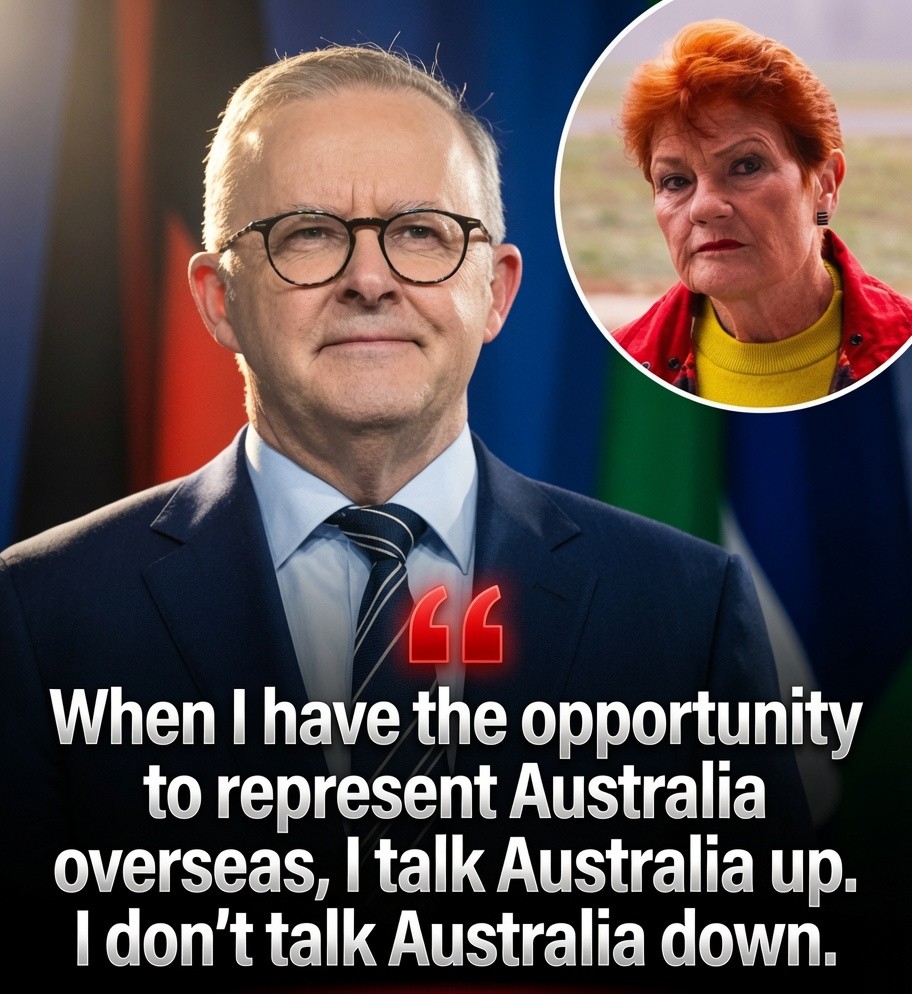
“When I have the opportunity to represent Australia overseas, I talk Australia up. I don’t talk Australia down,” the Prime Minister said.
“I go as someone who’s proud to represent our nation and proud to talk about what we are as a nation.”
He added that Australia remained “an extraordinary nation” admired internationally and said politicians should reflect that pride whenever they represent the country abroad.
Albanese’s comments followed several days of headlines generated by Hanson during her UK visit.
Among her most controversial remarks were claims that Australia had become “stupid” for recognising transgender rights and allowing women to wear burqas in public. She also declared she was “sick of hearing about white privilege” while addressing a conservative political gathering in London.
Earlier in the trip, Hanson appeared on a podcast with British activist Tommy Robinson, where she lamented the end of the White Australia policy and argued that high levels of immigration were changing Australia in ways she believed resembled developments in parts of Britain. Those comments drew criticism from across the political spectrum.
The debate intensified further following Seven’s Spotlight documentary, which documented Hanson’s British tour and included meetings with Robinson, Reform UK figures and campaigners advocating significantly tougher immigration policies.
During the program, Hanson endorsed the concept of large-scale deportations targeting people who are in Australia unlawfully.
Asked whether she supported the type of “mass deportation” proposal promoted by some British politicians, Hanson replied: “I love it.”
Pressed on how such a policy would operate in Australia, she declined to outline detailed implementation plans, saying policy would be developed following discussions with relevant authorities.
“I’m not going to give you politics on the run here,” she said.
Throughout her visit, Hanson maintained that her concern was directed at illegal migration and what she described as failures of multicultural integration rather than lawful migrants generally.
She argued Australia should avoid making what she considers to be the same immigration policy mistakes that have contributed to social tensions in parts of the United Kingdom.
Those arguments have remained central to One Nation’s platform for many years and have become increasingly prominent as immigration returns to the forefront of national political debate.
The Prime Minister’s response reflects a markedly different view of Australia’s multicultural success.
Albanese said the country’s diversity had become one of its defining strengths and suggested Australia’s international reputation had been built through decades of successful migration and social cohesion.
“There’s nowhere you’d rather be than Australia,” he said.
“It is the responsibility of people when they travel overseas to talk Australia up and to be proud of who we are and what we have created as a nation.”
The exchange illustrates the growing political divide over immigration and national identity.
While Labor continues to support a managed migration program alongside strong border protection, One Nation argues Australia should substantially reduce immigration levels, strengthen deportation powers for unlawful non-citizens and place greater emphasis on cultural assimilation.
Those competing approaches have become increasingly visible following a series of high-profile appearances by Hanson during and after her European trip.
In a separate interview broadcast this week, Albanese also reflected on Labor’s own evolution on border protection, acknowledging that the party had “learned the lesson” after years of internal debate over maritime asylum policies.
He said maintaining orderly migration and effective border controls was essential to sustaining public confidence in Australia’s immigration system.
Those comments underscored Labor’s continued support for the core elements of Australia’s existing border protection framework, despite historical disagreements within the party over measures such as boat turnbacks.
Hanson, meanwhile, has continued to argue that Australia’s migration policies remain too permissive.
During recent public appearances, including a leadership event in Perth, she praised tougher deportation policies adopted overseas and suggested Australia should pursue stronger enforcement against people who remain in the country unlawfully.
She has also criticised the Albanese Government over housing affordability, energy policy and what she describes as insufficient action to address the impacts of rapid population growth.
The disagreement has unfolded as One Nation records improved polling in some recent surveys, although results continue to vary between polling organisations.
Political analysts say concerns about housing affordability, infrastructure, cost-of-living pressures and migration have become increasingly important issues for many voters, creating opportunities for smaller parties seeking to differentiate themselves from Labor and the Coalition.
At the same time, both major parties continue to support firm border enforcement while differing over migration levels, humanitarian intake and broader immigration policy settings.
Albanese’s criticism of Hanson also highlights a longstanding convention in Australian politics that government leaders generally seek to present the country positively during overseas visits.
Successive prime ministers from both major parties have argued that promoting Australia’s economic opportunities, democratic institutions and multicultural society is an important part of representing the national interest internationally.
Opposition figures and minor parties, however, have often maintained that drawing attention to domestic problems overseas is legitimate where it forms part of broader policy discussions or international comparisons.
That tension has become particularly evident during Hanson’s UK tour, where she repeatedly cited British immigration debates as lessons Australia should heed.
The Prime Minister rejects that framing, insisting Australia’s experience differs fundamentally from Britain’s and arguing Australia’s multicultural society remains one of the country’s greatest strengths.
As Parliament prepares to resume and parties continue positioning themselves on immigration ahead of future political contests, the latest exchange underscores how border policy, multiculturalism and national identity remain among the most contested issues in Australian politics.






