The Australian Broadcasting Corporation (ABC) is facing mounting criticism after defending as “satirical” a controversial television segment that graphically described violence against mining magnate Gina Rinehart.
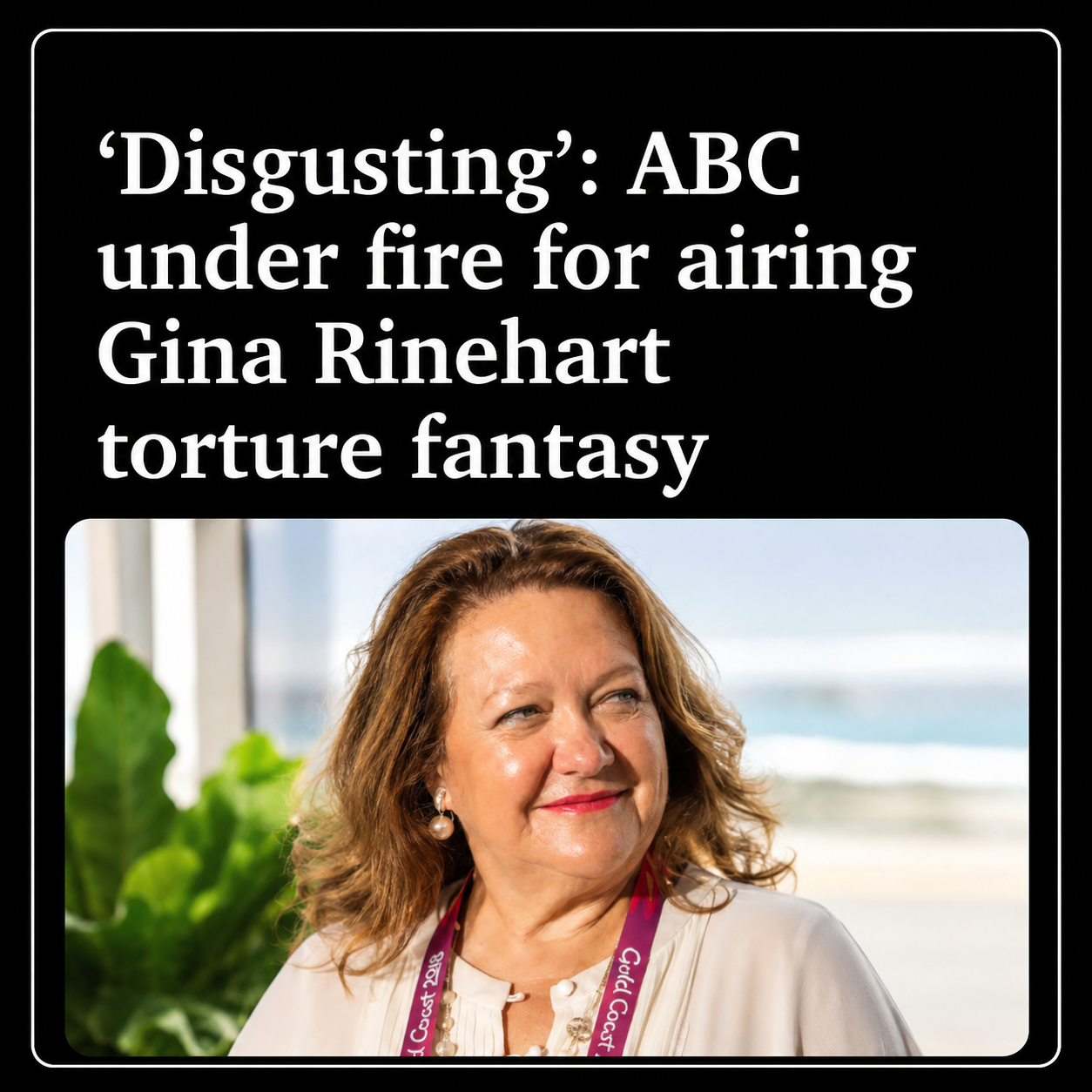
The controversy centres on an episode of Race Around the World, in which contestant Kate McGuinness presented a short film containing an imagined, graphic description of violence directed at Rinehart. The segment aired during the program and remains available on ABC platforms, prompting criticism from Hancock Prospecting and several political commentators.
Hancock Prospecting described the material as “disgusting” and called on the ABC to issue a public apology as well as investigate how the segment progressed through the broadcaster’s editorial approval process.
In a statement, the company argued the material went beyond legitimate satire and instead normalised sexualised political violence against Australia’s richest woman. Hancock also questioned whether comparable content targeting a public figure with different political views would ever have been approved for broadcast.
The ABC has declined to apologise.
Responding to the criticism, an ABC spokesperson said the film was “intended to be satirical in tone” and was considered “editorially justifiable within the context of the program”. The broadcaster also noted that while contributors to Race Around the World are not ABC journalists, all broadcast material remains subject to the organisation’s editorial standards, policies and review processes.
The broadcaster further said it recognised audiences may respond differently to creative content and pointed out that criticism of the film was included within the program itself.
One of the program’s panellists, ABC presenter Leigh Sales, questioned the inclusion of what she described as a “nasty gag about Gina Rinehart”, suggesting it detracted from an otherwise creative short film. She was the only member of the judging panel shown expressing reservations during the broadcast.
The incident has quickly developed into a broader debate over the boundaries of satire on publicly funded media.
Supporters of the ABC’s position argue satire has historically played an important role in scrutinising powerful public figures and that creative works often employ exaggeration and provocative imagery. Critics, however, contend that depictions involving explicit violence or sexual assault against identifiable individuals cross an important editorial line regardless of the target’s political views or public profile.
The controversy has also renewed scrutiny of the ABC’s editorial oversight.
Because the segment was pre-recorded rather than broadcast live, critics argue it necessarily passed through multiple stages of production, editorial review and approval before reaching viewers. Hancock Prospecting said this raised questions not only about the content itself but also about the broadcaster’s internal decision-making processes.
The ABC has maintained that the approval process operated appropriately under its existing editorial framework.
Its editorial policies require content to comply with standards relating to accuracy, impartiality where applicable, harm and offence, while recognising that creative and entertainment programming may legitimately include material that some viewers find confronting or offensive when editorially justified.
The episode has also become part of a wider political discussion surrounding perceptions of impartiality at the national broadcaster.
Conservative commentators and some politicians have argued the broadcast reinforces longstanding concerns about ideological bias within the ABC, particularly regarding coverage of conservative public figures. Others reject that characterisation, arguing that editorial decisions should be assessed individually rather than used as evidence of institutional bias.
The debate comes only days after ABC Chair Kim Williams publicly defended the broadcaster’s commitment to impartiality, stating that the organisation exists to serve all Australians through independent journalism and programming. The timing has intensified public scrutiny of the broadcaster’s handling of the controversy.
Gina Rinehart is one of Australia’s most prominent business leaders and has frequently been the subject of political commentary and satire because of her role as executive chair of Hancock Prospecting, her public advocacy on taxation, energy and mining policy, and her support for a range of conservative causes.
Public figures generally receive less legal protection from criticism than private individuals, and satire has long been recognised as an important form of political expression in democratic societies. Nevertheless, Australian media organisations are expected to exercise editorial judgment regarding material that could be interpreted as encouraging violence or causing serious harm.
At this stage, the ABC has given no indication it intends to remove the segment or issue an apology.
Hancock Prospecting has continued to press for further action, while the incident is likely to remain part of a broader discussion about the limits of satire, the responsibilities of publicly funded broadcasters and the editorial standards expected by Australian audiences. Whether the controversy leads to formal regulatory complaints or changes to ABC editorial practices remains to be seen, but it has already become one of the broadcaster’s most closely watched editorial disputes of the year.






