Former CFMEU Victorian secretary John Setka has denied allegations that he threatened and targeted women working within the union’s administration following reports concerning a series of strongly worded social media posts.
According to published reports, Setka rejected the allegations while defending his conduct after criticism emerged over comments directed at several people associated with the administration of the Construction, Forestry and Maritime Employees Union (CFMEU). The reported dispute has added to continuing public attention surrounding the union’s governance and administration.
The CFMEU has remained under significant public and regulatory scrutiny since parts of the organisation were placed into administration. The appointment of an independent administrator was intended to strengthen governance, oversee organisational reforms and review internal management practices following broader concerns about the union’s operations.
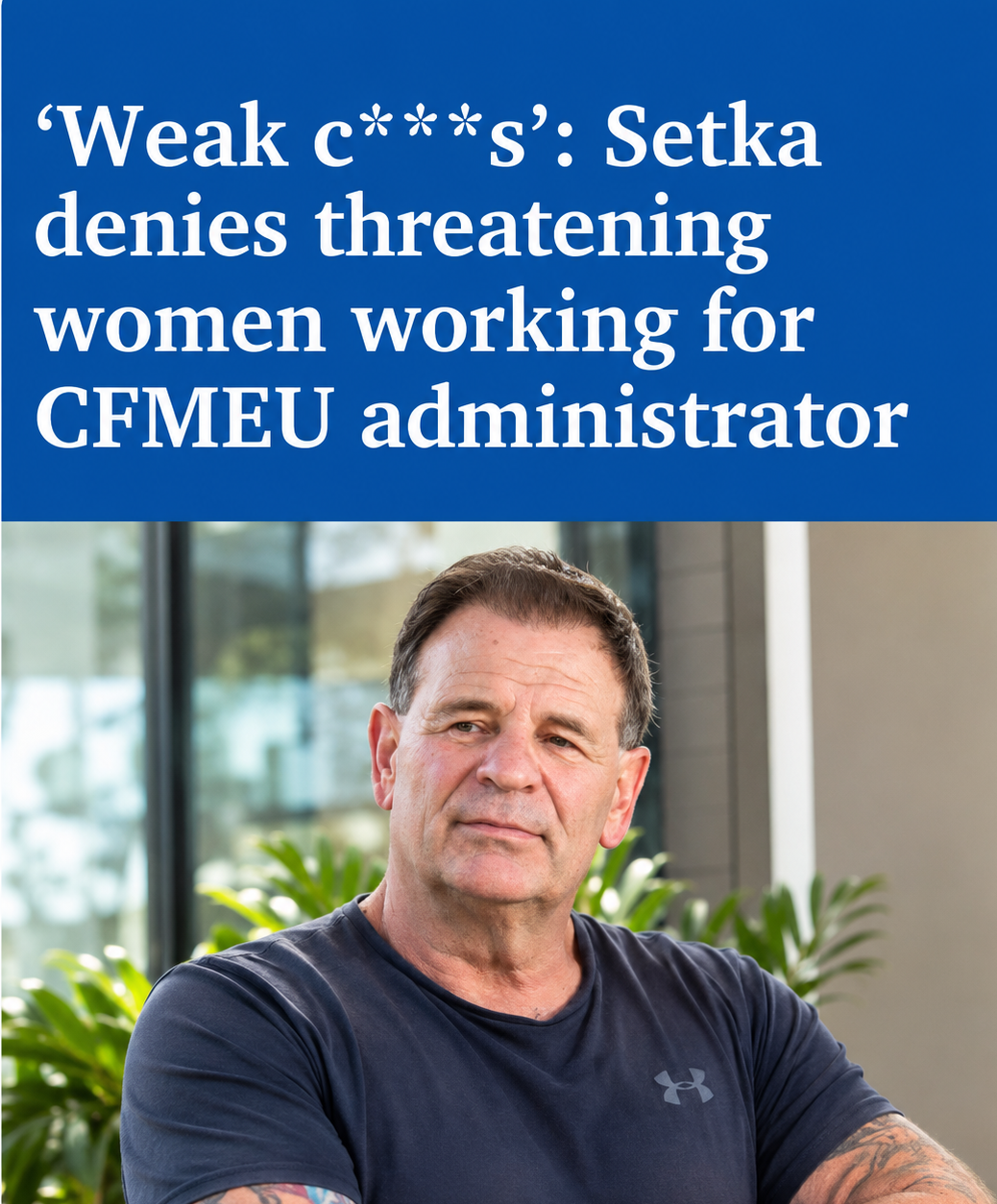
Reports indicate that Setka publicly criticised several current or former union personnel through social media. While those comments attracted criticism, Setka has denied allegations that his conduct amounted to threats or targeted behaviour toward women. At the time of reporting, those allegations remained contested and had not been determined through any judicial process.
Legal and workplace governance experts note that allegations involving workplace conduct or intimidation are generally assessed through formal investigative procedures, internal disciplinary processes or legal proceedings where appropriate. Allegations alone do not establish misconduct, and individuals are entitled to respond to claims made against them.
The ongoing administration of the CFMEU has prompted wider discussion about governance standards, workplace culture and accountability within Australia’s construction industry. Government agencies, regulators and industry stakeholders continue monitoring reforms introduced during the administration process.
Observers note that disputes involving prominent current or former union officials frequently attract significant media attention because of their potential implications for public confidence in major organisations. Even so, media reporting distinguishes between allegations, responses from those involved and any findings ultimately reached through official processes.
As the administration of the union continues, further developments may arise through regulatory reviews, official investigations or public statements from the relevant parties. Any conclusions regarding the disputed allegations will depend on the outcome of those processes rather than public commentary alone.
Until any formal findings are made, the reported allegations and denials should be understood as part of an ongoing dispute rather than established facts.






