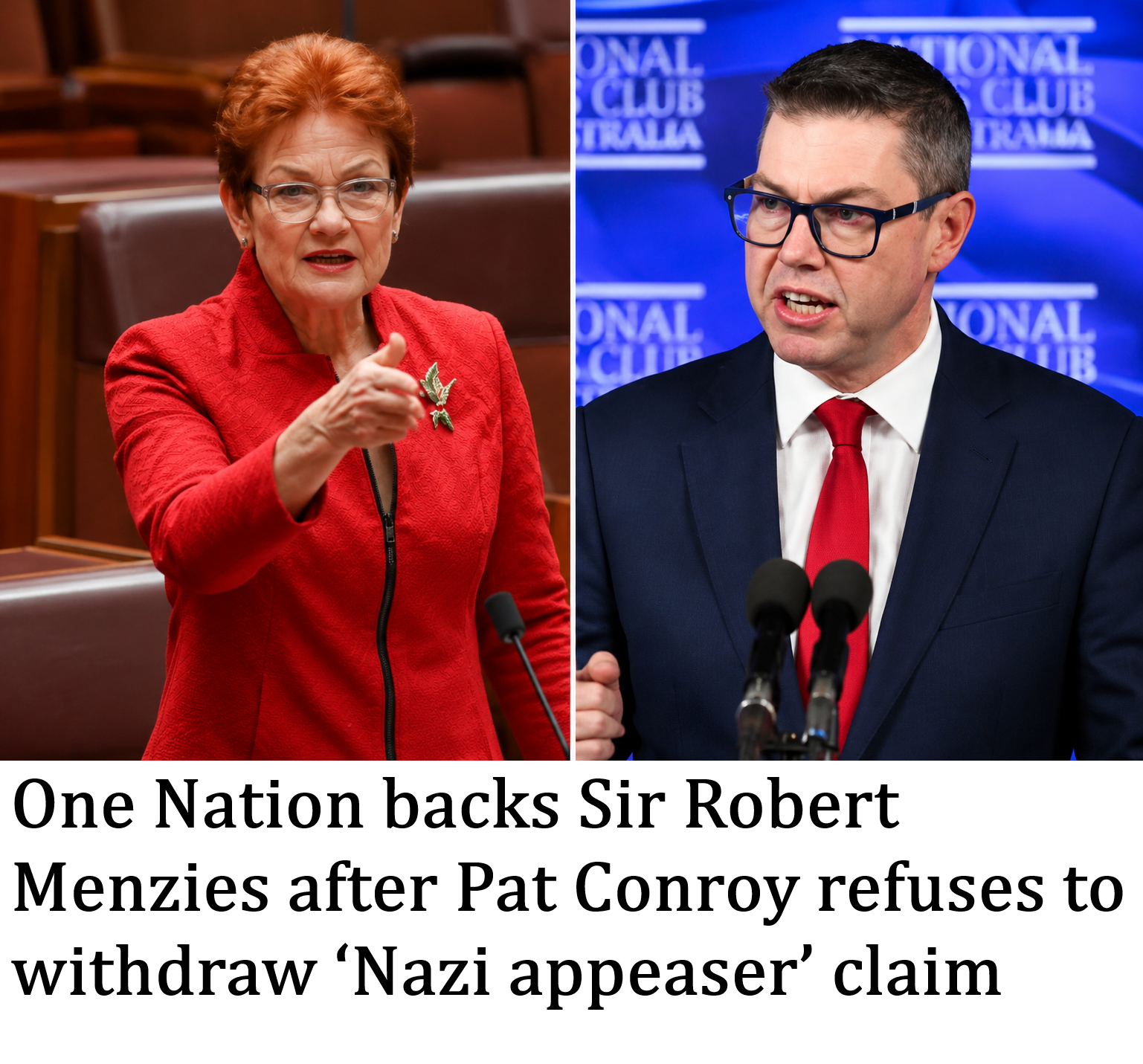
One Nation has joined an ongoing political debate surrounding comments made about former Prime Minister Sir Robert Menzies, arguing that Australia’s longest-serving prime minister should be assessed within the historical circumstances of his time rather than through contemporary political arguments.
According to published reports, the party criticised remarks made by Defence Industry Minister Pat Conroy regarding Menzies and argued that his historical contribution has been unfairly represented. The comments form part of a broader political disagreement over how Australia’s wartime leadership and political history should be interpreted. These statements reflect the views of the political parties involved rather than established historical conclusions.
Sir Robert Menzies remains one of Australia’s most influential political leaders, serving as Prime Minister during two separate terms and becoming the nation’s longest-serving holder of the office. His leadership covered periods of significant domestic development and international change, including the early years of the Second World War and Australia’s post-war economic expansion.
Historical assessments of Menzies have long varied among scholars, political commentators and historians. Some emphasise his role in strengthening Australia’s political institutions, economic development and international alliances, while others continue to examine aspects of his leadership and foreign policy decisions during the years preceding and following the outbreak of the Second World War.
Political historians note that debates over national leaders frequently evolve as new research, historical records and academic interpretations emerge. As a result, prominent historical figures are often reassessed over time, with differing conclusions reflecting the complexity of the political and international circumstances they faced.
The current disagreement also illustrates how historical issues continue to feature in contemporary political debate. Political parties sometimes draw on historical events to support present-day policy arguments or broader narratives about national leadership, while opponents may challenge those interpretations by presenting alternative historical perspectives.
Academic experts generally distinguish between political commentary and historical scholarship. While political statements often reflect contemporary priorities or ideological viewpoints, historical research seeks to evaluate events using documentary evidence, archival material and broader historical context.
Public discussion surrounding Australia’s political history remains an important part of democratic debate, particularly when the legacy of former prime ministers and major historical events is revisited. Readers are often encouraged to consider multiple sources and historical interpretations when evaluating competing claims about the past.
As debate continues, differing perspectives on Sir Robert Menzies’ legacy are likely to remain part of broader conversations about Australia’s political history, wartime leadership and the interpretation of significant historical events.






